Kopan Monastery Kathmandu Photography Guide: 7-Day Retreat, Views and Photo Spots
Introduction
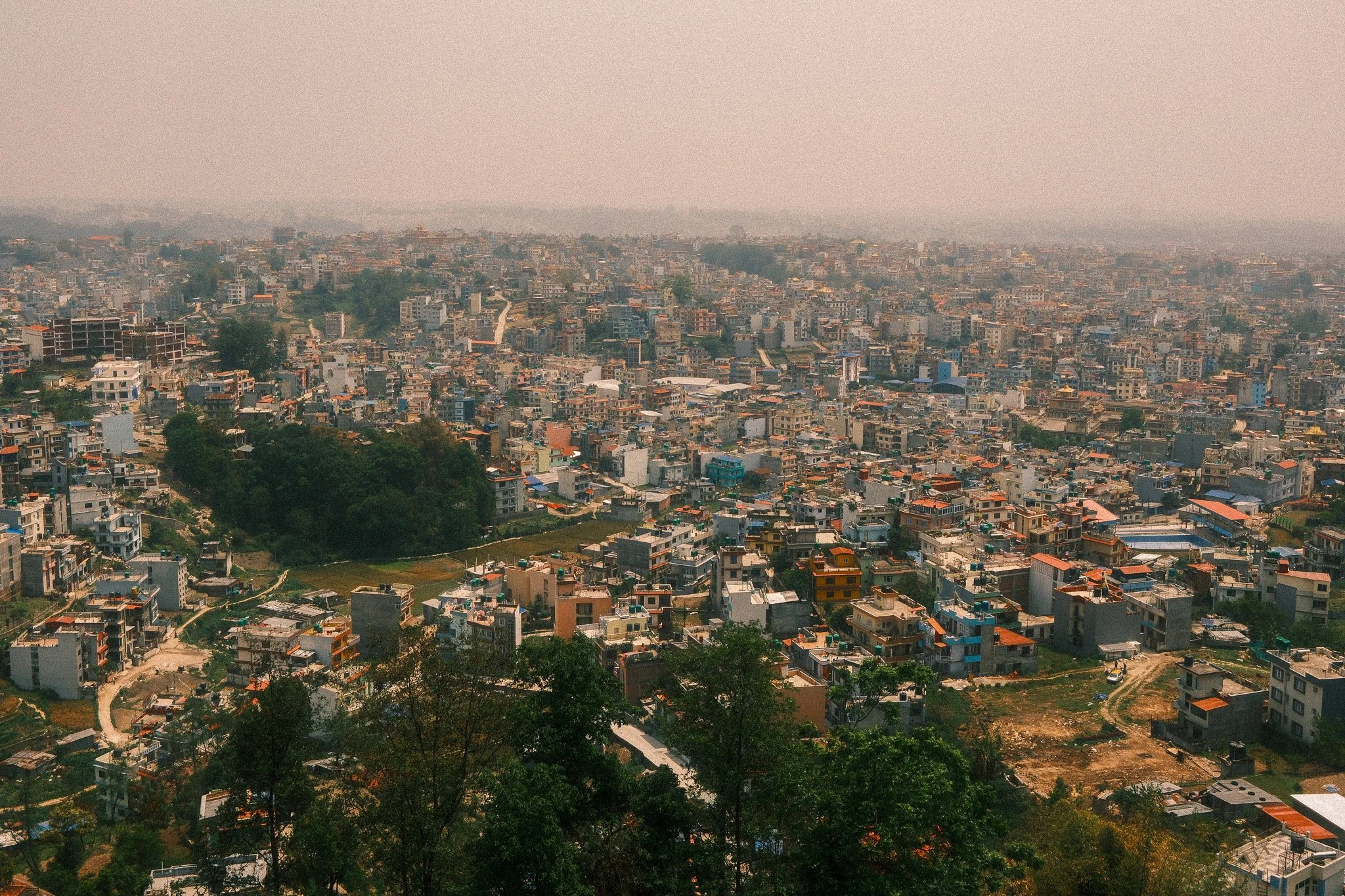
Above the noise of Kathmandu, Kopan Monastery sits on a hill, looking out across the valley.
I spent a week here on a 7-day retreat called Getting to Know Your Mind. It was a mix of meditation, Buddhist teachings, and long periods of silence.
The 7 days had a rule of no phones, laptops or cameras, which gave me a needed break from those distractions, but in this post I’d like to show you what I saw when I finally picked my camera back up, and how that week of slowing down completely changed the way I approached photography.
Contents:
-
Kopan Monastery is a Tibetan Buddhist monastery located on a hilltop on the outskirts of Kathmandu
Founded in the 1970s by Lama Thubten Yeshe and Lama Zopa Rinpoche
Part of the Foundation for the Preservation of the Mahayana Tradition (FPMT)
Known for its meditation retreats and courses, especially the popular “Getting to Know Your Mind” program
Open to international visitors, with structured courses ranging from a few days to one month
Set in peaceful gardens with views across Kathmandu Valley, offering a quiet contrast to the city below
Photography is restricted in certain areas, especially during courses and inside prayer halls
Check out their website to find out more
The Retreat Experience
The course I joined was the 7-day Getting to Know Your Mind retreat (you can find it on the Kopan Monastery website).
It combines:
Daily meditation sessions
Teachings on Buddhist philosophy
Periods of silence (half the day)
Time for reflection
The days are structured, but mentally quite intense.
My favourite parts of each day were the times in between the sessions, where I can be alone and reflect.
One morning, sitting in the garden just after sunrise, I wrote:
The day is beginning. Warm air moves through the trees, birds call across the hills, and the city hums below. There is energy and movement in Kathmandu, but here everything feels calm and still.
Meditation takes place in the Chenrezig Gompa, where light slowly fills the room in the morning. Juniper incense burns, and the smoke drifts through the space as the session begins.
It sounds peaceful, and it is, but it’s not always relaxing.
A lot of the teachings focus on observing your thoughts and emotions, including the difficult ones, which requires honesty, focus and effort.
Strangely, my Garmin recorded this as a more stressful week than my time climbing mountains in the Everest region! That says a lot.
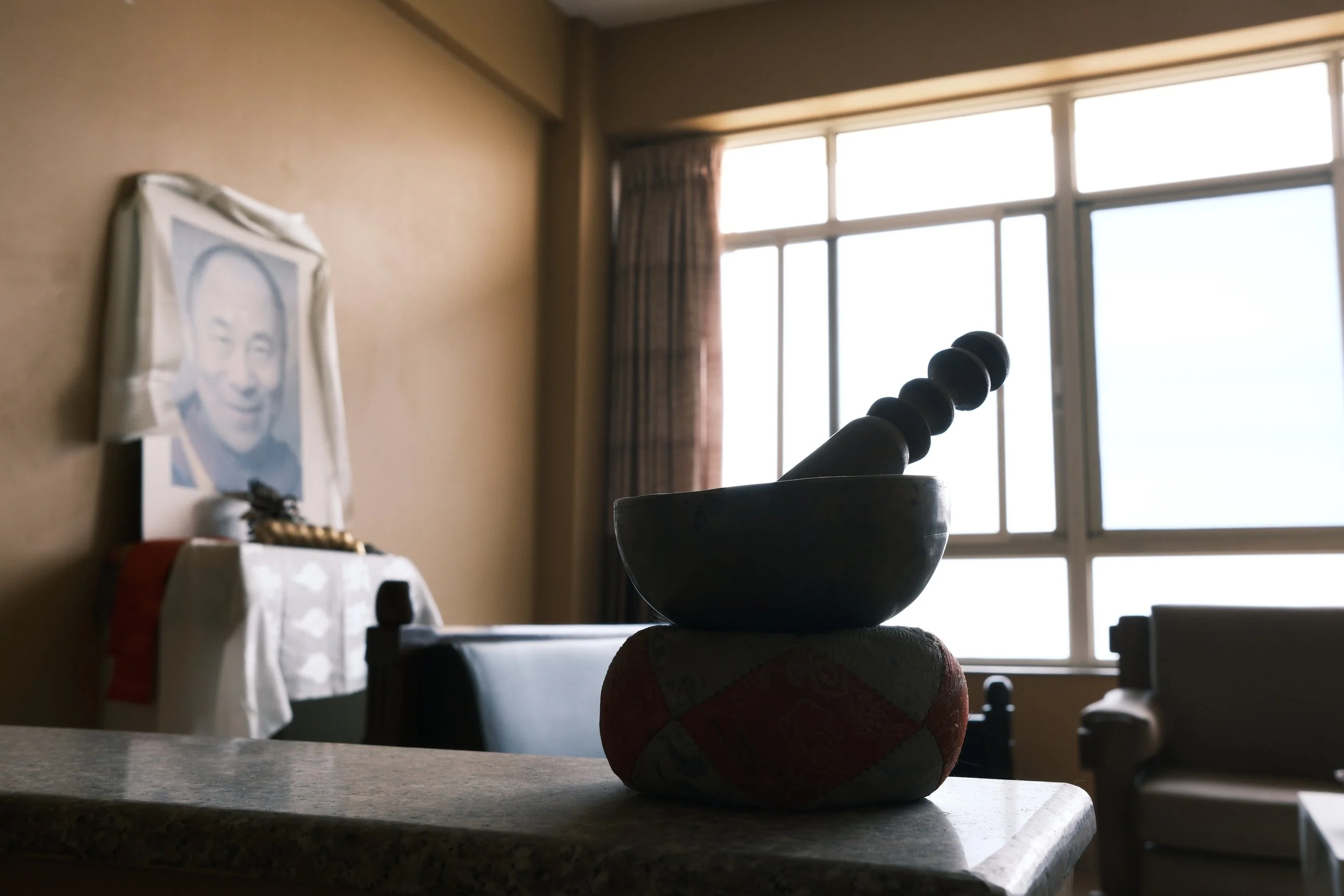
A Different Way of Observing
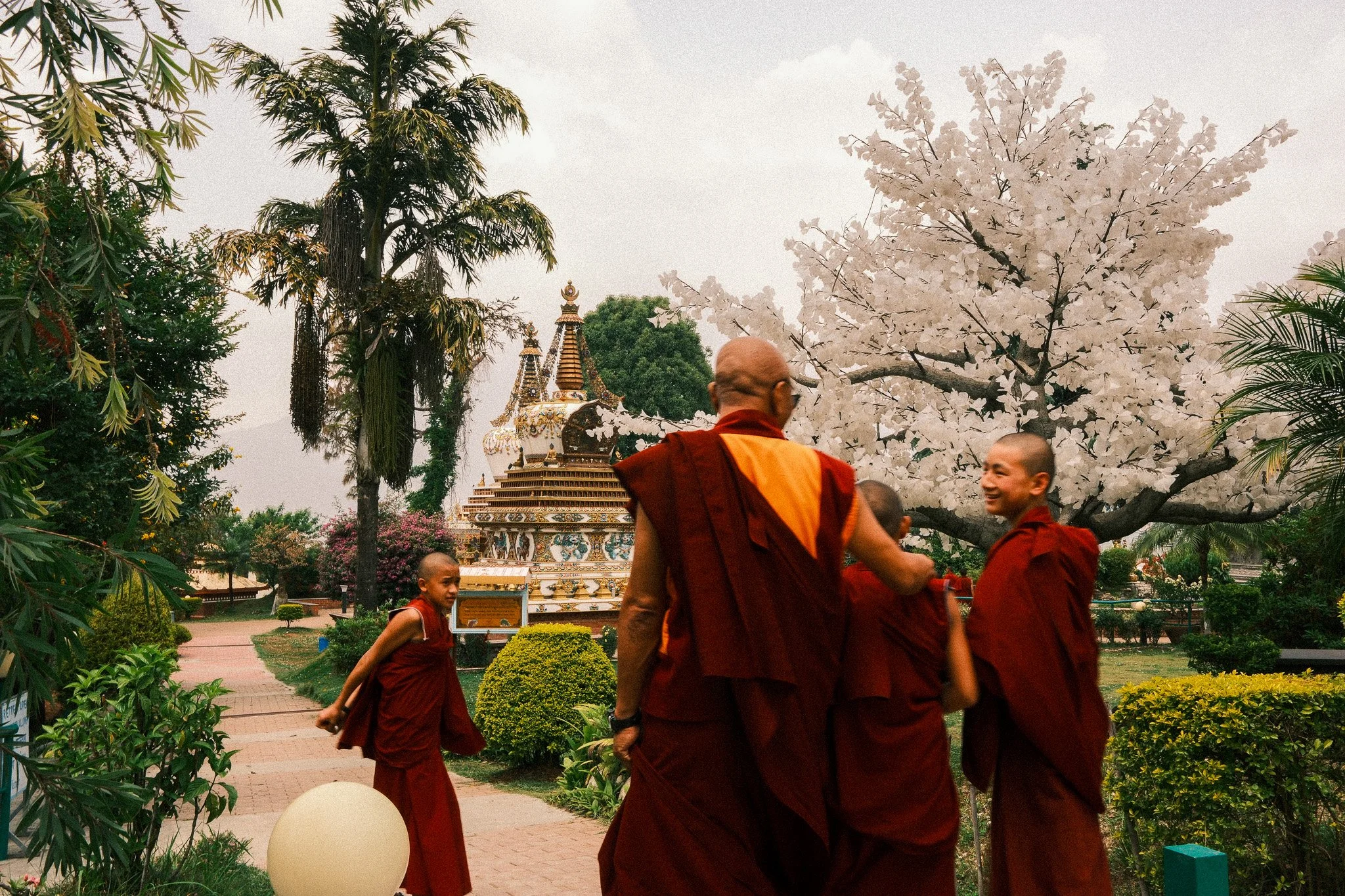
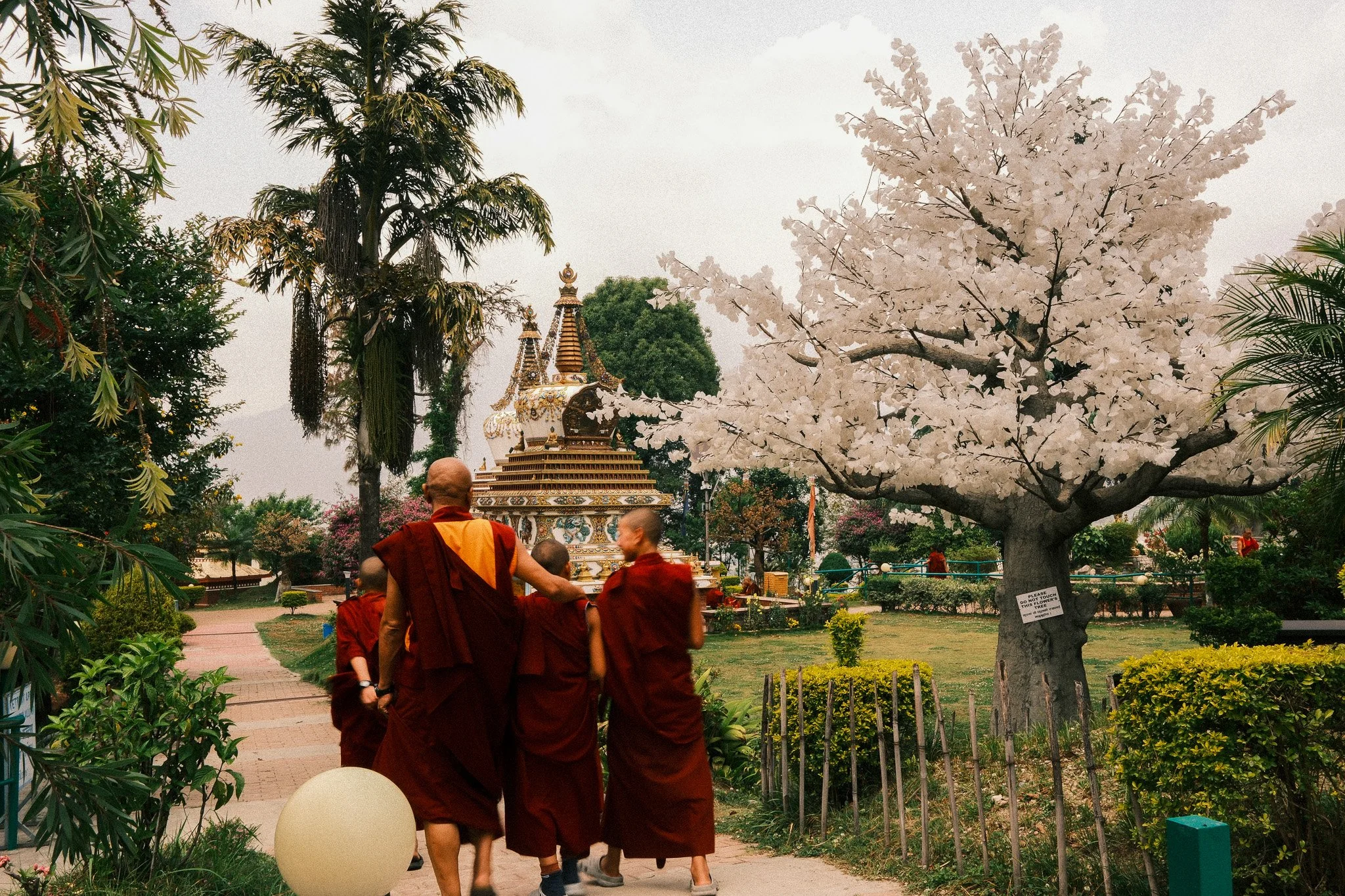
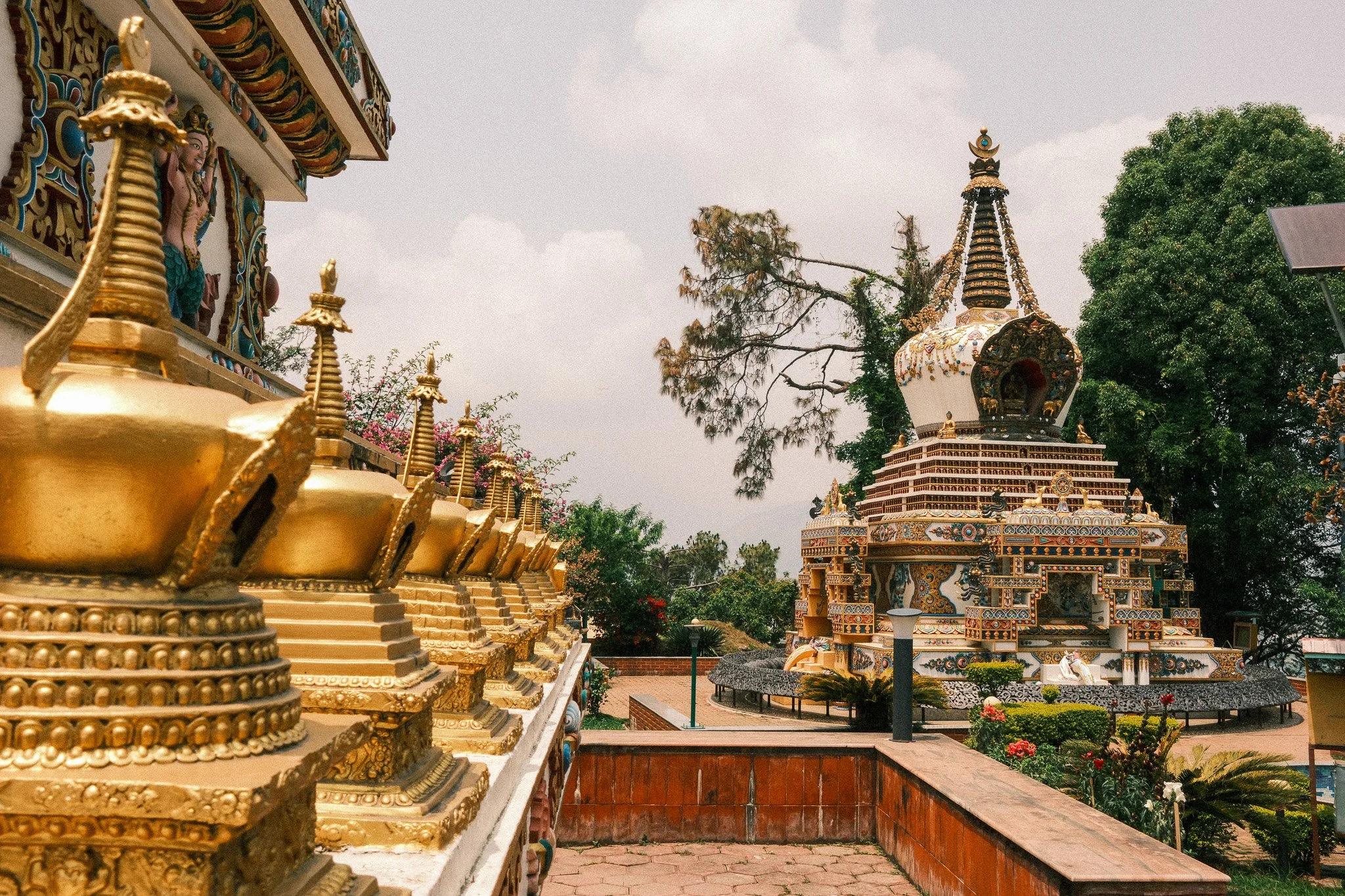
After meditation one morning, I sat in the stupa garden overlooking the valley.
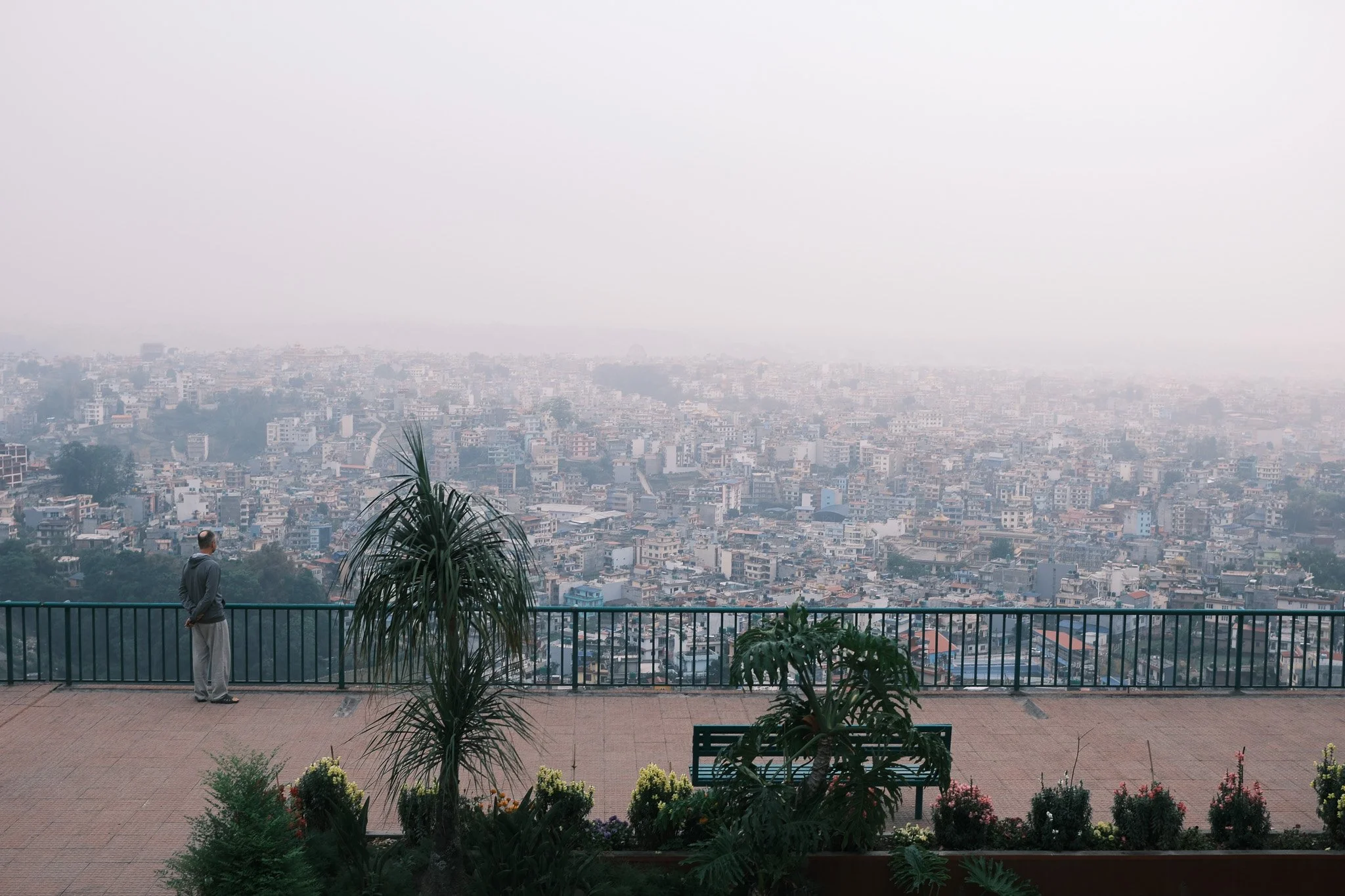
Below, Kathmandu was busy, loud, and constant. Up here, everything was quiet, ordered, and calm.
It felt like a clear metaphor.
The mind can be chaotic, like the city. But with effort, it can be elevated into something calmer and more stable.
But just like the monastery gardens, that calm doesn’t maintain itself. It takes continuous work.
That idea stayed with me when I picked up my camera again.
Photographing Kopan Monastery
You’re not allowed to photograph during the retreat, and some areas remain off-limits even afterward.
So all the photos in this post were taken on the day I checked out.
As I handed in my room key and got my camera back, the clouds cleared and the sun came through for a couple of hours. It felt like the perfect window to walk around and shoot.
And interestingly, after a week without a camera, I wasn’t rushing. I was slower. More patient. More aware of small details.
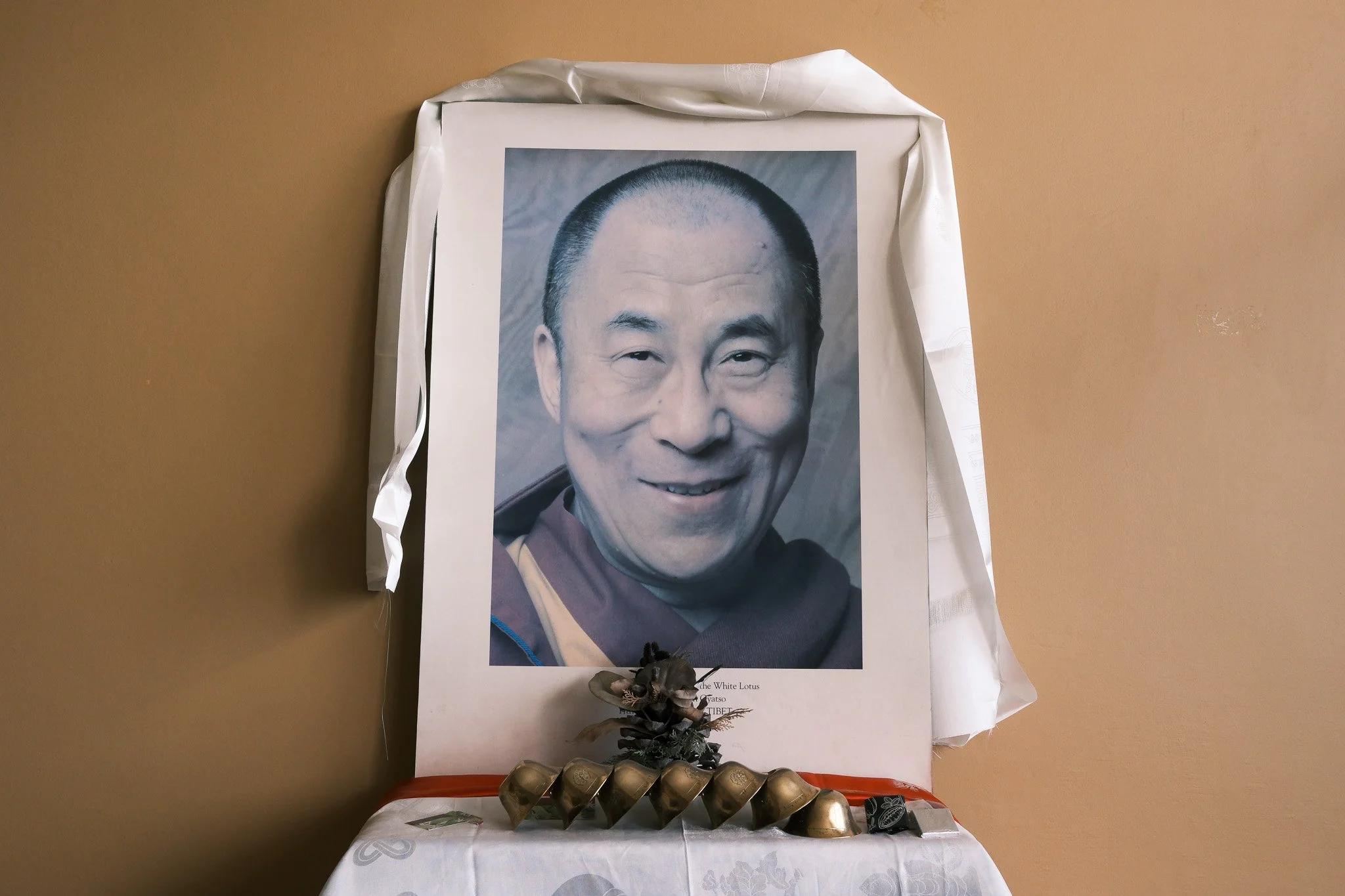
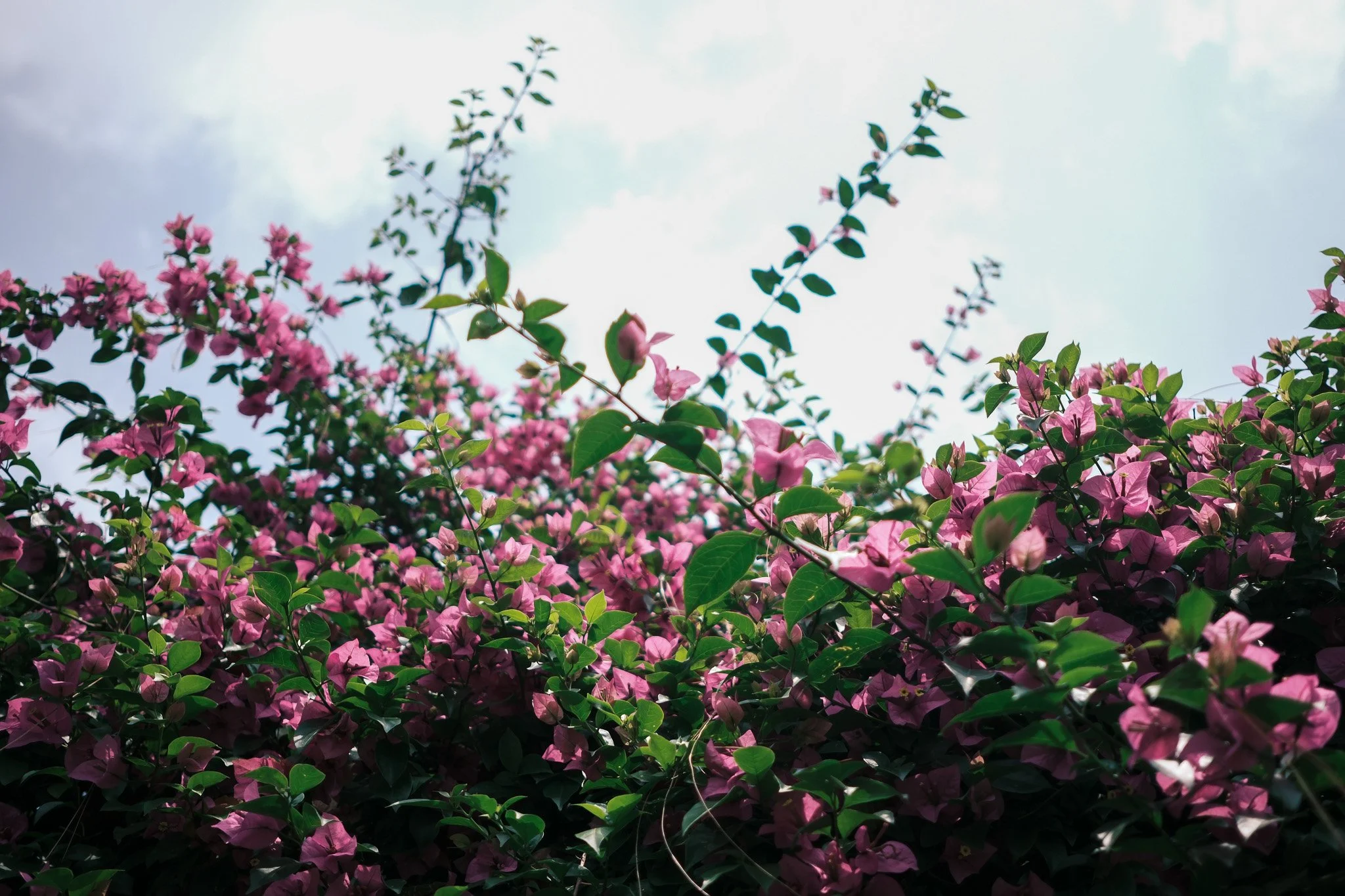
Best Photography Spots Around Kopan Monastery
1. Stupa Garden
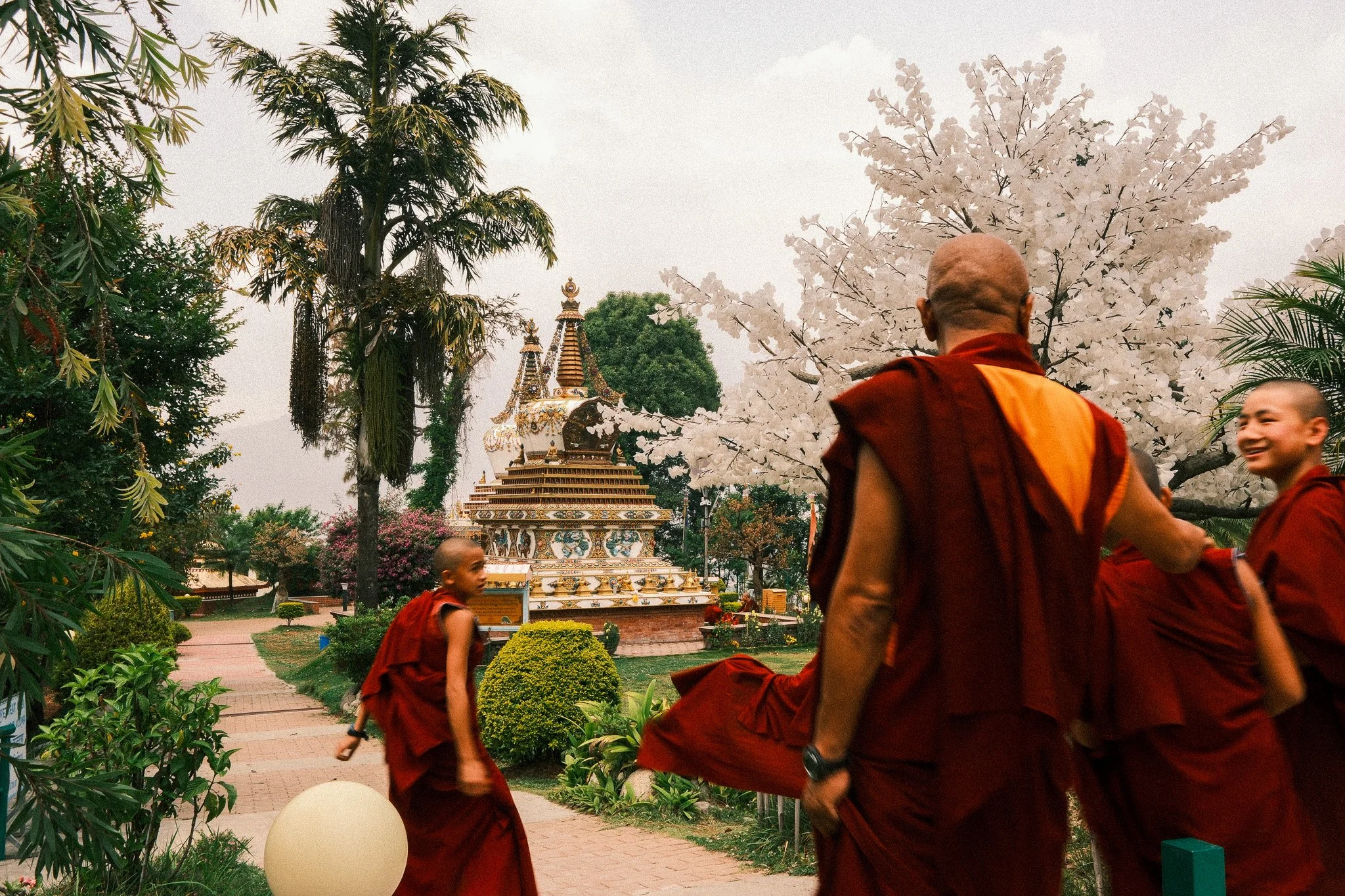
2. Hilltop Views Over Kathmandu
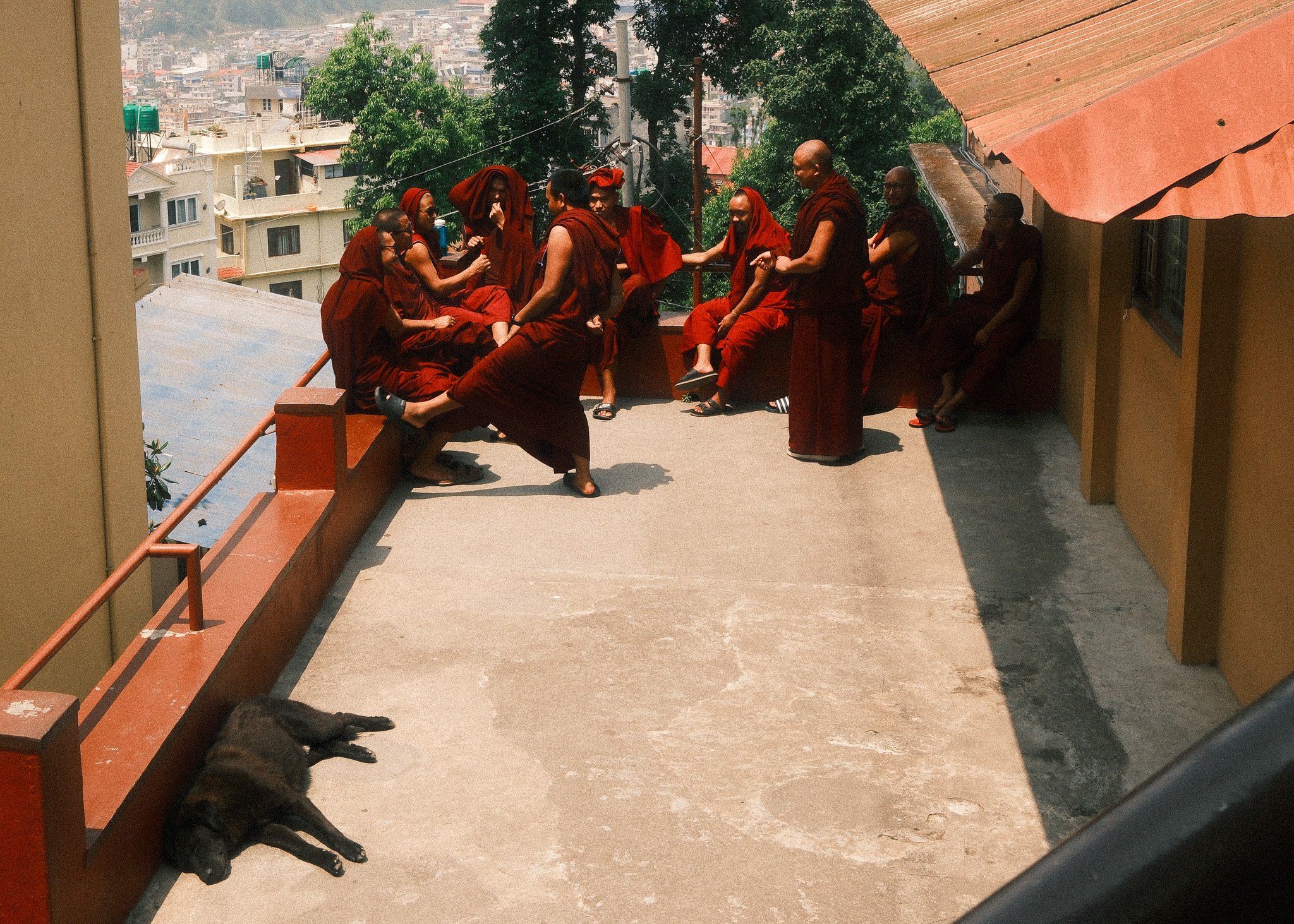
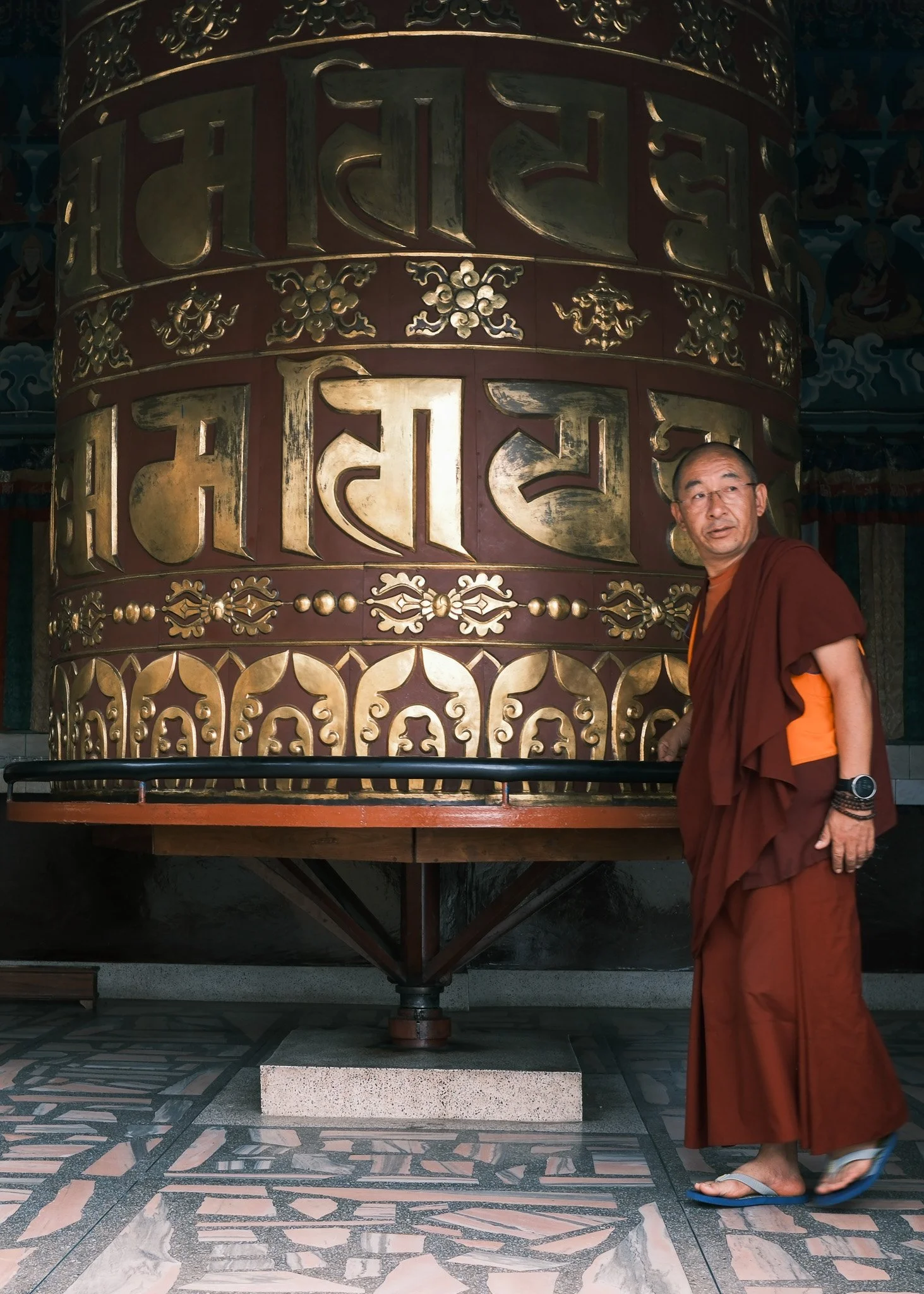
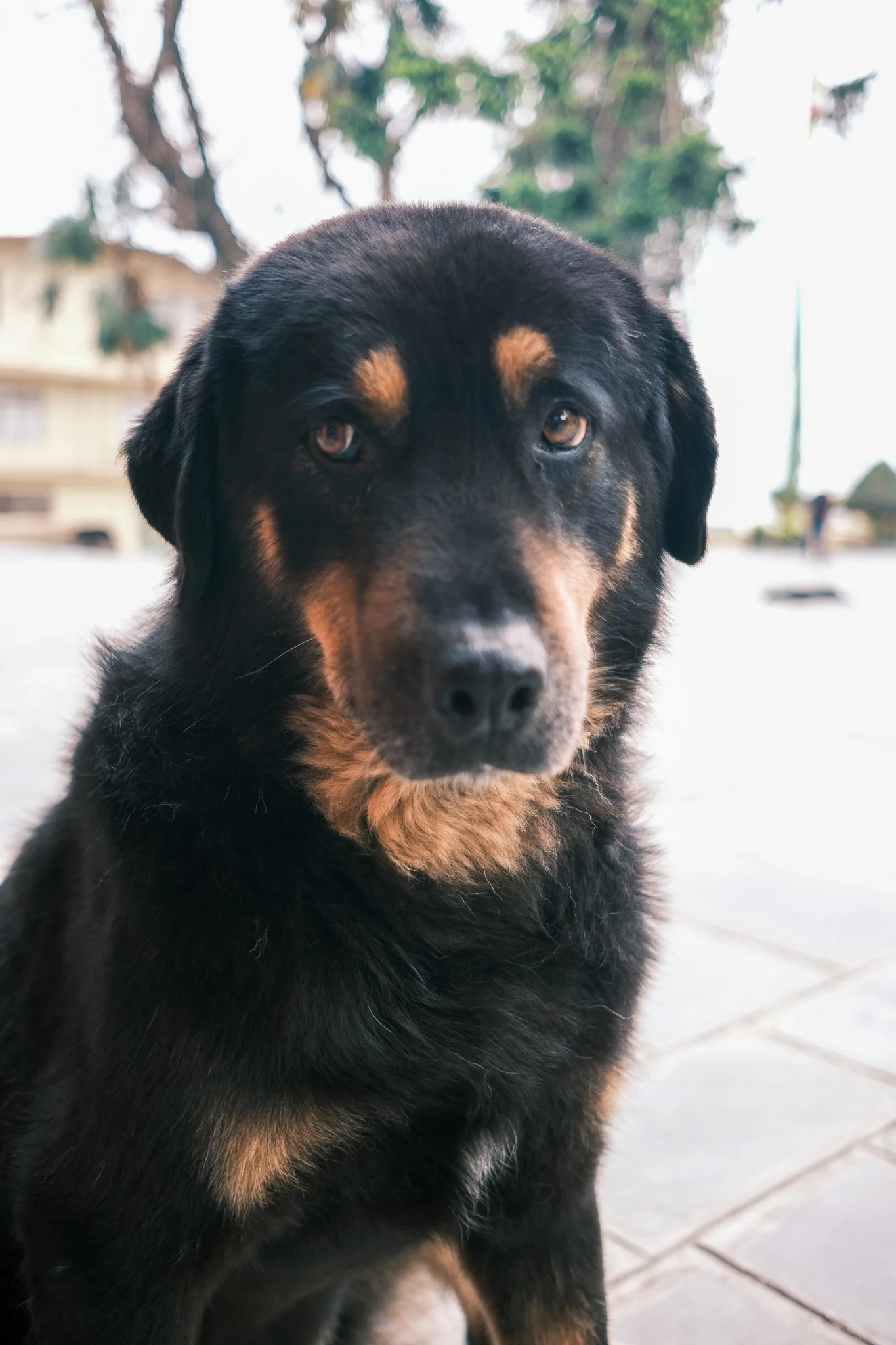
3. Monastery Grounds and Daily Life
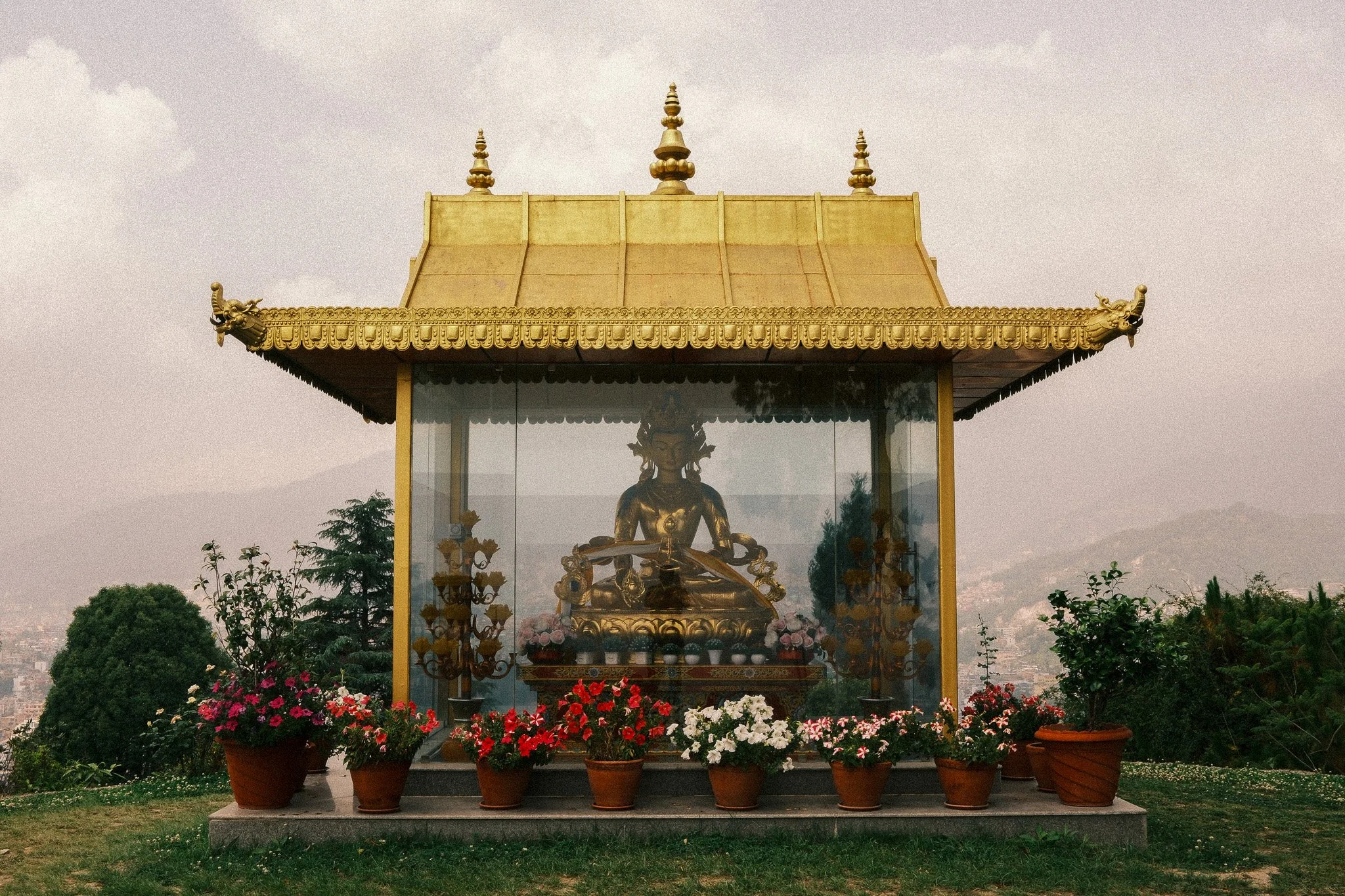
4. The Buddha Statue on the Hill
Photography Tips for Kopan Monastery
Go early. The light and atmosphere are much better. The light can either get quite harsh, or cloudy and rainy during the daytime. However it’s also worth paying attention to any itineraries and planned activities for the monks and nuns, and the guests on the days that you’re there, which may impact the photo opportunities you’ll have.
I kept my setup minimal, just the Fujifilm X-T5 and XF23mmF2, but if you are staying a while and can take your time, there’s no reason why not to bring a zoom lens for wildlife and shots down to the city, or lenses for portraits etc.
Be respectful. Some areas are not for photography (such as inside temples).
If you want to photograph people, ask first, especially the monks, having photographers around can disturb them during their activities like debates, prayers etc.
Final Thoughts
Spending a week without a camera in such a photogenic place sounds counterintuitive.
But it might be one of the most valuable things I’ve done for my photography.
The retreat wasn’t about switching off. It was about paying attention.
And when I finally picked up the camera again, that awareness carried through into how I saw and captured everything around me.
Thoughts, comments or questions?
