The Photographer's Guide to Upper Mustang
This post is intended as a detailed photographer's guide to Upper Mustang, with practical tips and recommendations based on my experience photographing the region and more than five months travelling throughout Nepal in 2026.
You'll find advice on planning your trip, permits and costs, photography gear, the best locations, photographing local communities, when to visit, and the lessons I learned along the way, alongside a selection of my favourite photographs from the journey.
This is the main guide in what will become a wider Upper Mustang photography series. I'll be publishing and linking more detailed posts about individual locations, photography experiences and practical topics, as well as more descriptive diary-style stories designed to immerse you in what it actually feels like to travel through this extraordinary region of Nepal.
-
📍 Location: Upper Mustang, Nepal
🗓️ Trip Length: 12 nights
🚙 Travel Style: Jeep-supported journey with daily walks and photography stops
📸 Best Suited To: Documentary, portrait, cultural, architectural and landscape photography
🌤️ Best Season: May (during the Tiji Festival) for the cultural experience, or June–August for fewer tourists and a quieter atmosphere. Avoid the winter months, when many locals leave the region due to the cold.
🛂 Permit Requirements: Restricted Area Permit (RAP) and Annapurna Conservation Area Permit (ACAP).
🏘️ Main Bases: Marpha, Chuksang, Dhakmar, Tsarang, Lo Manthang, Jharkot and Tatopani.
📷 Recommended Lenses: A fast portrait lens paired with a versatile zoom is an ideal combination. A telephoto lens is also worthwhile if you enjoy photographing the dramatic landscapes or the abundant wildlife found throughout the region.
🧭 Key Advice: If there's one thing I'd spend extra money on, it's an experienced local guide with excellent English and strong relationships throughout Upper Mustang. They become far more than a guide—they're your translator, cultural interpreter and bridge to the local community. Many of my favourite photographs and memories simply wouldn't have happened without that connection.
Introduction
Upper Mustang had been in my mind since I first began researching Nepal in 2024. Lo Manthang, in particular, stood out as a must-visit destination for me… a remote former kingdom shaped by Tibetan culture, high desert landscapes and centuries of religious life.
This guide is written from my perspective, as a documentary travel photographer who has aimed to observe and document the beauty, culture and people of this area.
Why Upper Mustang
Upper Mustang combines many subjects that rarely sit so closely together, even throughout Nepal. The high desert landscape is immense, but the villages are small. Monasteries and mani walls shape the architecture, while livestock, farming, trade and religious practice are still present in daily life. For you as a photographer, this creates a strong relationship between people and place.
A landscape that shows scale
The journey passes through tall, desert-like valleys cut by narrow roads. Herds of goats move along the mountainsides, and the occasional person walking alone becomes a small figure against the mountain. These scenes give the landscape scale without relying on a conventional viewpoint photograph.
Ancient Tibetan culture, part of daily life
The energy, the daily ritual and ancient Tibetan practices draw you into Upper Mustang; Kora, puja, monastery education, protective symbols, livestock movements and social life around teahouses are all actively part of life here. My strongest photographs have come from observing how these elements fit together rather than treating them as isolated attractions.
A slower photographic rhythm
Upper Mustang is suited to photographers who prefer to wander, wait and return. And that’s because the natural rhythm of life here is slower.
In July when I was there, there were very few other tourists. Streets and courtyards could be observed without rushing.
Our daily plans were often built around exploring locations multiple times in order to scout sunrise or sunset photo opportunities, and meeting people who might want to feature as models for our photoshoots.
Although I'd already spent months exploring Nepal before this expedition, Upper Mustang was the first journey I planned specifically around photography, not around climbing or trekking.
Previous trips, including the Manaslu Circuit and Langtang Valley treks, introduced me to the incredible documentary photography opportunities that exist throughout Nepal. However, those expeditions were still primarily trekking adventures, with long days of walking, covering distance and carrying a heavy pack.
Planning a photography journey
The below drop-down sections provide some advice on a couple of practicalities around permits and requirements.
-
Upper Mustang is one of the few regions in Nepal that still requires a Restricted Area Permit (RAP) in addition to the standard conservation permit. While the permit system has changed in recent years, obtaining the necessary paperwork is straightforward when travelling through a registered trekking agency, with most companies arranging everything on your behalf before departure.
-
The Restricted Area Permit is required for all foreign visitors entering Upper Mustang.
Foreign nationals:US$50 per person, per day
SAARC nationals:US$25 per person, per day
One of the biggest recent changes is that the old US$500 flat fee for the first 10 days has been removed. Instead, the permit is now charged on a pay-per-day basis, meaning you only pay for the number of days you actually spend inside the restricted area. This makes shorter itineraries significantly more affordable than they were previously.
-
As the route into Upper Mustang passes through the Annapurna Conservation Area, an ACAP permit is also required.
Foreign nationals: NPR 3,000
SAARC nationals: NPR 1,000
The permit contributes towards the conservation and management of the Annapurna region and is required regardless of how long you spend inside Upper Mustang.
-
A rushed itinerary would miss much of what makes the region photographically interesting. The best experiences came from having time to walk in the mornings and evenings, revisit locations, accept invitations for tea and wait for daily life to unfold. Lo Manthang alone deserves at least two or three nights, and longer is better for anyone prioritising portrait and documentary work.
If you have the time and budget, book a 12 day tour, and aim to spend a couple of nights around Lo Manthang.
-
My journey was primarily jeep-supported, with walking blocks and day trips built around photography. That approach made it possible to carry camera equipment, reach several villages and still spend time on foot.
It is important, however, not to let the vehicle dictate the pace. Ask for time to walk into villages, stop for changing light and make early or late excursions away from the main road.
-
July had dry, warm conditions in Lo Manthang, blue skies, intermittent cloud and a constant breeze outside the town walls. The walls blocked much of the wind, although occasional gusts lifted dust through the streets. Elsewhere on the route, rain and cloud created softer conditions and changed the atmosphere of the valleys and monasteries.
-
If you are going teahouse-to-teahouse, then most of those have good wifi and charging. There is no shortage of teahouses around each village as this is a popular tourist route especially around Tiji Festival in May.
My favourite accommodation was the Mandala Guesthouse in Lo Manthang.
Photography Kit
Upper Mustang offers portraits, interiors, street scenes, long valley views and rapidly changing situations. The best kit is capable but not so heavy that it discourages walking.
-
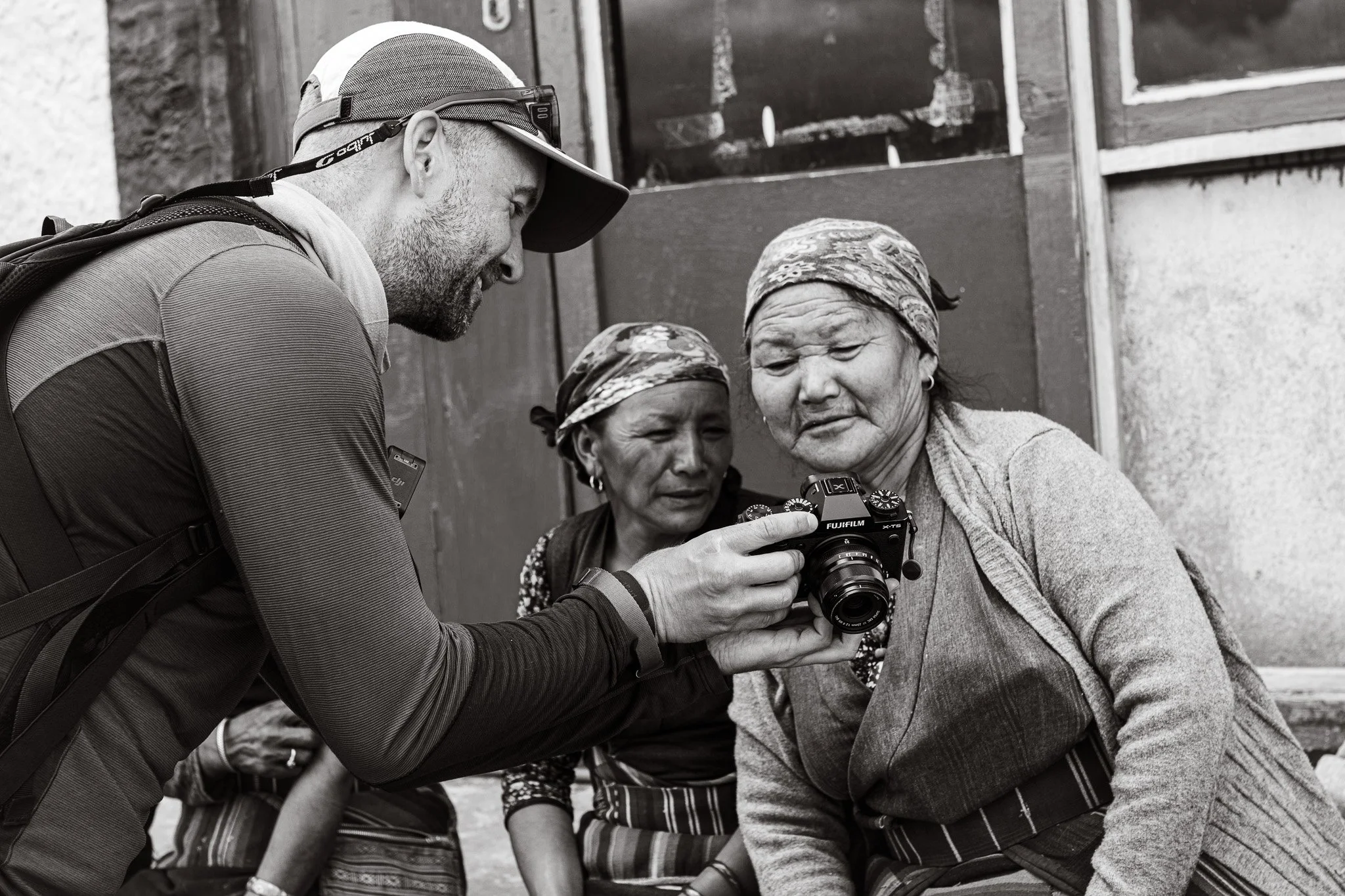
Fujifilm X-T5: My primary camera throughout the expedition.
XF 33mm F1.4: Main lens for portraits, monasteries and low-light scenes.
XF 16–80mm F4: Everyday workhorse for landscapes, villages and travel.
XF 23mm F2: Packed as a lightweight street lens but used very little.
DJI Osmo Pocket 4: Behind-the-scenes video and travel footage.
WANDRD PRVKE Camera Bag: Comfortable for long days in the jeep and walking around villages.
Godox Lightweight Reflector: Filling harsh backlight during environmental portraits.
Godox V1 Flash: Portrait lighting when natural light wasn't enough.
3 × 256 GB SD Cards: Enough storage for the entire trip. I didn’t back up my files during this journey, but next time I’d bring a portable SSD and keep a second copy of the photographs.
-
I quickly realised that this trip suited a different style of photography than many of my previous travels. Rather than concentrating on wider environmental street scenes, I found myself drawn to photographing people and documenting everyday life in the villages. As a result, the XF 33mm F1.4 spent most of the expedition attached to my camera. It gave me a natural perspective for portraits, excellent sharpness and enough light-gathering ability to work comfortably inside monasteries and in the narrow streets of villages.
Whenever we were travelling between locations, I almost always switched to the XF 16–80mm. The constantly changing scenery meant I could move from wide Himalayan landscapes to roadside moments and distant details without changing lenses. On a journey where the jeep rarely stopped for long, that flexibility was invaluable.
One piece of equipment I expected to use far more was the XF 23mm F2. In practice, it stayed in my bag for most of the trip. Upper Mustang naturally encouraged me towards either intimate portraits or expansive landscapes, leaving very few occasions where a moderate wide-angle prime felt like the best choice.
-
A versatile zoom: A high-quality standard zoom will probably spend more time on your camera than anything else. It's ideal for photographing the ever-changing landscapes, villages, monasteries and daily life without constantly swapping lenses.
A fast portrait lens: If you're interested in photographing local people, bring a sharp prime lens with a wide aperture. Whether it's a 35mm, 50mm or 85mm equivalent depends on your style, but you'll likely use it far more than you expect.
A telephoto: If landscape photography or wildlife is your focus, I'd strongly consider bringing a telephoto lens. The compressed mountain layers, blue sheep, birds of prey and distant details all lend themselves well to longer focal lengths.
Camera cleaning equipment (Essential): This is one item I wouldn't leave behind. Upper Mustang is dry, dusty and often extremely windy, especially around the jeep tracks. A rocket blower, lens cloths and a small cleaning kit quickly became essential for keeping my camera in good condition.
Reflector and/ or flash: I used a lightweight reflector several times when photographing people in strong backlit conditions. Some of my favourite portraits were made with the sun directly behind the subject, while the reflector bounced soft light back onto their face. A small flash can achieve a similar result and is worth carrying if portrait photography is one of your priorities.
-
I used my 33mm F1.4 far more than I expected.
The 23mm F2 rarely left the bag.
A versatile zoom was important during jeep journeys.
Dust was a much bigger challenge than battery life.
One of the biggest lessons from this trip was how much my shooting style has evolved. I found myself constantly switching between intimate portraits and spontaneous street scenes, often within the same village. While the XF 33mm F1.4 became my favourite lens for portraits thanks to its exceptional sharpness and beautiful rendering, I occasionally missed the wider perspective of a 23mm.
If I returned, I'd seriously consider carrying the XF 23mm F1.4 instead. It would give me the wider field of view I naturally enjoy for documentary photography while retaining the sharpness and low-light performance that made the 33mm such a pleasure to use.
Location Guides
The following location chapters are organised for photographers rather than as a strict day-by-day diary. Each section includes atmosphere, subjects and practical advice.
Locations that are covered in this section:
Marpha village, Chuksang, Dhakmar, Tsarang, Luri Gompa, Lo Manthang, Choser, Chuksang & Tetang, Muktinath, Lubra.
Marpha Village
Marpha is usually the first overnight stop on the journey north, but it already feels very different from the greener regions of Nepal further south. After hours following the Kali Gandaki River through monsoon forests, muddy mountain roads and towering valleys, arriving in its ancient cobbled streets feels like really arriving in Mustang.
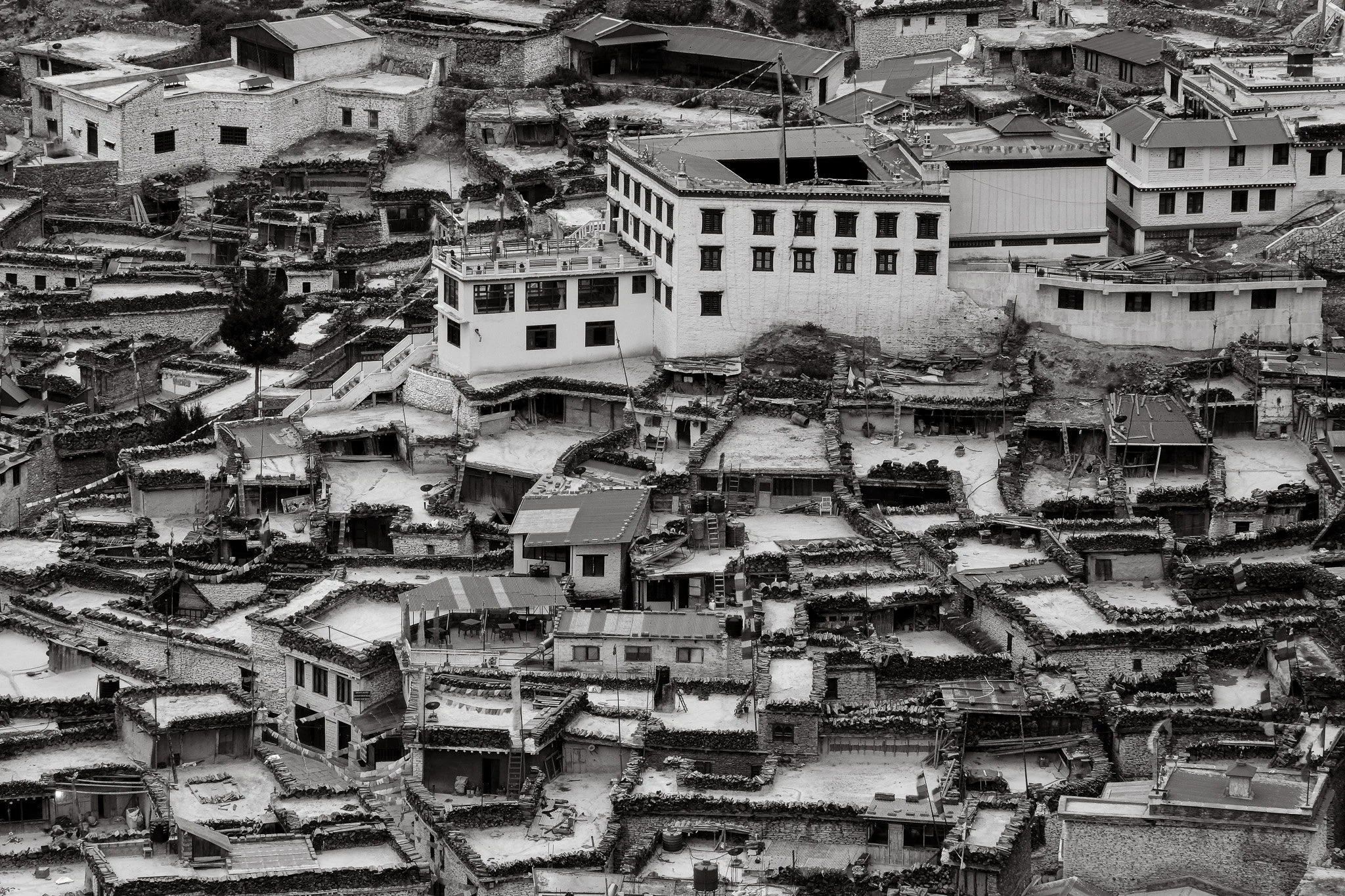
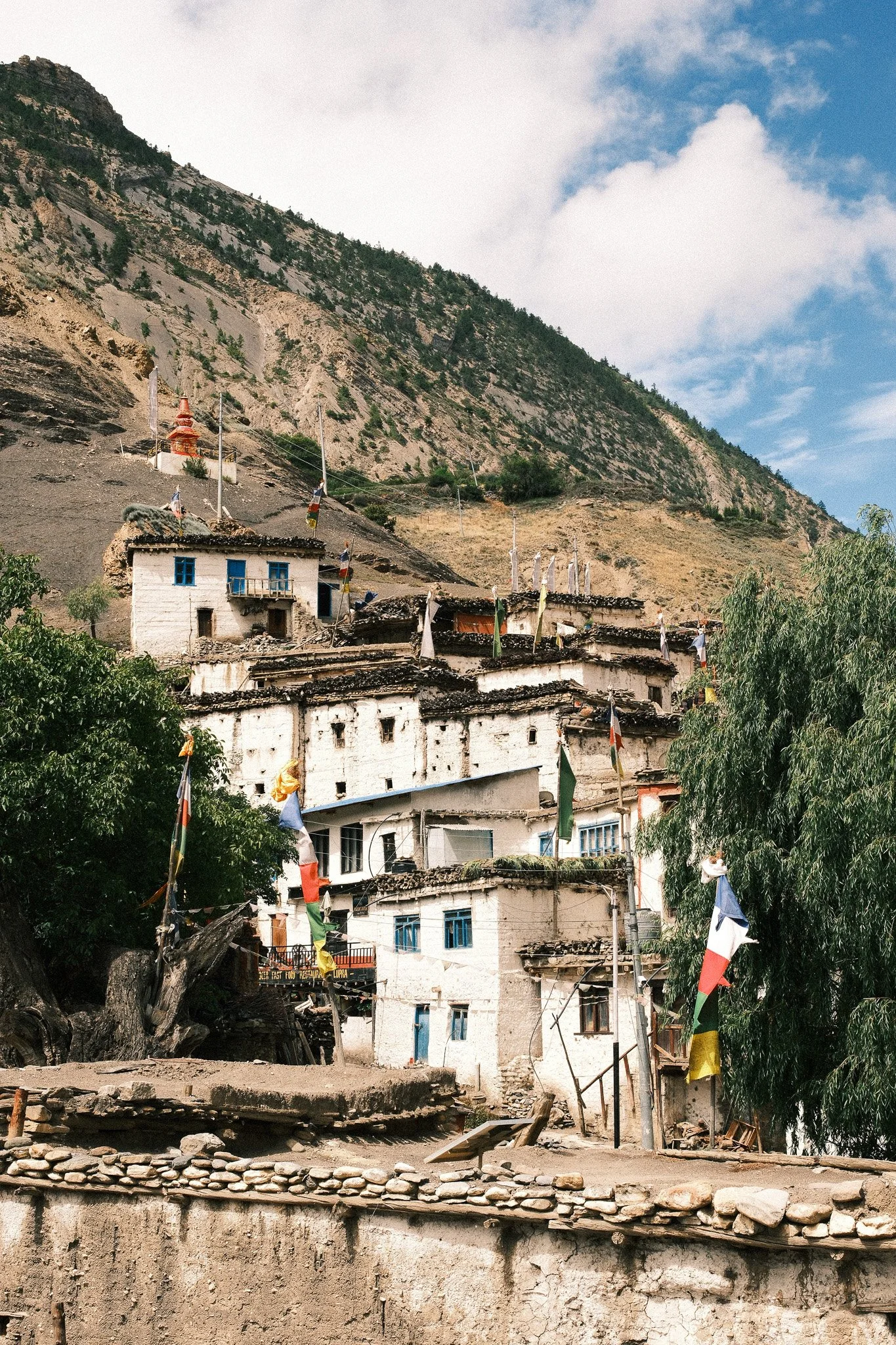
Whitewashed houses, traditional Tibetan architecture and narrow alleyways caught my attention. Livestock wandered through the streets, children played outside their homes, colourful prayer flags hung overhead and the surrounding mountains seemed to rise directly behind the village. It was a positive shock to the system and the first real indication that this journey would be different to my previous trips in Nepal.
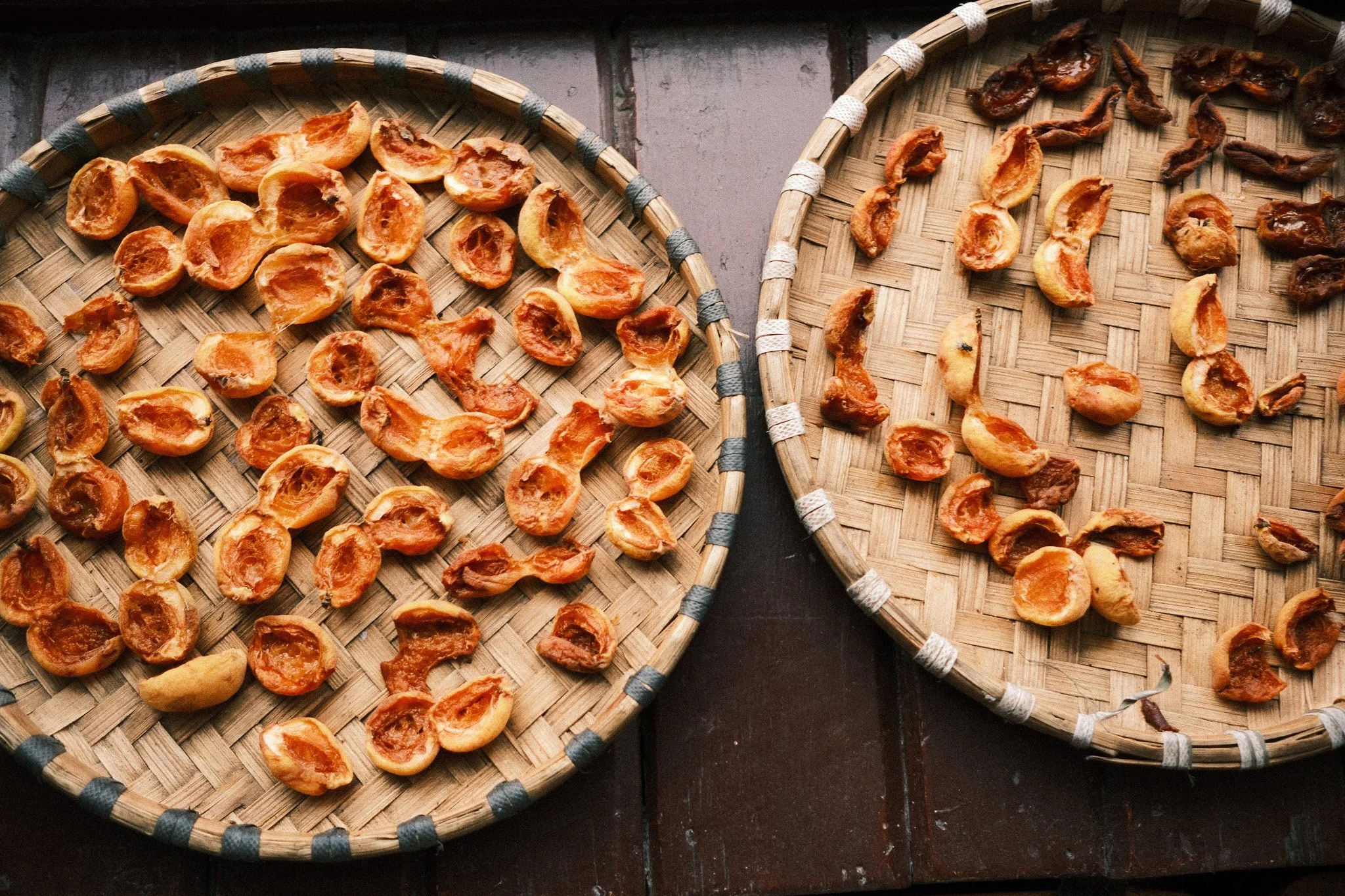
Marpha is also known for its apples. Orchards surround the village, while local shops sell everything from fresh apples to cider and brandy. During my visit, trays of apples could be seen drying outside teahouses and on rooftops, always in view wherever I looked.
From a photographer's perspective, the narrow alleyways were the highlight. The whitewashed walls reflected soft, even light throughout much of the day, creating beautiful conditions for portraits and street photography. Some of my favourite images from Marpha came from wandering with my camera and searching for candid, fleeting moments.
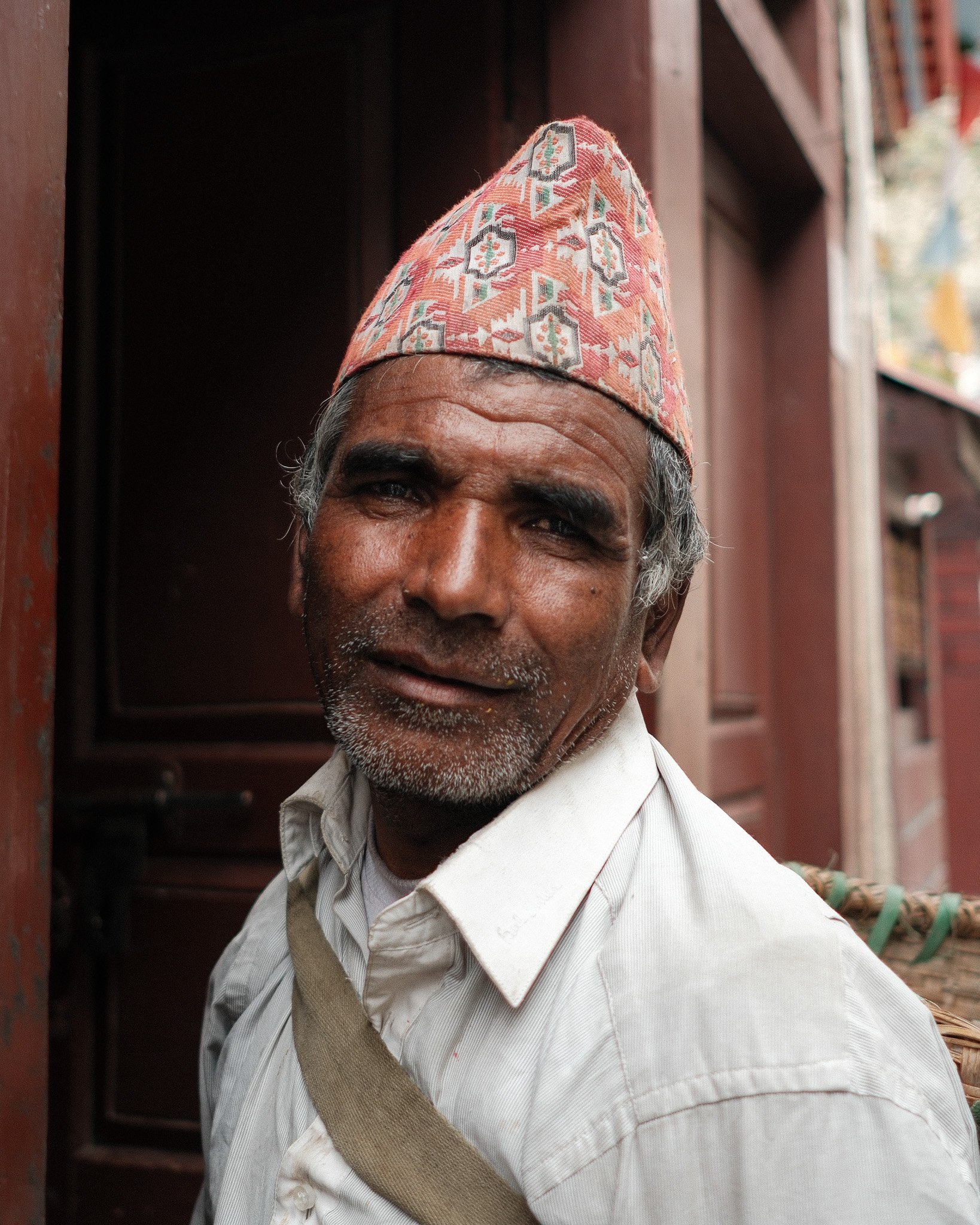
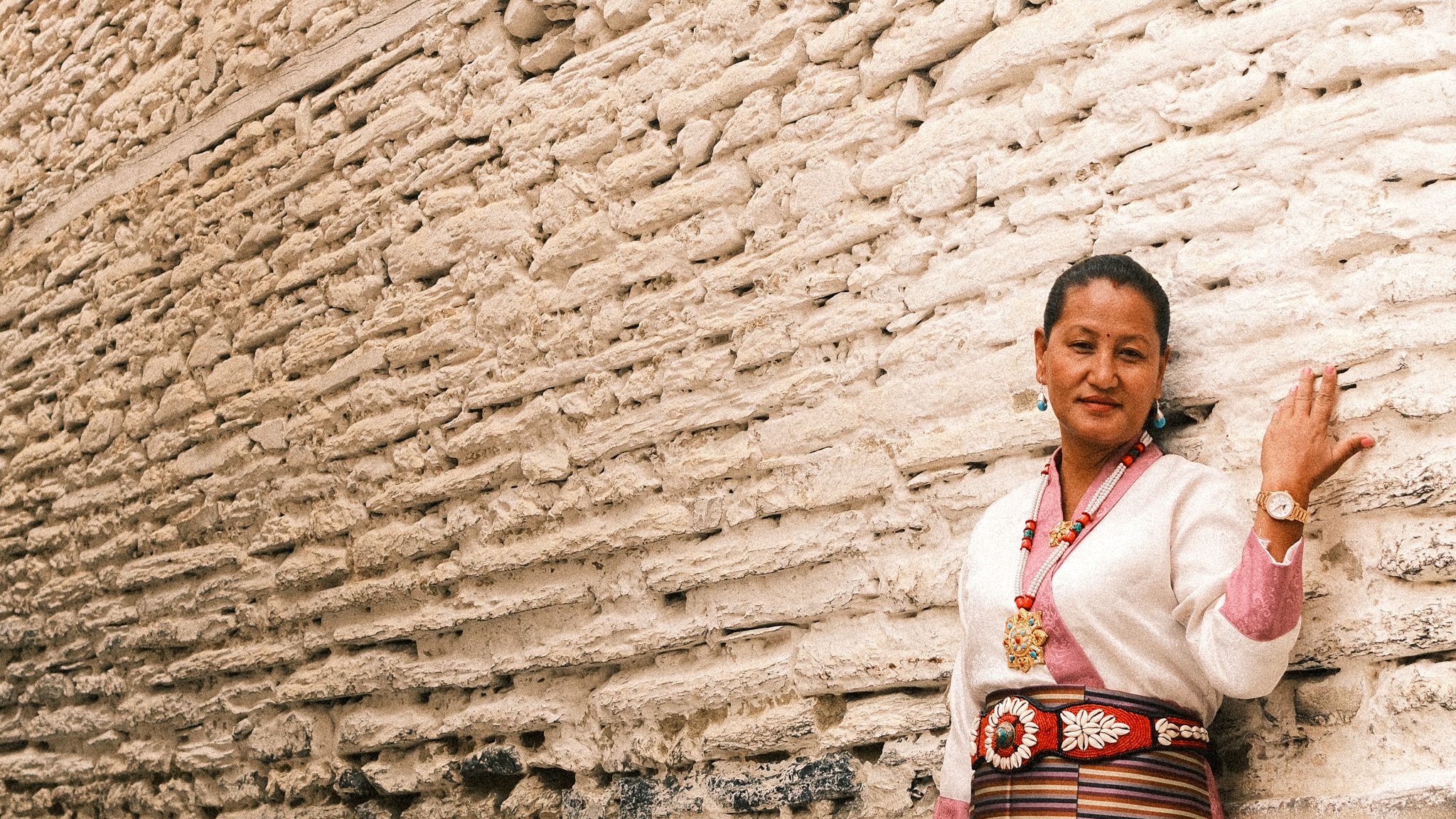
📸 My favourite photographs: Portraits against the whitewashed walls, framed by prayer flags and traditional Tibetan architecture.
Chuksang
Ancient whitewashed houses sat beneath towering red cliffs, with small monasteries, cave dwellings and quiet village streets offering opportunities to explore with a camera.
One of the highlights was visiting a small hilltop gompa, where interior details, butter lamps and murals that are believed to be around a thousand years old contrasted with the surprisingly modern floor and seating inside. These monasteries are still living places of worship rather than simply historical landmarks.
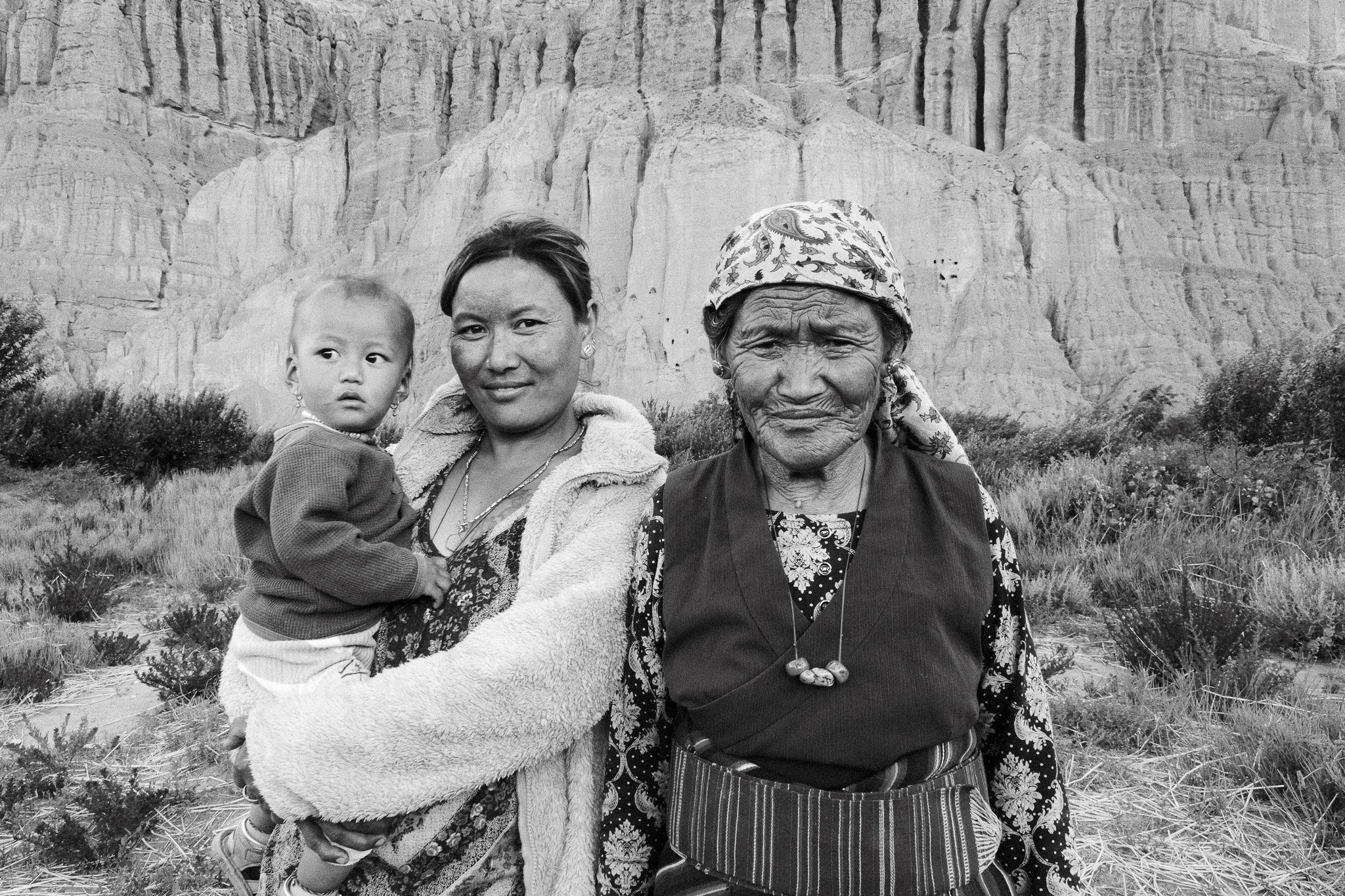
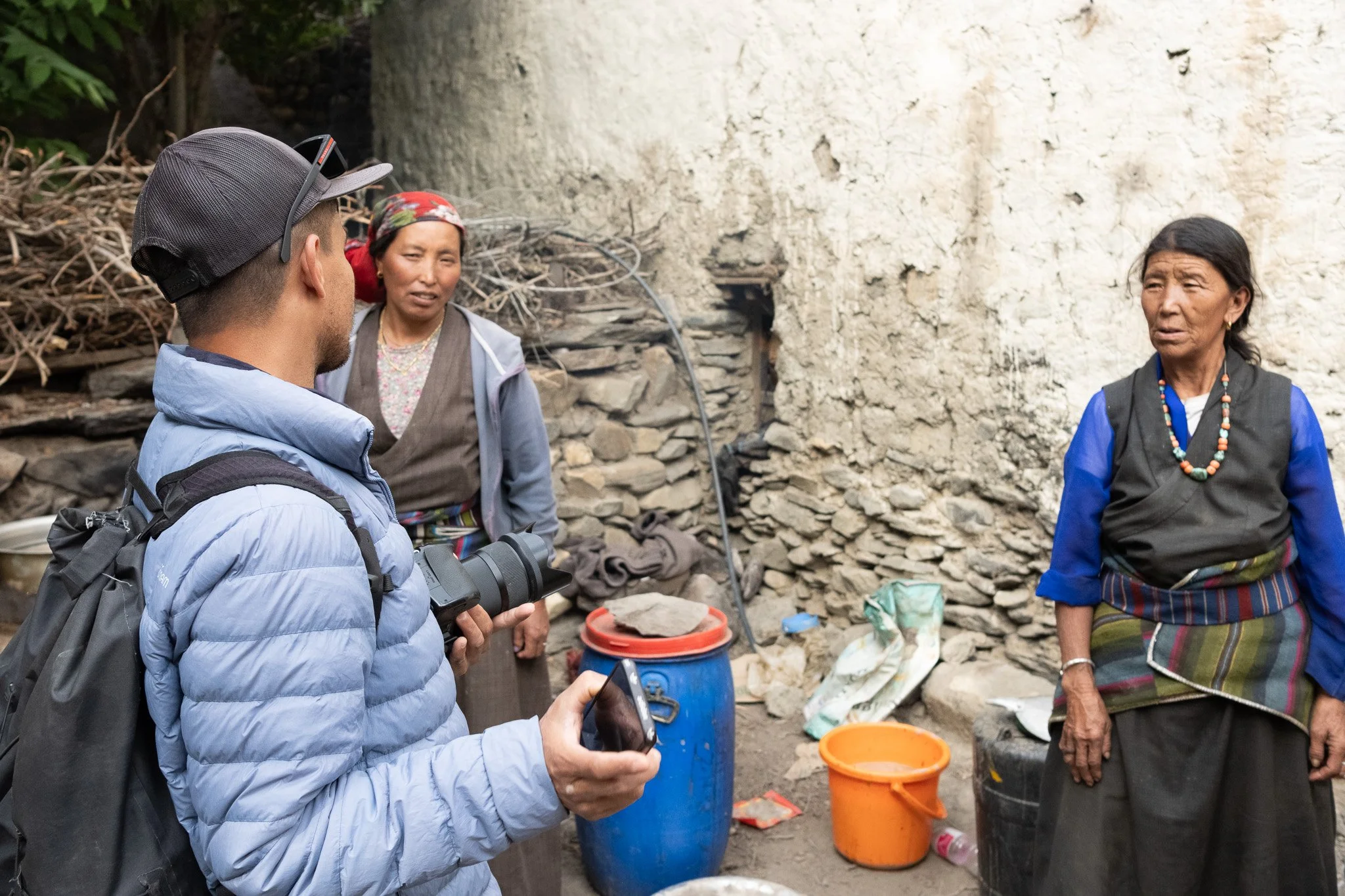
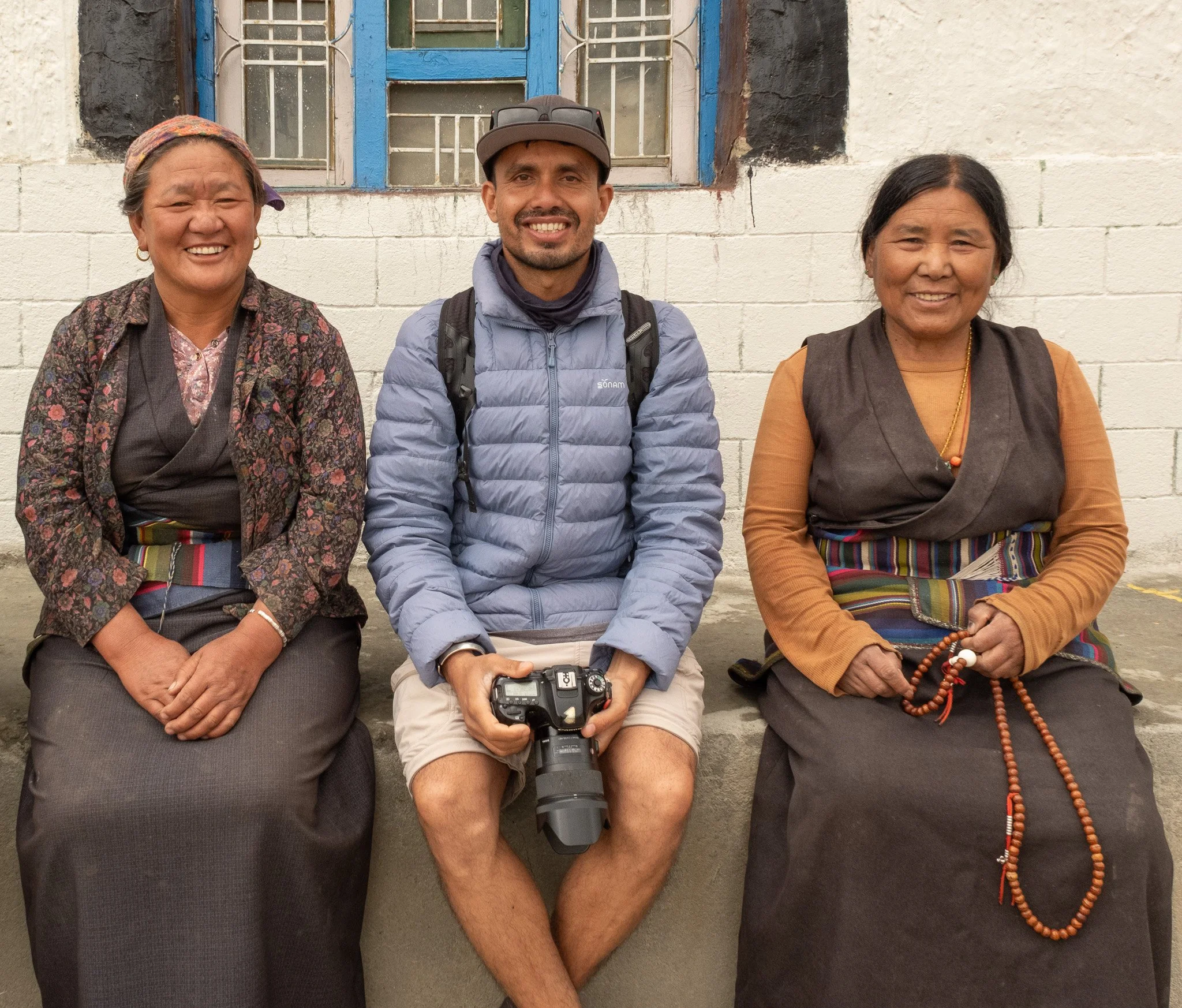
Back in the village, Udaya and Temba struck up a conversation with three local women from the same family. Three generations stood together beneath the dramatic red cliffs while I made a series of portraits that became some of my favourite photographs from the expedition. This reinforced how important local connections and patience are when photographing people respectfully.
The village itself was equally rewarding to wander. Narrow lanes, whitewashed walls and friendly residents created plenty of opportunities for documentary photography.
📸 My favourite photographs: Three generations beneath the red cliffs, along with intimate portraits made while wandering the quiet village streets.
Dhakmar
Dhakmar is one of the most visually striking villages in Upper Mustang. Towering red cliffs rise vertically behind the village, creating a backdrop that changes colour throughout the day as the light moves across the rock.
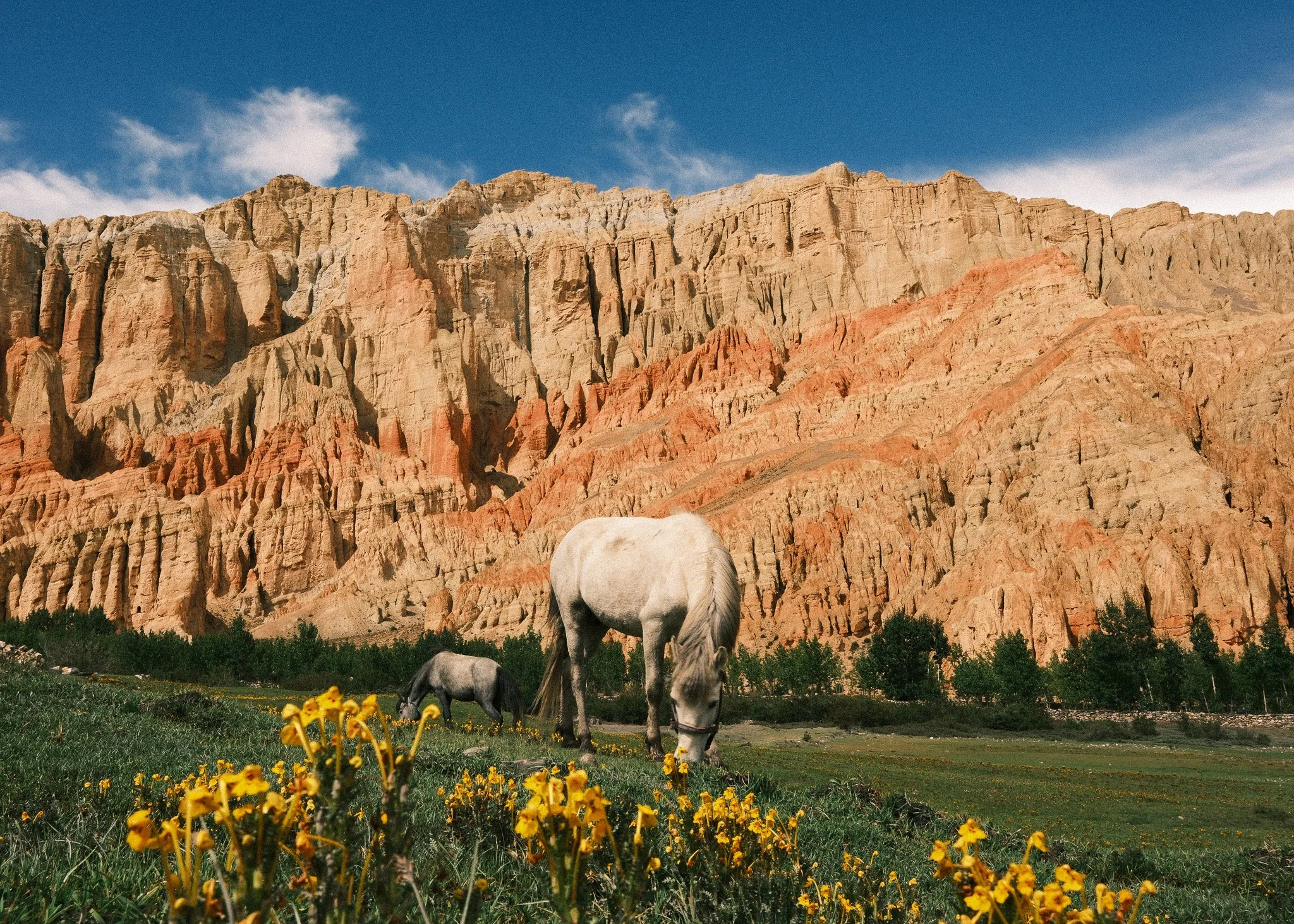
On the way, we stopped at Chungsi Cave, a sacred cave built around a natural spring where a lama still lives today. Butter lamps, prayer flags and intricate Buddhist decorations filled the cave, offering a fascinating contrast between the raw natural rock and the carefully maintained place of worship.
Back in Dhakmar, I spent most of the afternoon wandering the village with my camera. The red cliffs provided a dramatic backdrop for portraits, while everyday life unfolded quietly in front of them. Some of my favourite images from the village included an elderly man resting outside his home, a group of local women chatting together and an energetic baby who seemed fascinated by the camera. Earlier in the day, we had also photographed a woman working in a nearby teahouse, dressed in traditional clothing.
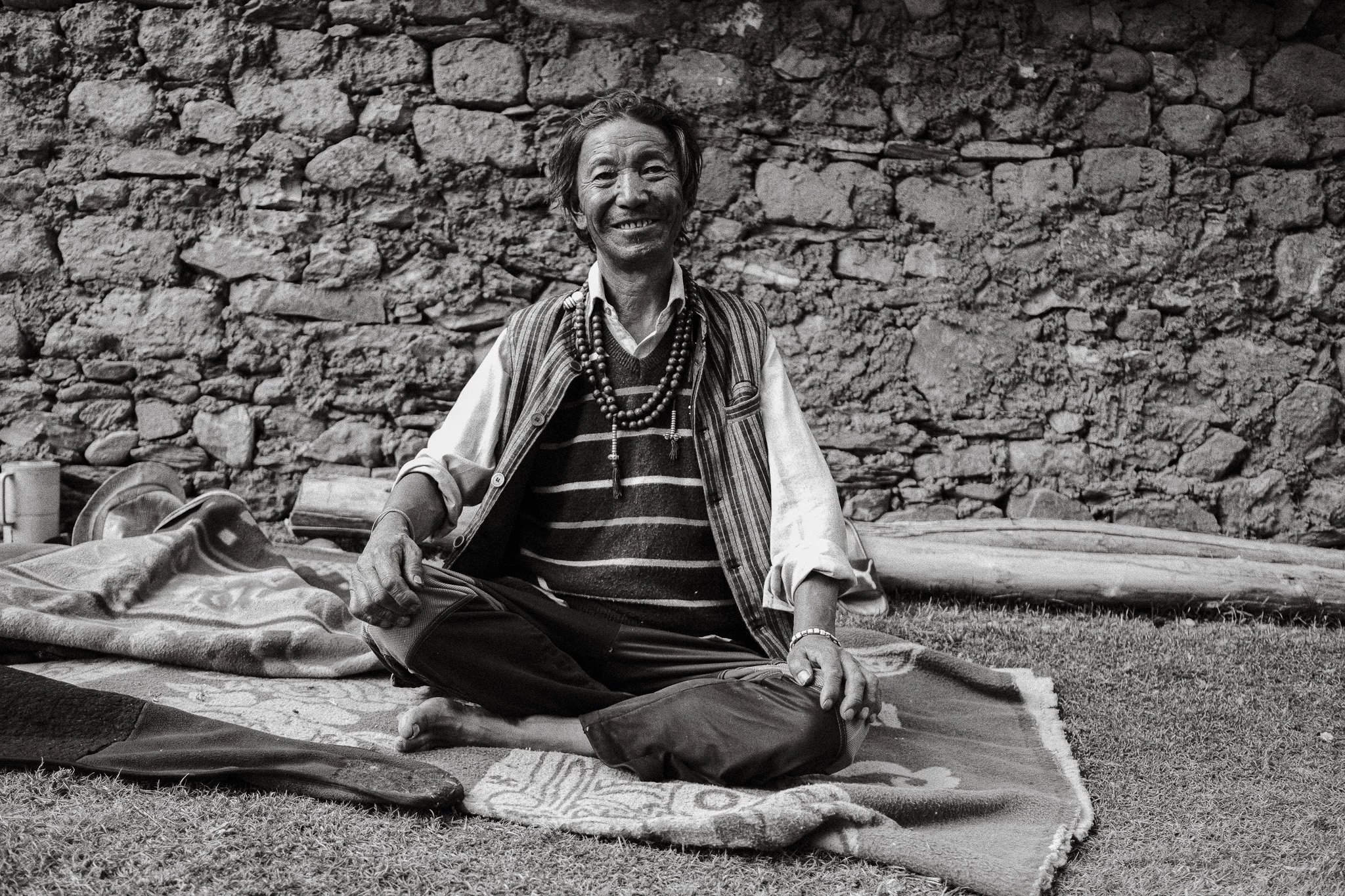
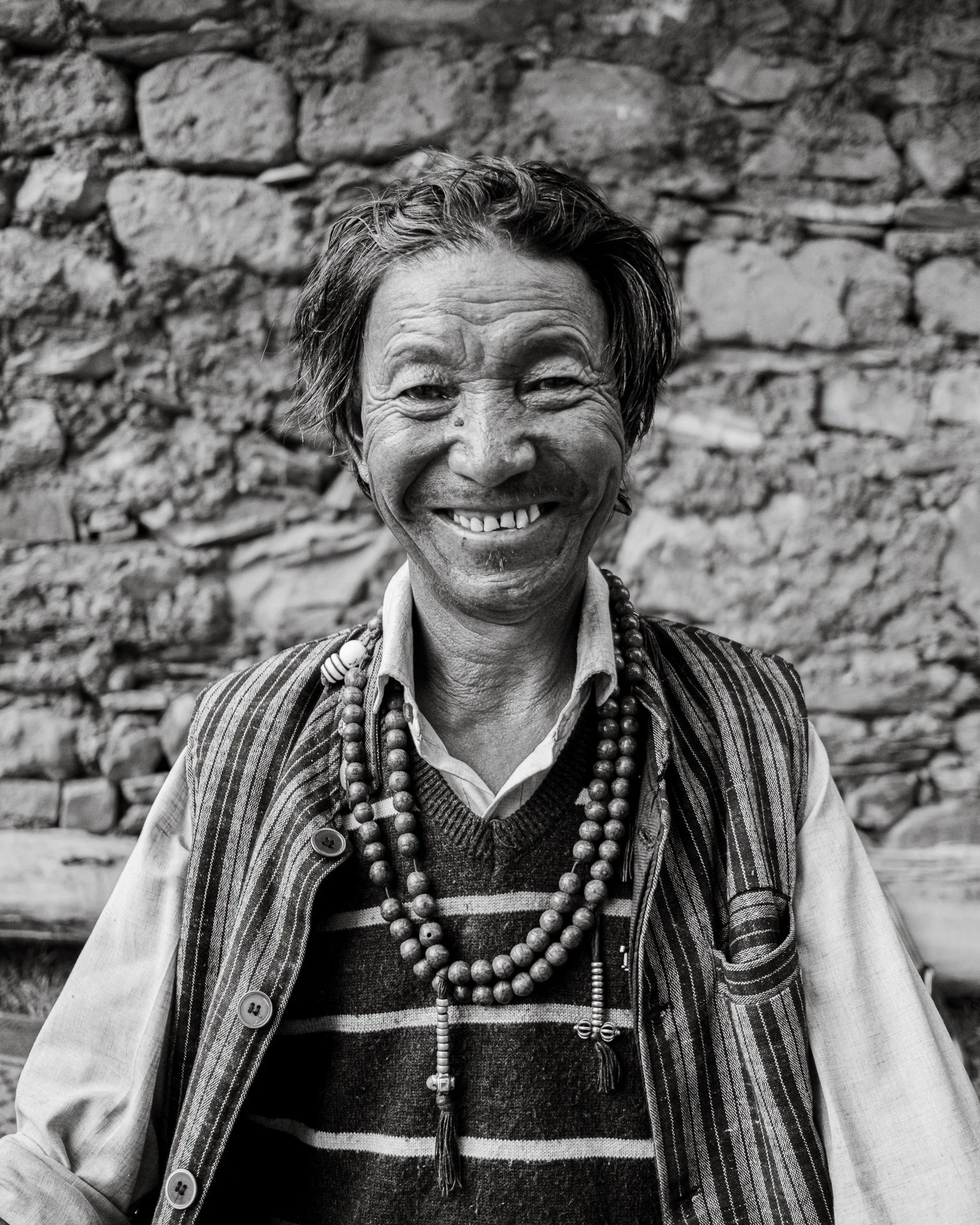
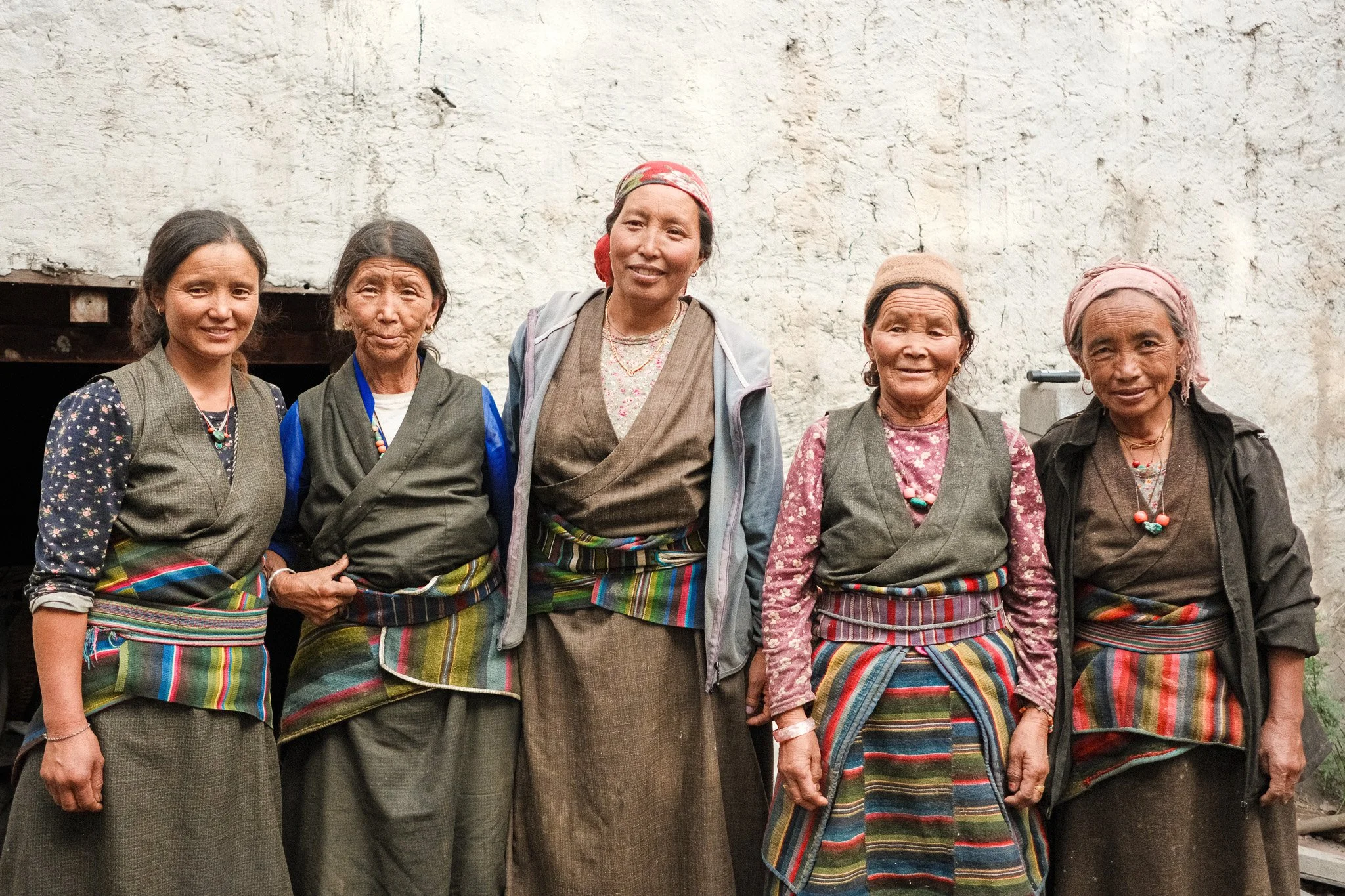
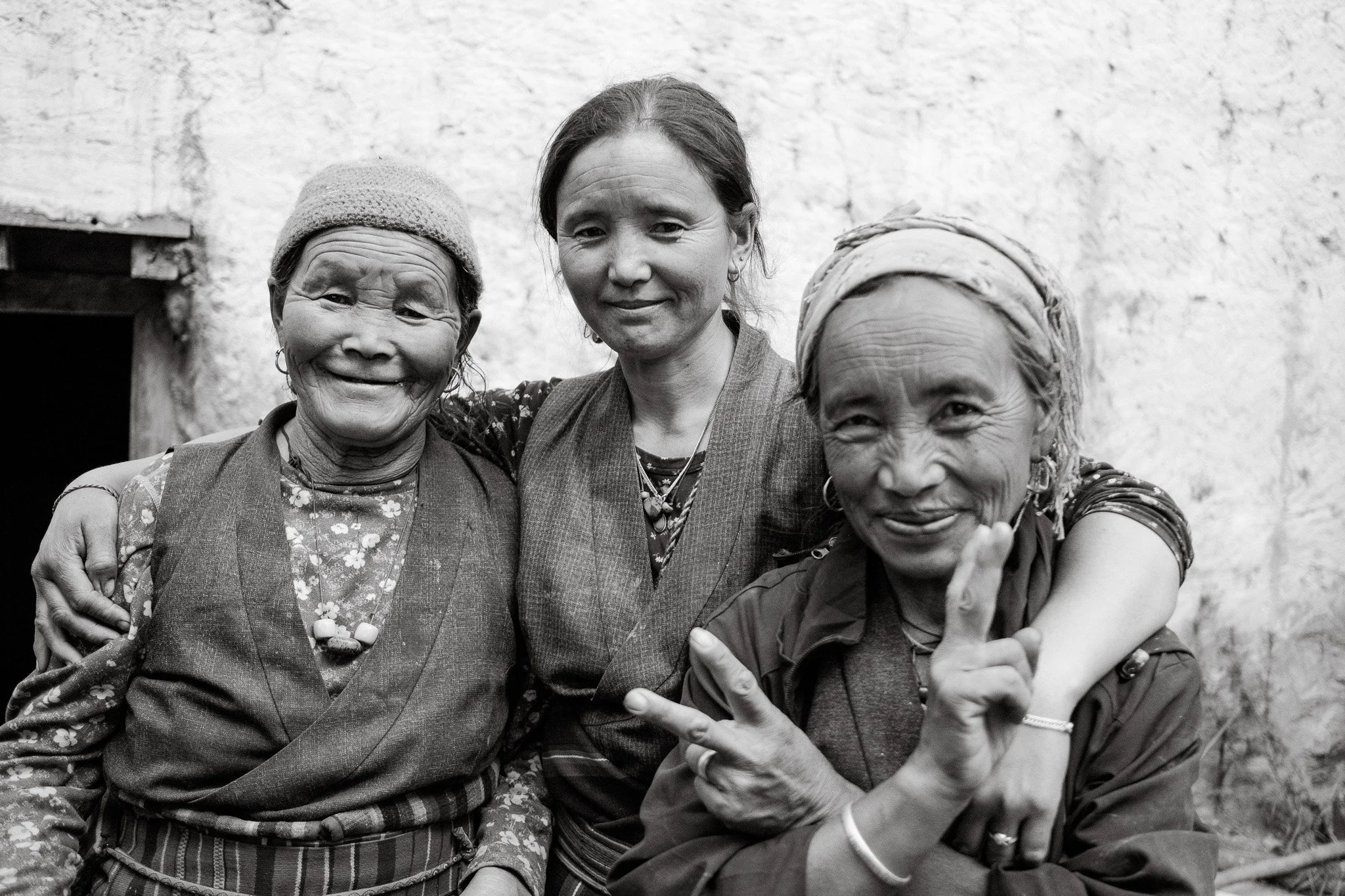
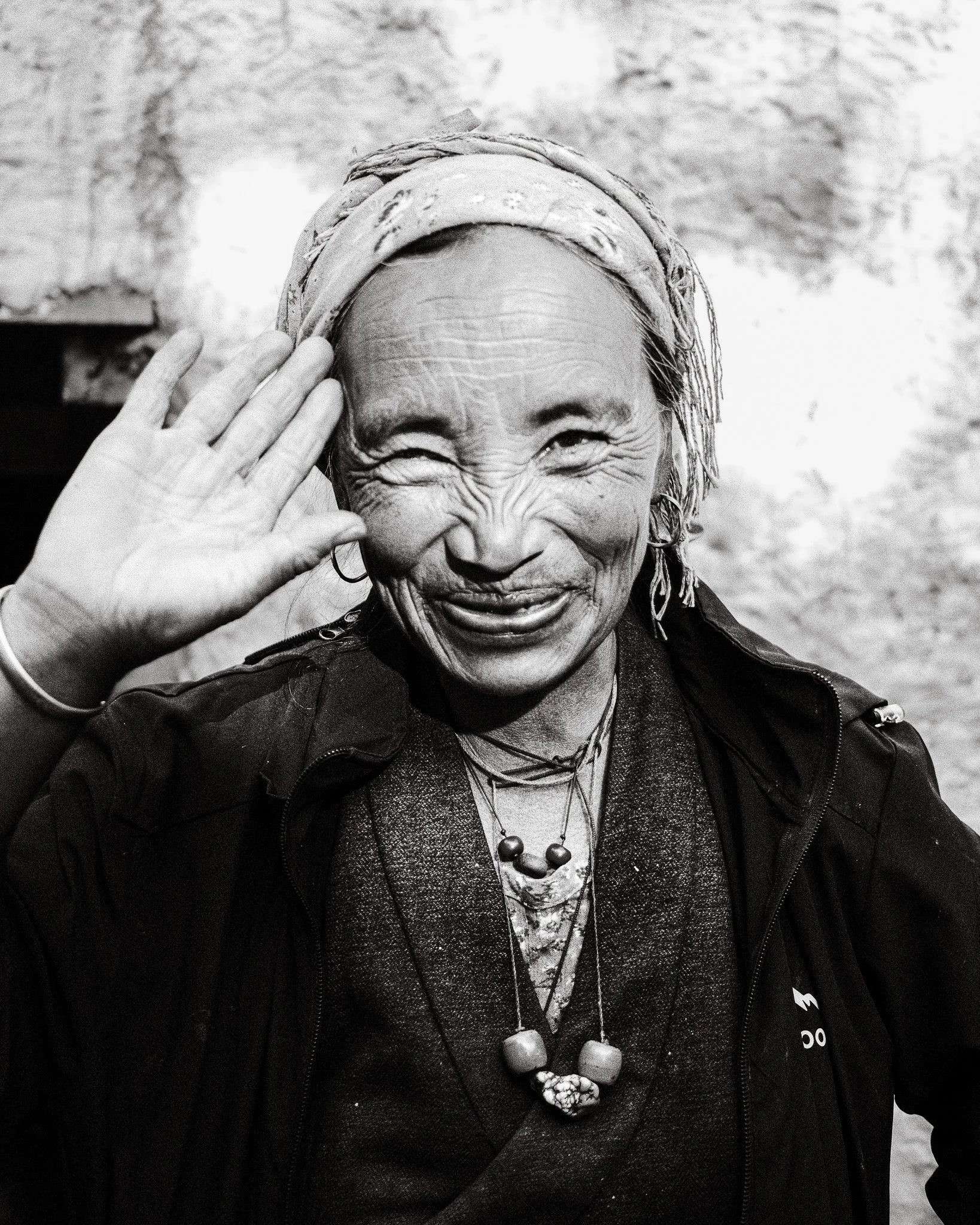
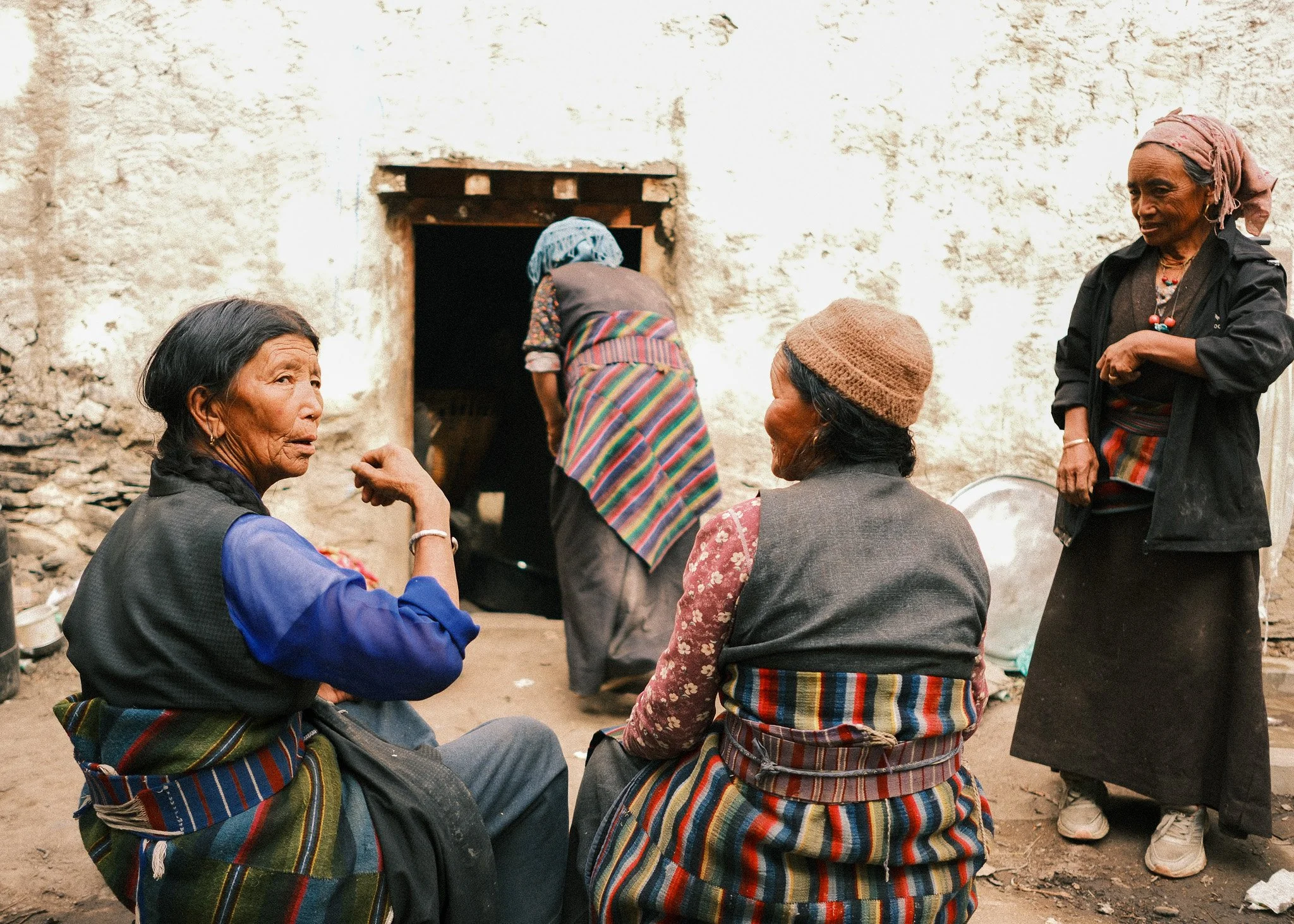
Dhakmar became a place to slow down completely. The quietness of this village encouraged reflection in a way that's difficult to find in everyday life, and that atmosphere became just as memorable as the photographs themselves.
Tsarang
If Lo Manthang is the cultural heart of Upper Mustang, Tsarang felt like its community heart. Home to more than a hundred traditional houses, an ancient monastery and the former royal palace, it offered some of the most rewarding documentary photography of the entire expedition.
On the way to the village, we visited Ghar Gompa, one of the oldest monasteries associated with Tibetan Buddhism. After sharing tea with locals upstairs and washing with holy water brought into the room, it was easy to understand why this remains such an important spiritual place today.
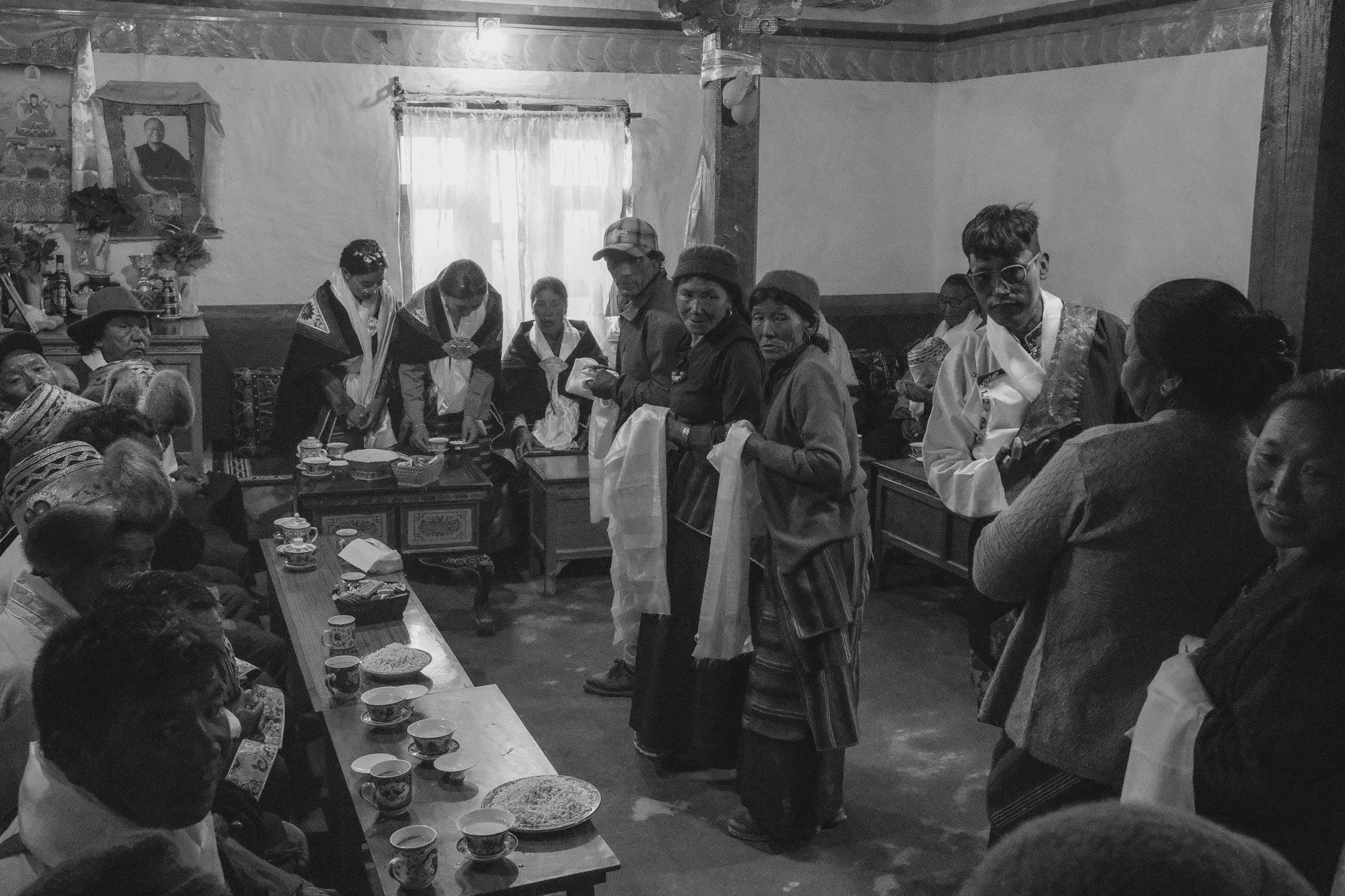
Later that afternoon, I wandered through Tsarang with my camera as monks moved around the monastery and villagers gathered outside in the warm sunshine. By chance, preparations were underway for a wedding in a neighbouring village, and instead of hurrying on, we stayed. Families arrived in traditional dress, conversations unfolded naturally and, thanks to Udaya introducing me to the local community, I was able to photograph portraits, candid moments and everyday interactions that would never have happened as a passing visitor.
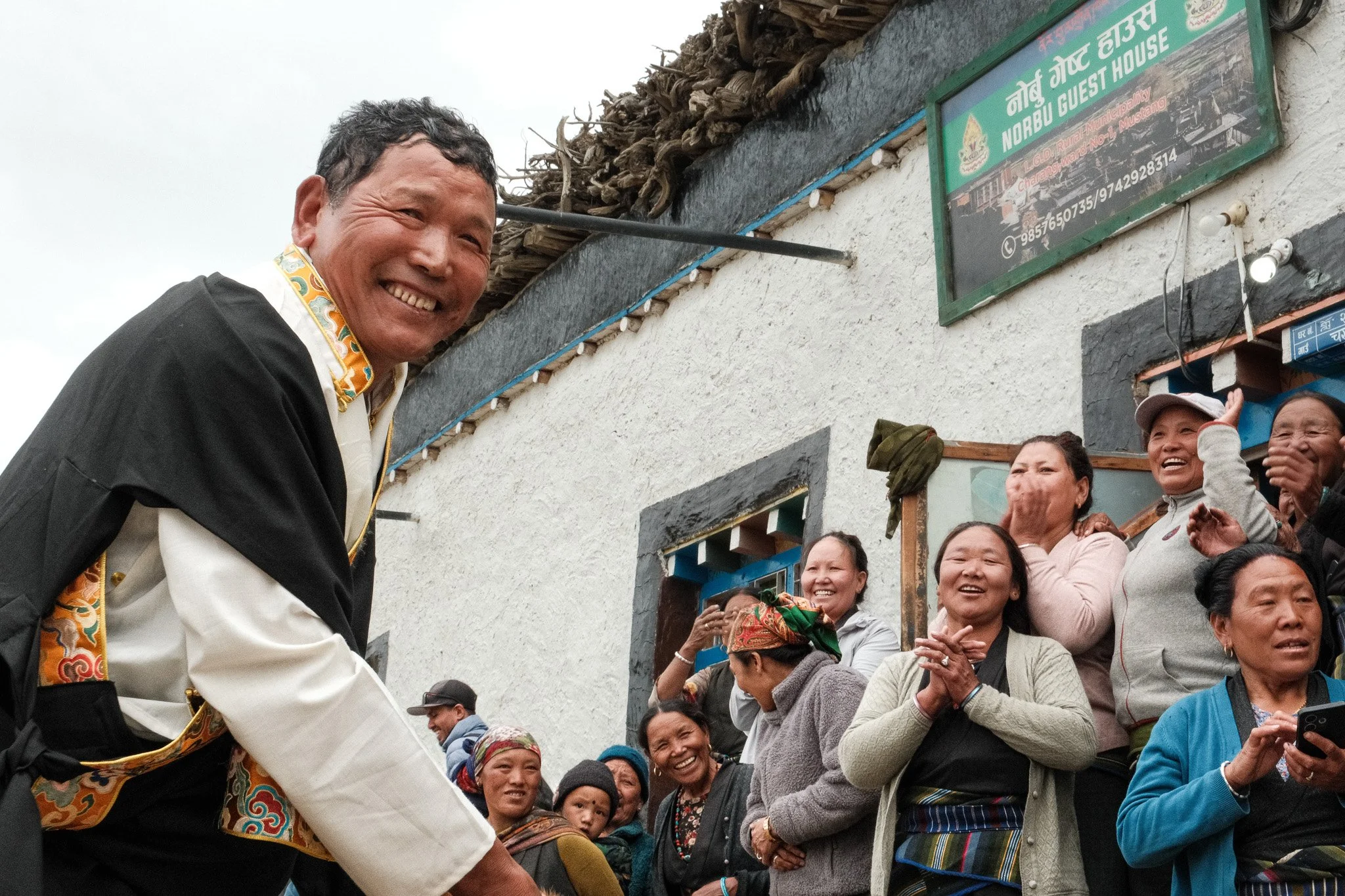
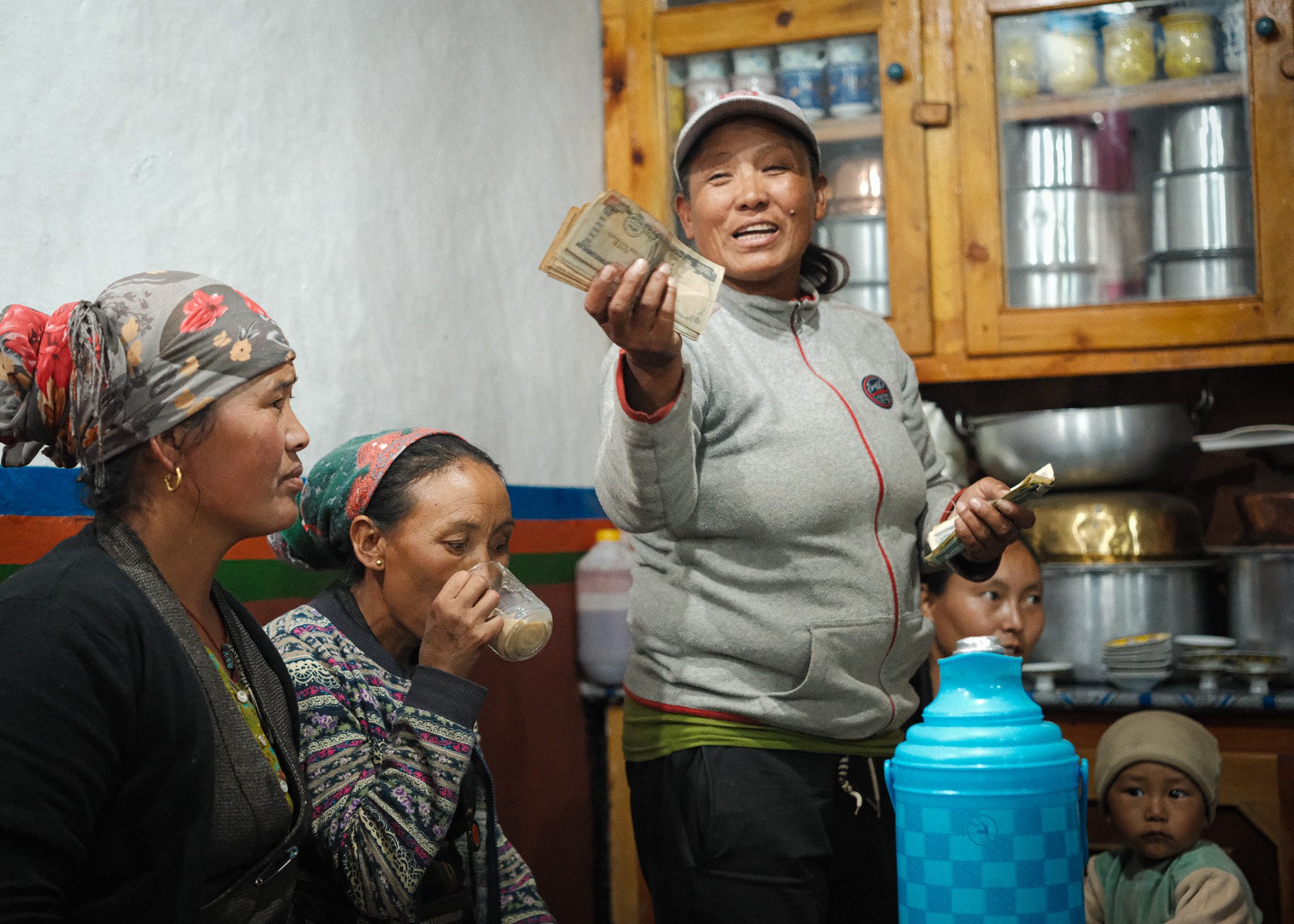
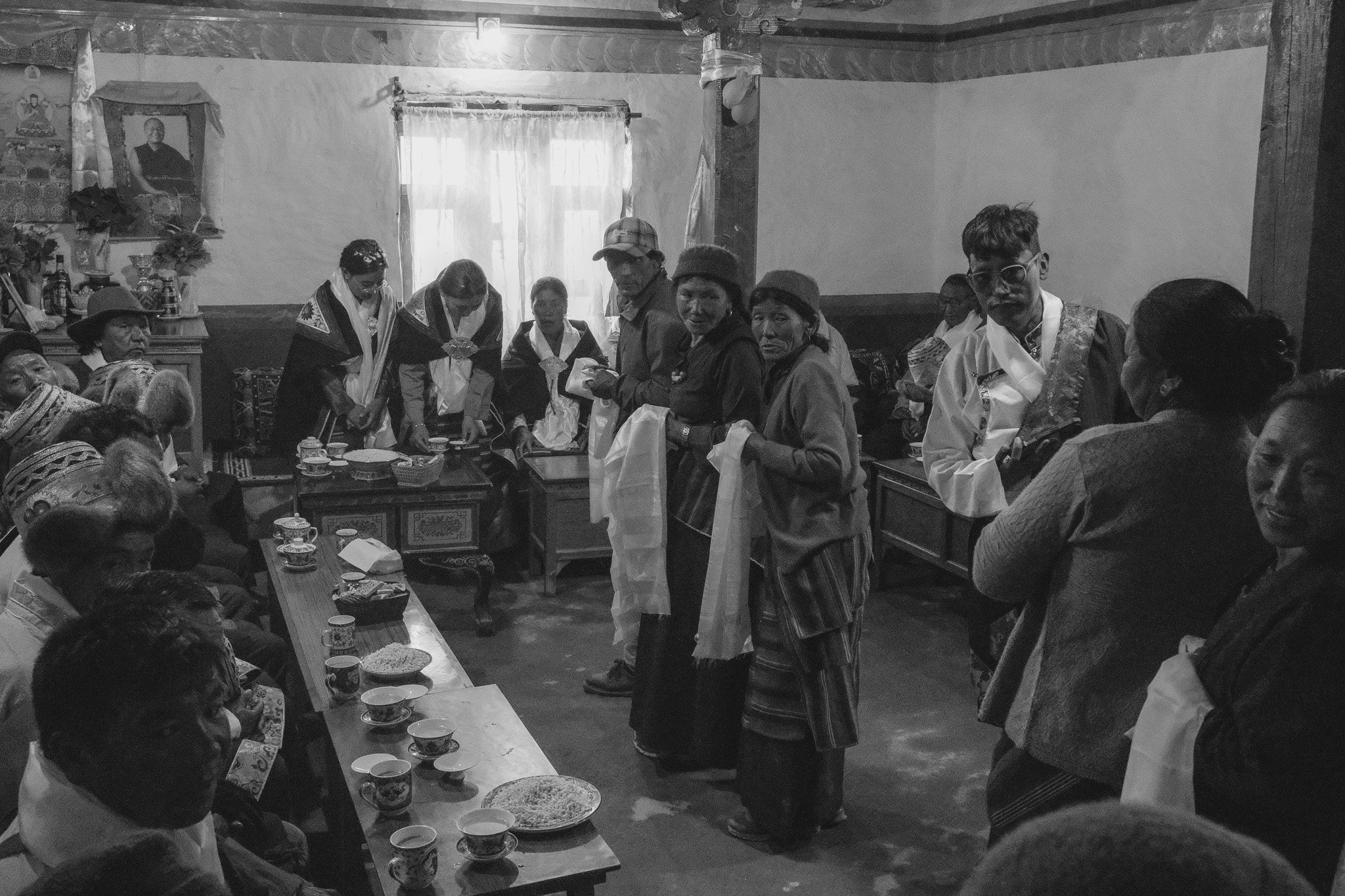
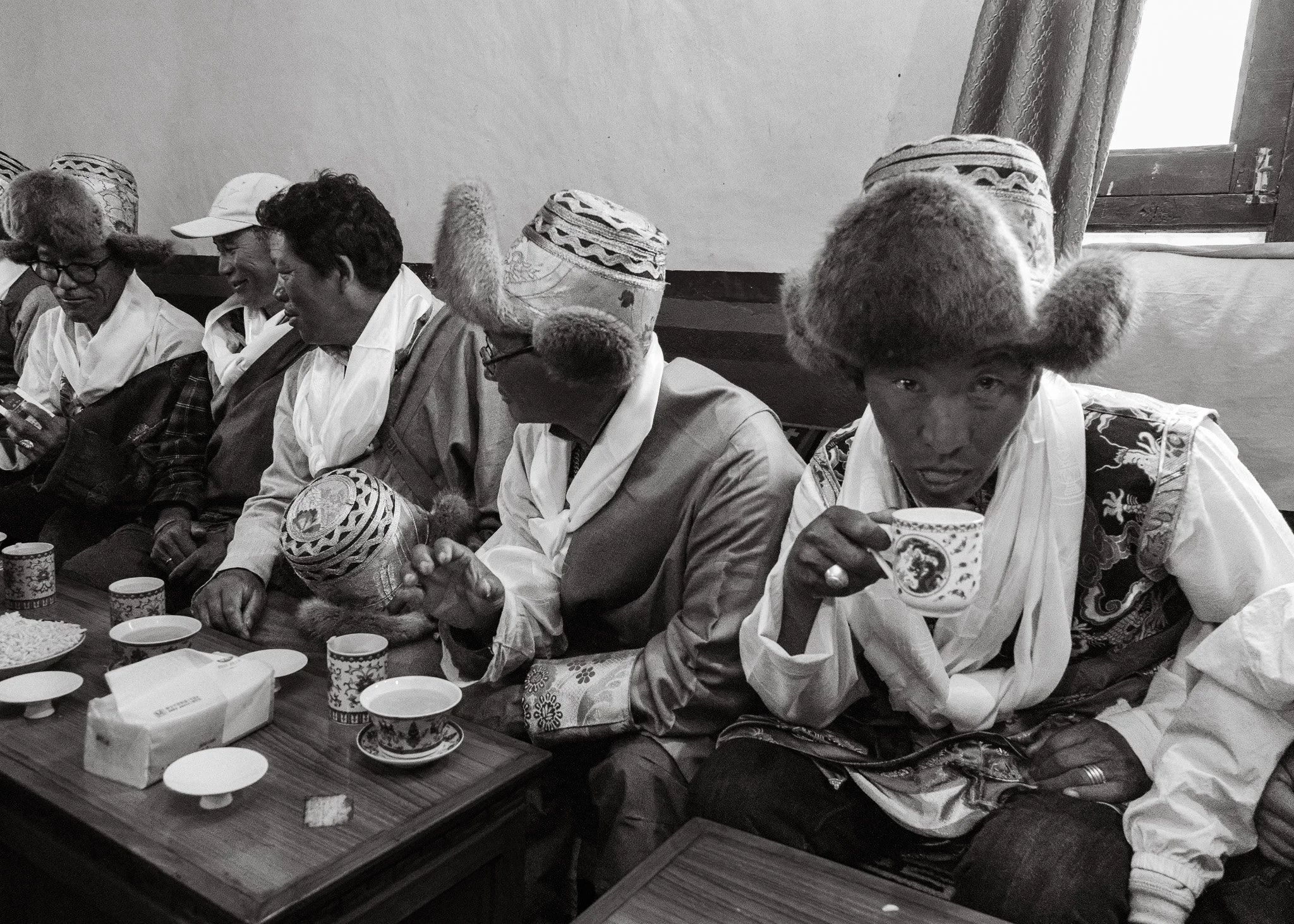
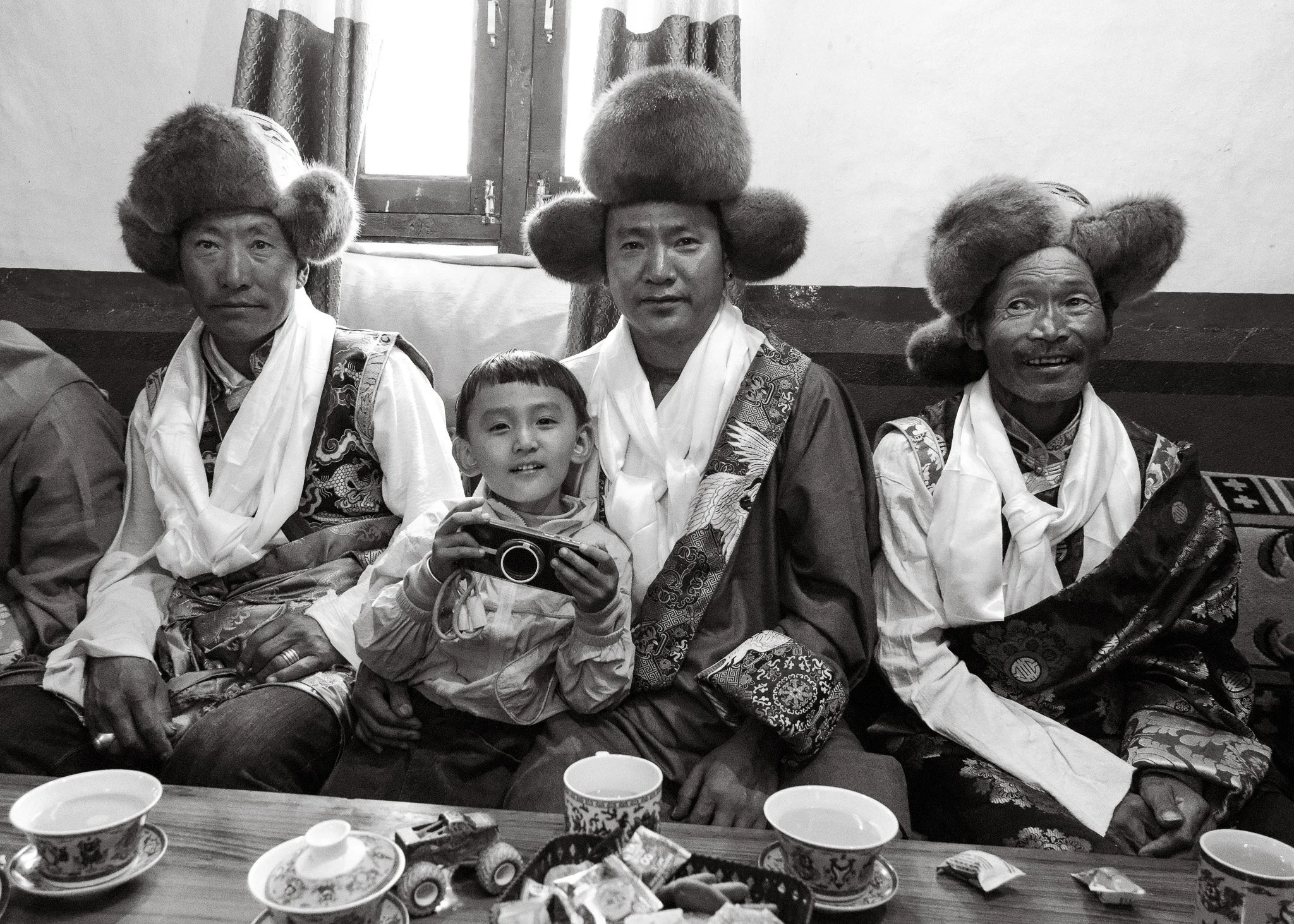
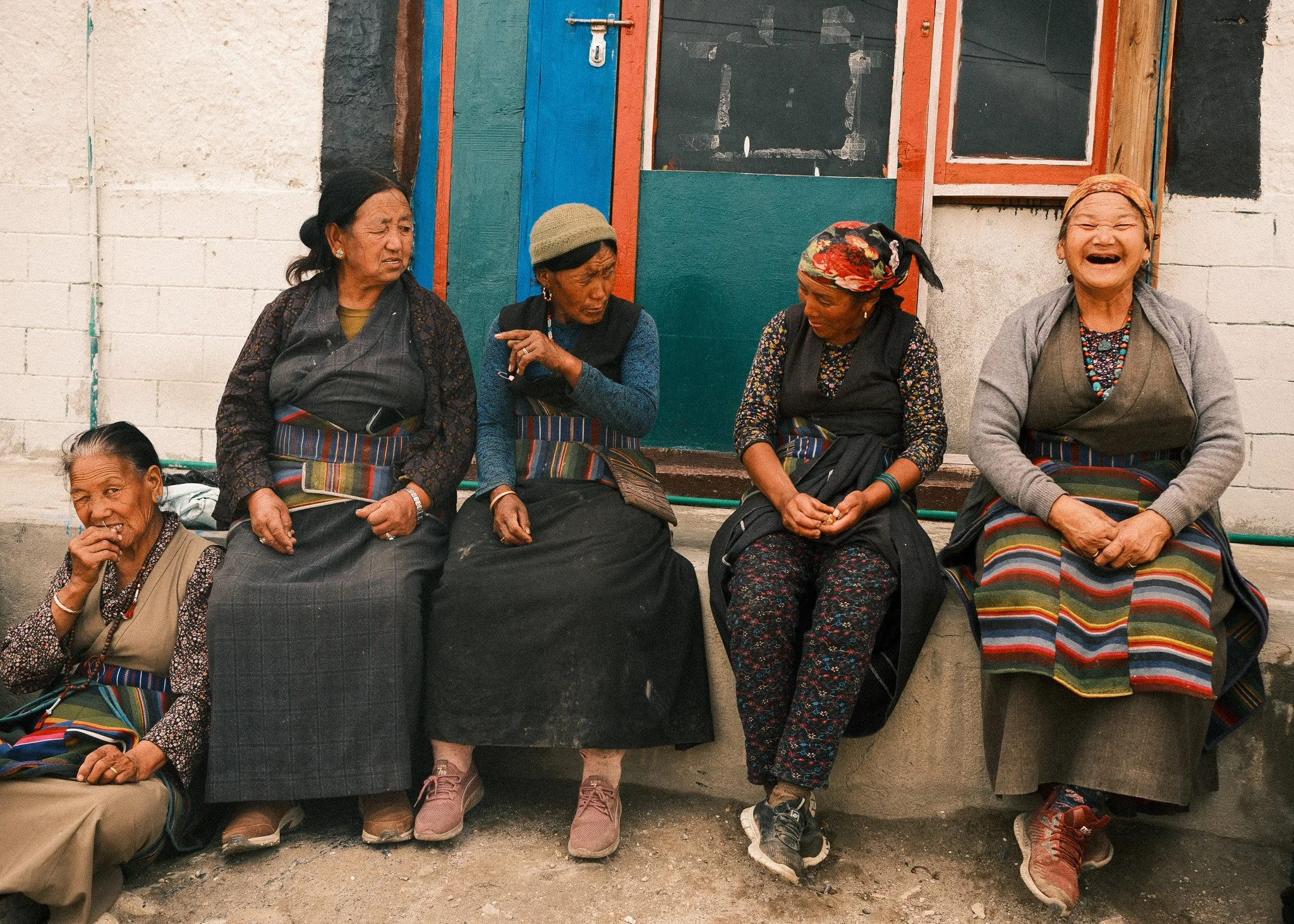
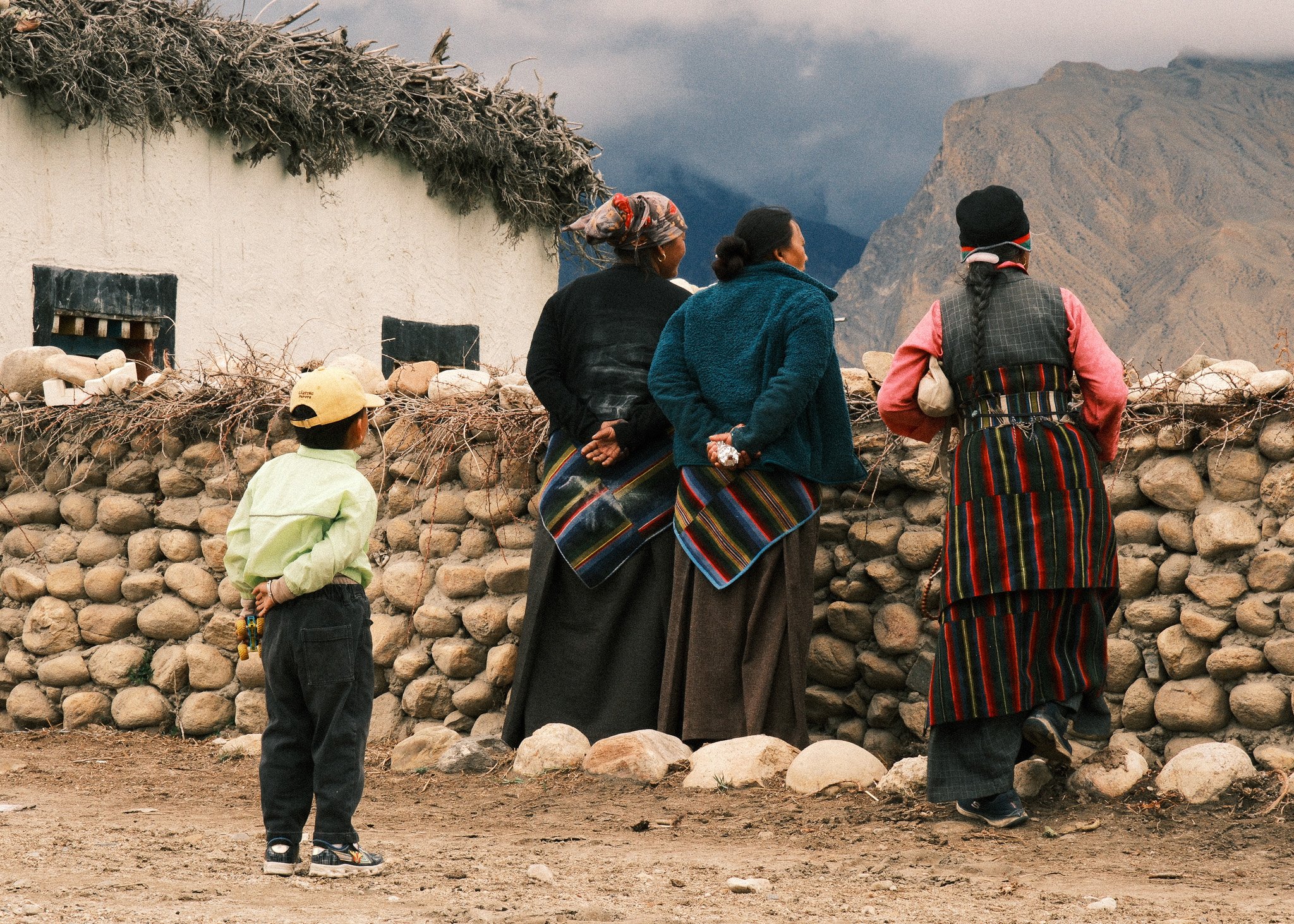
Some of my favourite photographs from the entire Upper Mustang expedition were made in Tsarang. More than anywhere else, it reinforced how valuable it is to travel slowly, spend time with people and have a guide who can bridge the language and cultural gap. The photographs became far more meaningful because they were built on genuine interactions rather than quick encounters.
📸 Don't miss: Spend time around the monastery in the late afternoon, then simply follow the rhythm of the village. Some of the best photographic opportunities appear when you stop looking for them!
Luri Gompa
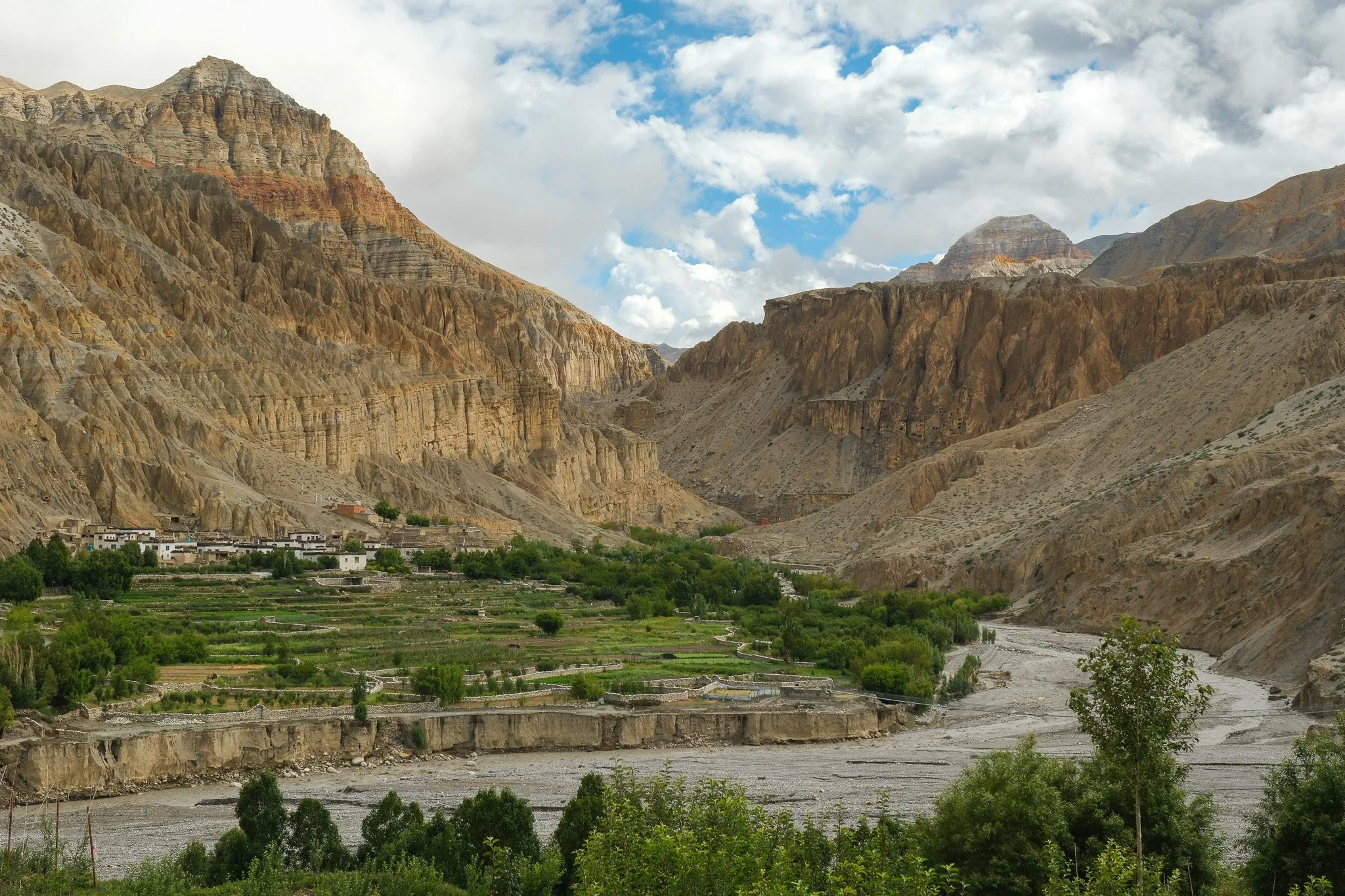
The journey to Luri Gompa was as memorable as the monastery itself. Every bend in the winding road revealed another vast valley, dramatic rock formation or cave carved into the cliffs. Vultures circled high above, rivers cut through the valley floor and the scale of the landscape seemed to grow with every kilometre.
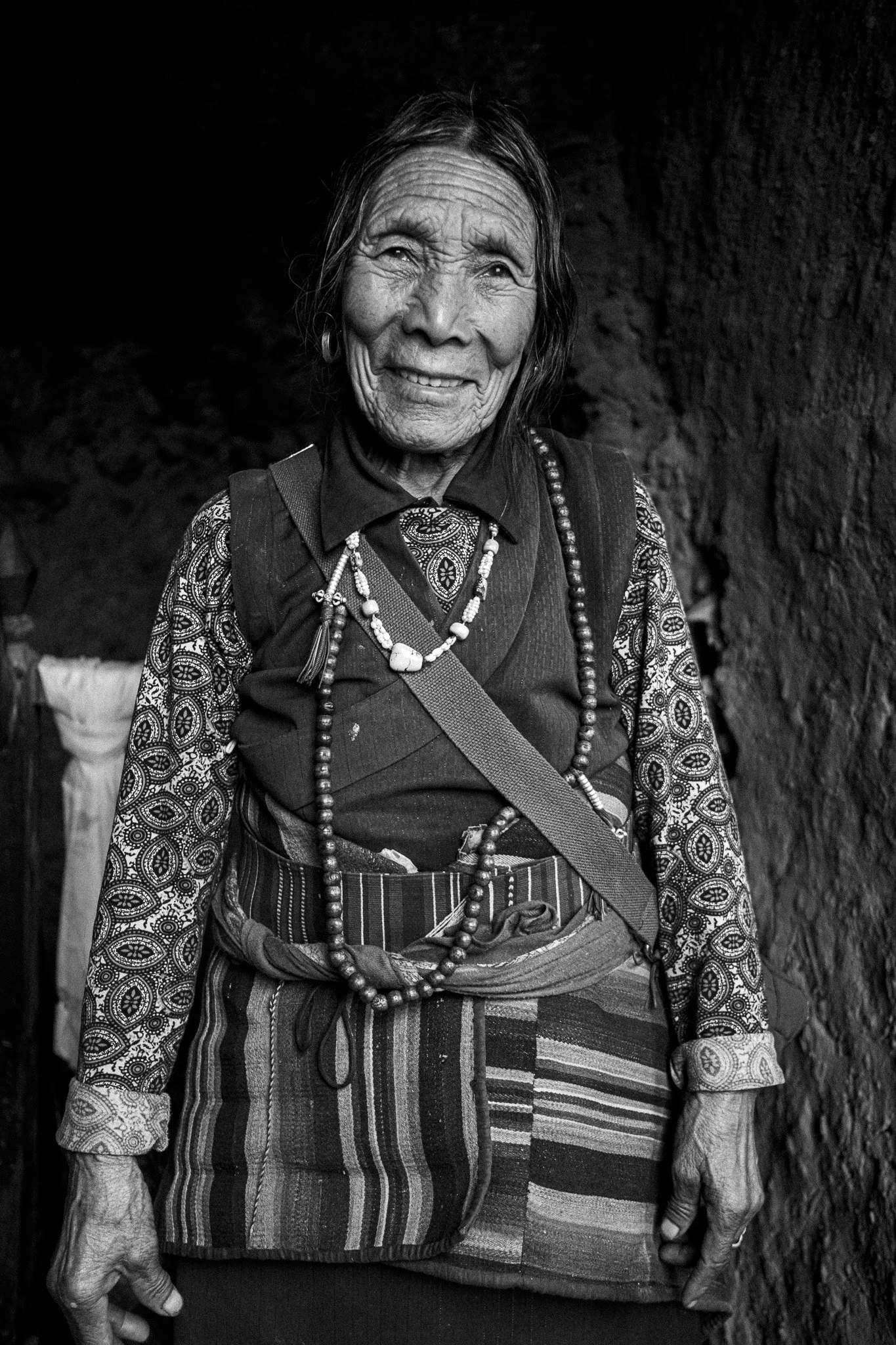
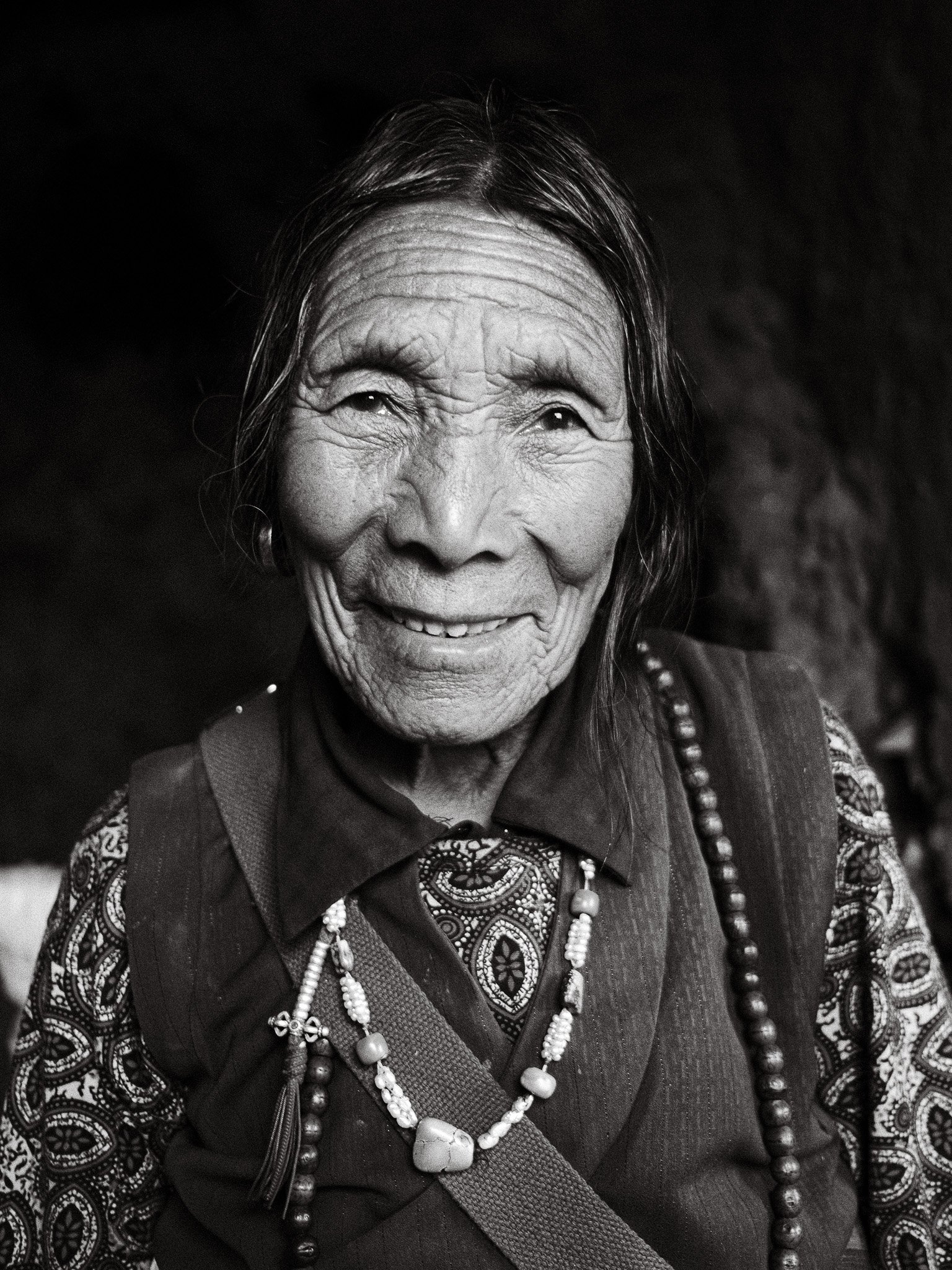
Arriving at Luri Gompa felt like stepping back through centuries. During my visit, a puja was taking place inside the monastery, and an elderly local woman welcomed us in with cups of traditional butter tea before we quietly joined the ceremony. Sitting in silence while prayers echoed through a monastery that has stood here for around 900 years was one of the most memorable moments of the expedition.
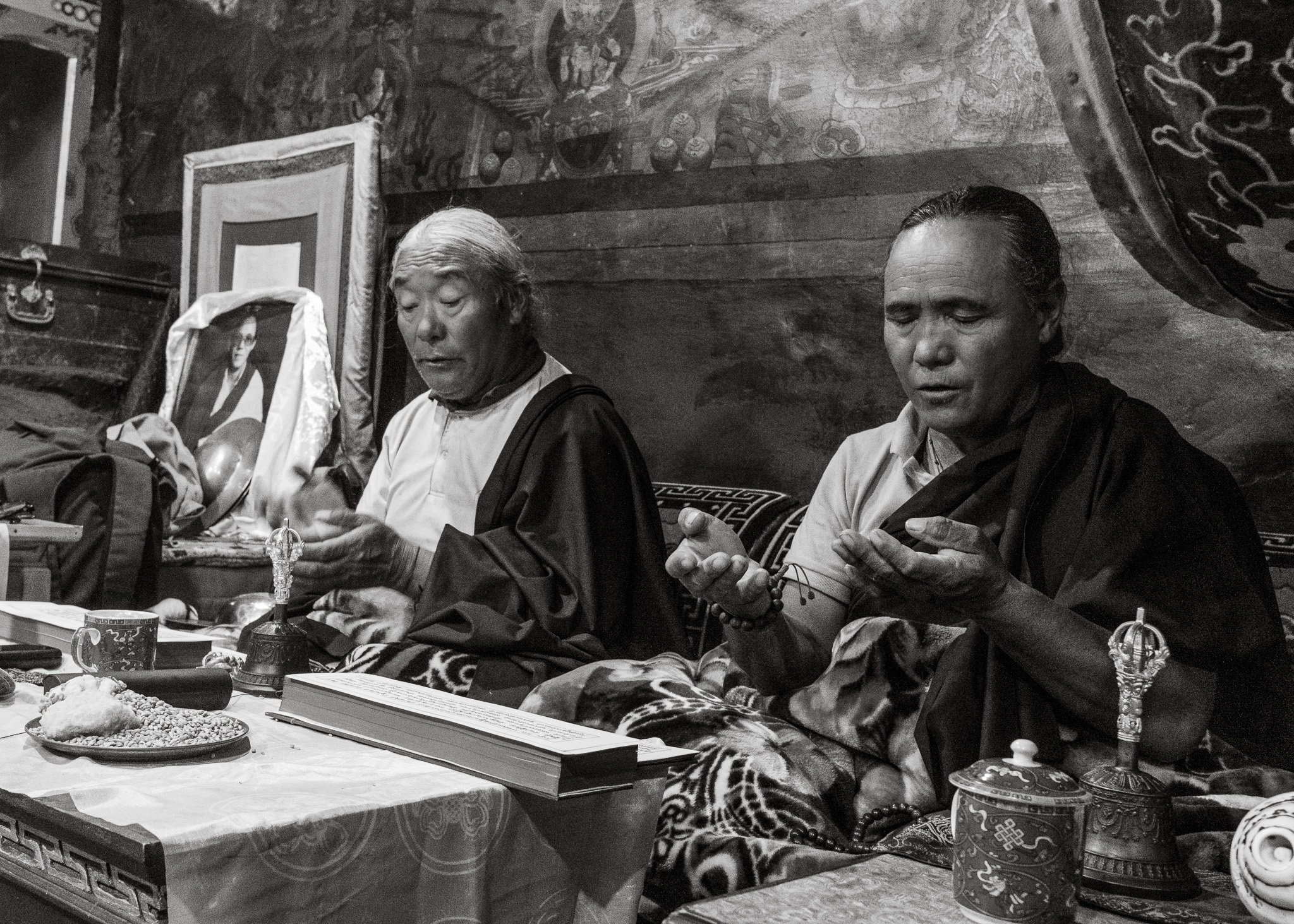
Later, we climbed to the small hilltop gompa overlooking the valley. The views were spectacular, but what stayed with me most was the atmosphere. There was a genuine sense that this wasn't just an ancient building preserved for visitors, it remains a living place of worship at the centre of the local community.
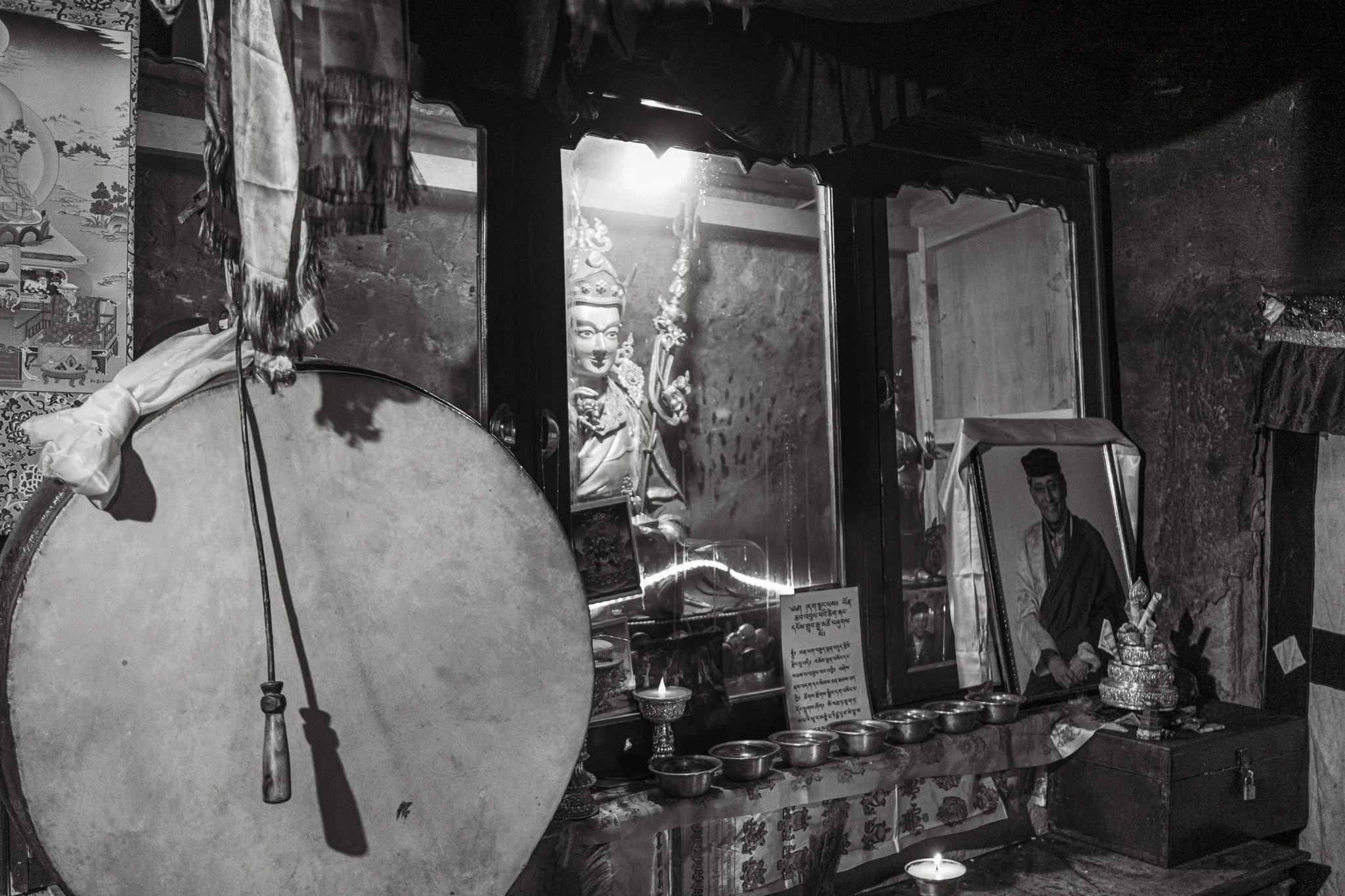
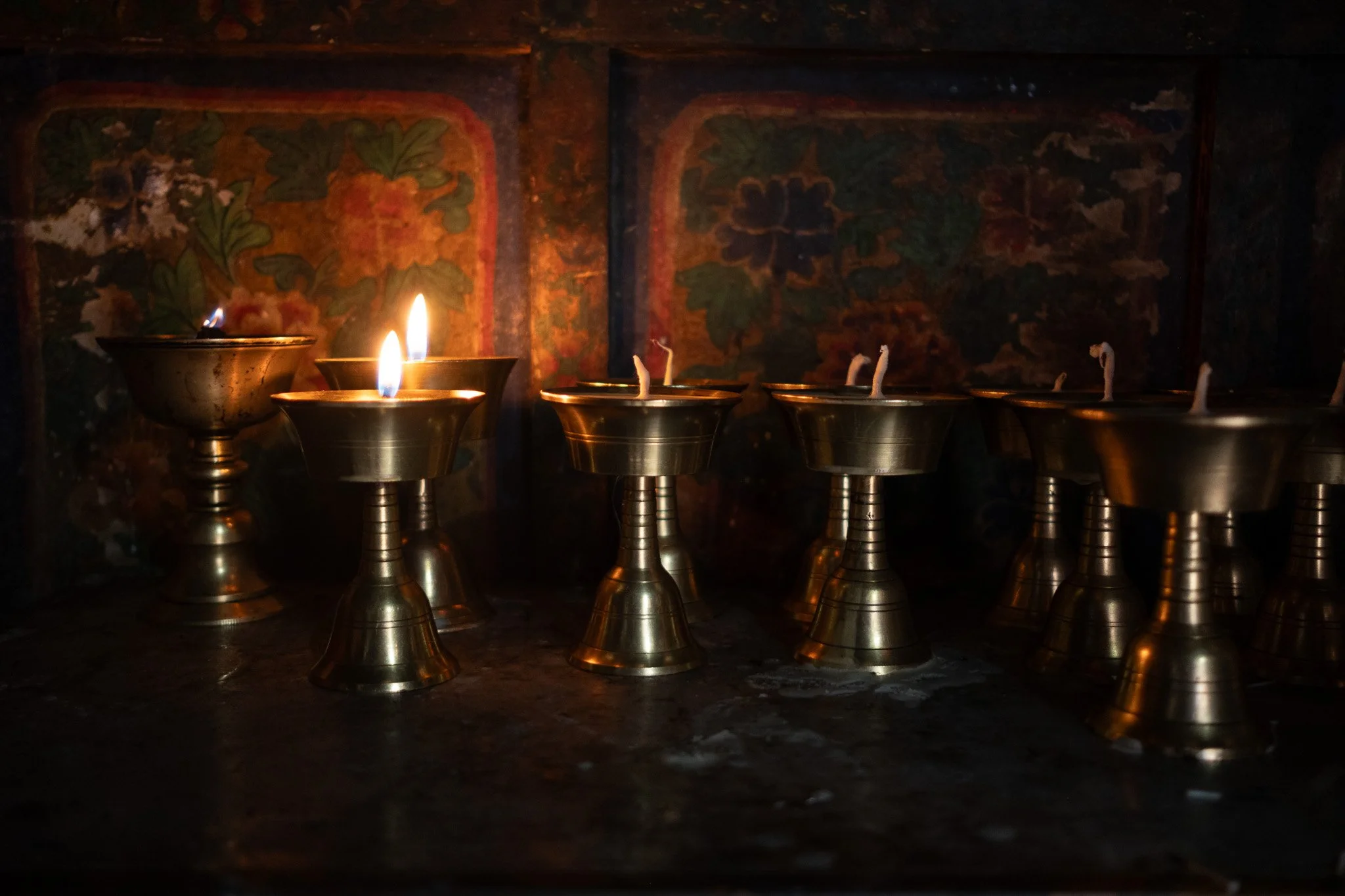
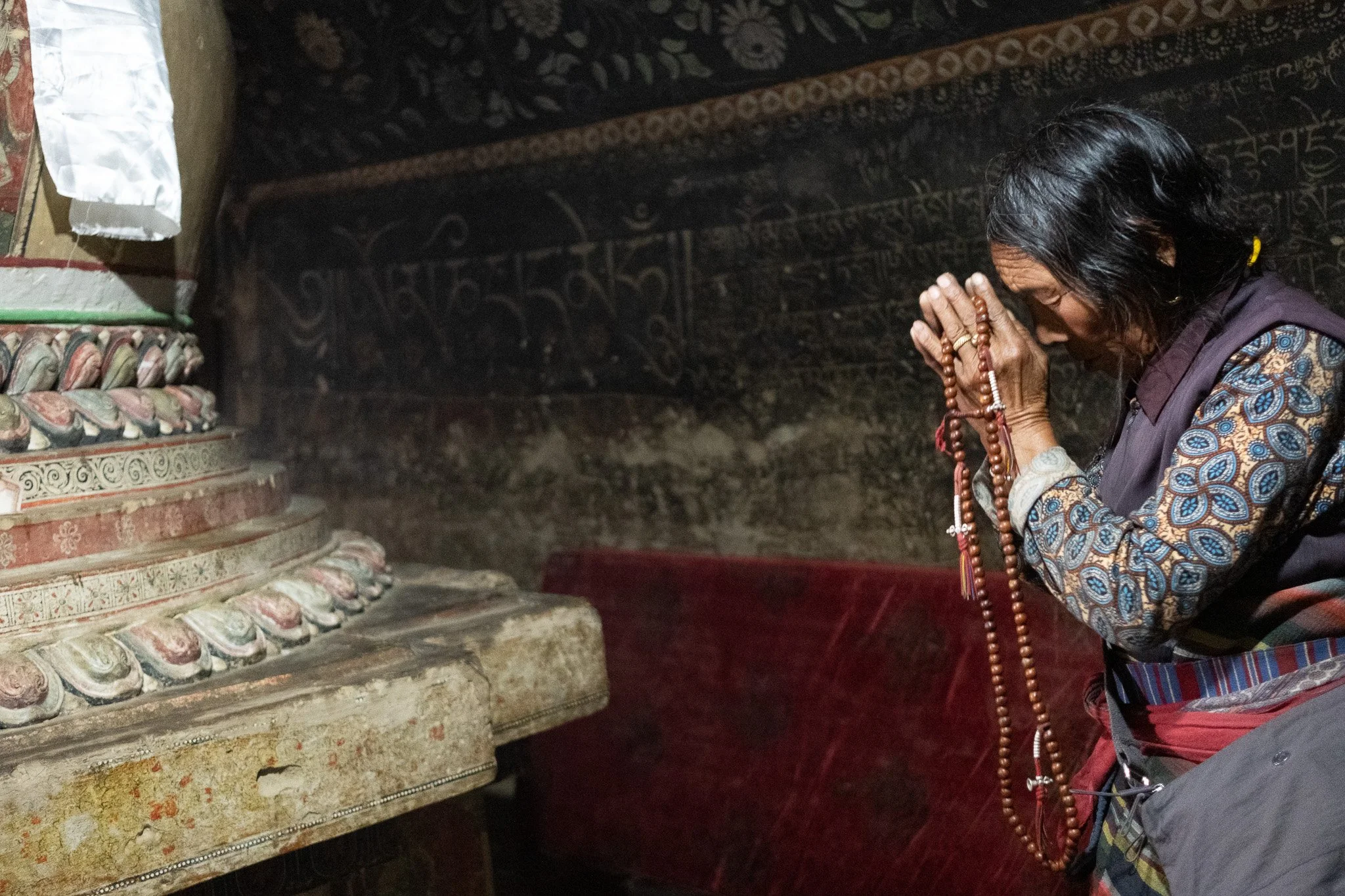
📸 Don't miss: Take time to absorb the atmosphere inside Luri Gompa before reaching for your camera. The experience of being there is just as memorable as the photographs you'll make.
Lo Manthang
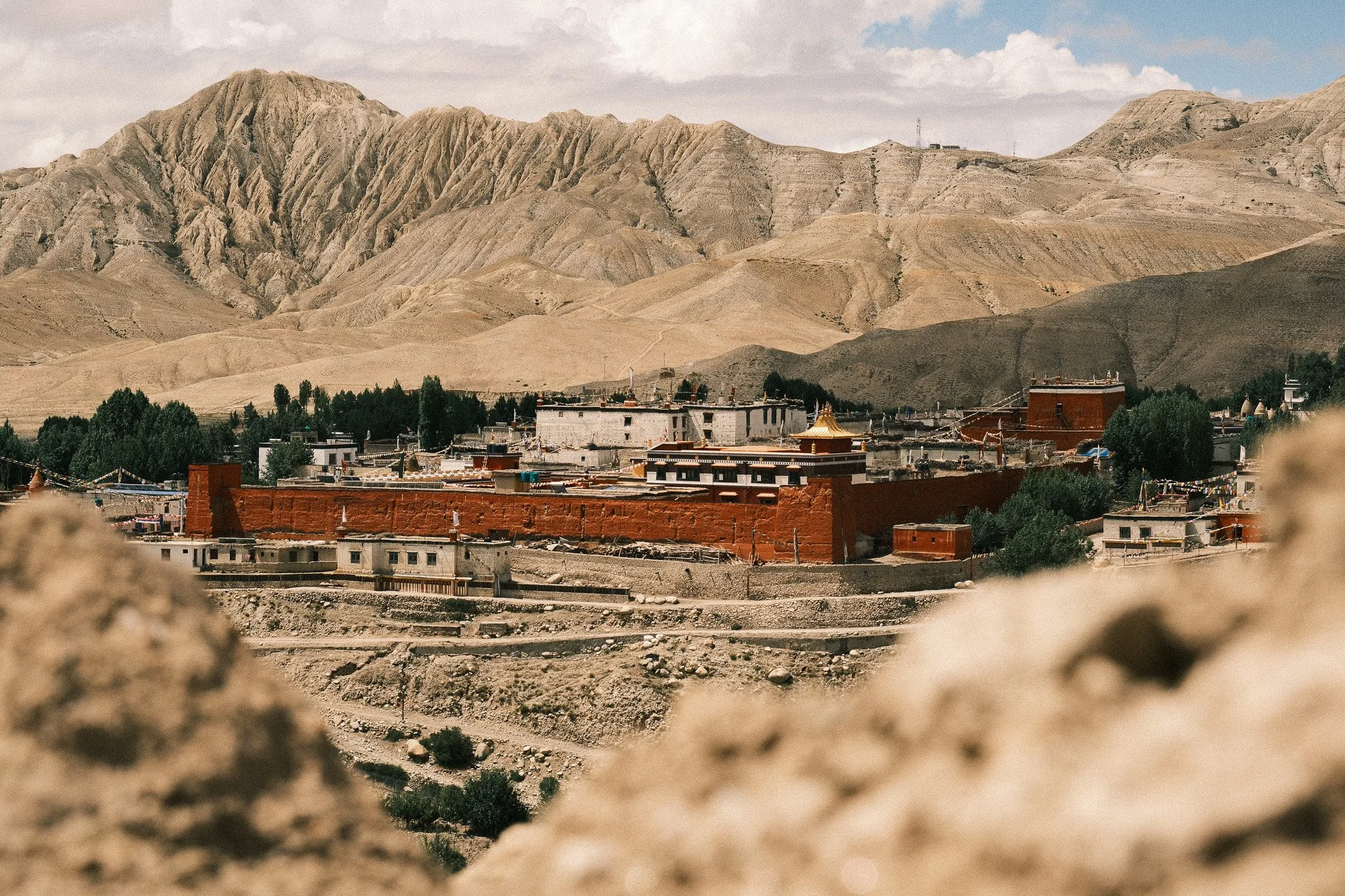
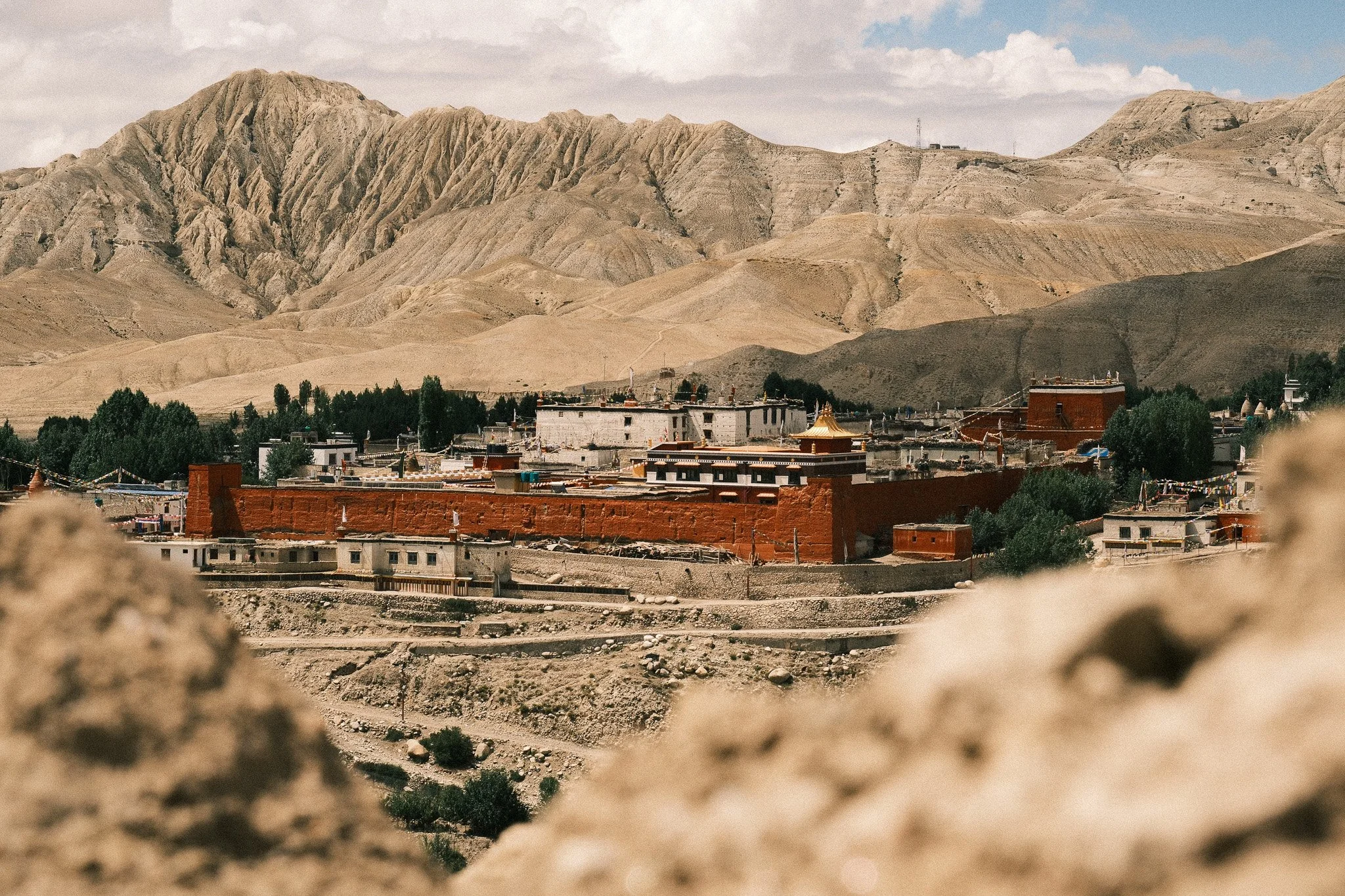
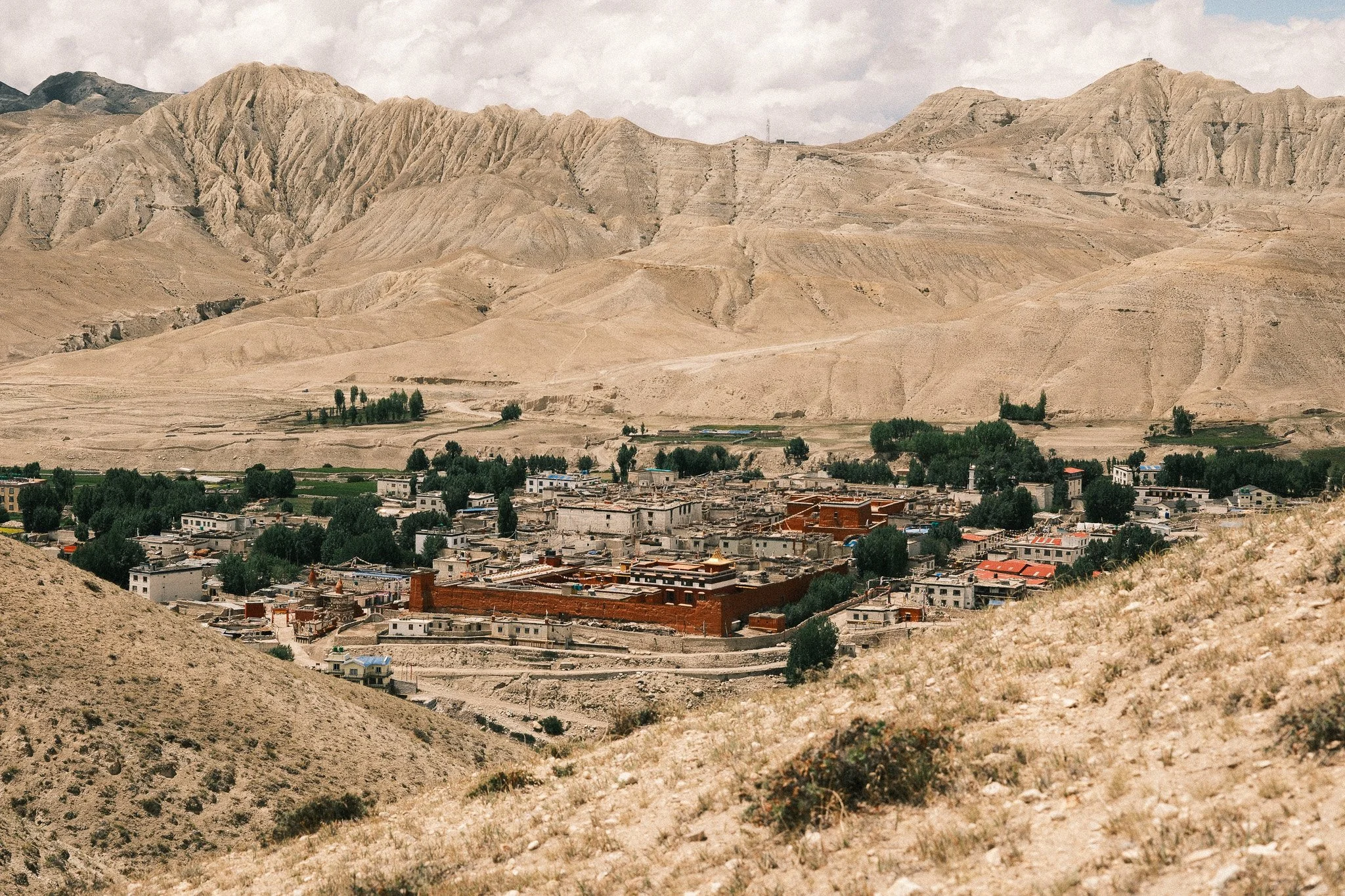
Lo Manthang was the place that first made me want to visit Upper Mustang. Approaching the former walled capital, the road passes through huge desert-like valleys where goats move in large numbers along tracks cut into the mountains. Every so often, a person appears walking through the valley, and their small figure shows the scale of the landscape around them.
The first view of the town brought together the colours that would define it in my photographs: white walls, the orange tones of the city walls and monastery, and prayer flags dotted around the edge of the settlement. The afternoon light was soft, glazing the walls and brightening the colours of the flags. July is low season, and there were only one or two other tourists and relatively few people in the streets.
The quietness was one of the first surprises, although Lo Manthang was never silent. Horses and cattle crossed the stone streets, small groups talked outside shops and teahouses, birds moved above the rooftops, and prayer flags fluttered in the breeze. A bell would sometimes ring from a monastery or shrine somewhere within the town. Without the horns, engines and constant movement of Kathmandu or Pokhara, each sound had space around it.
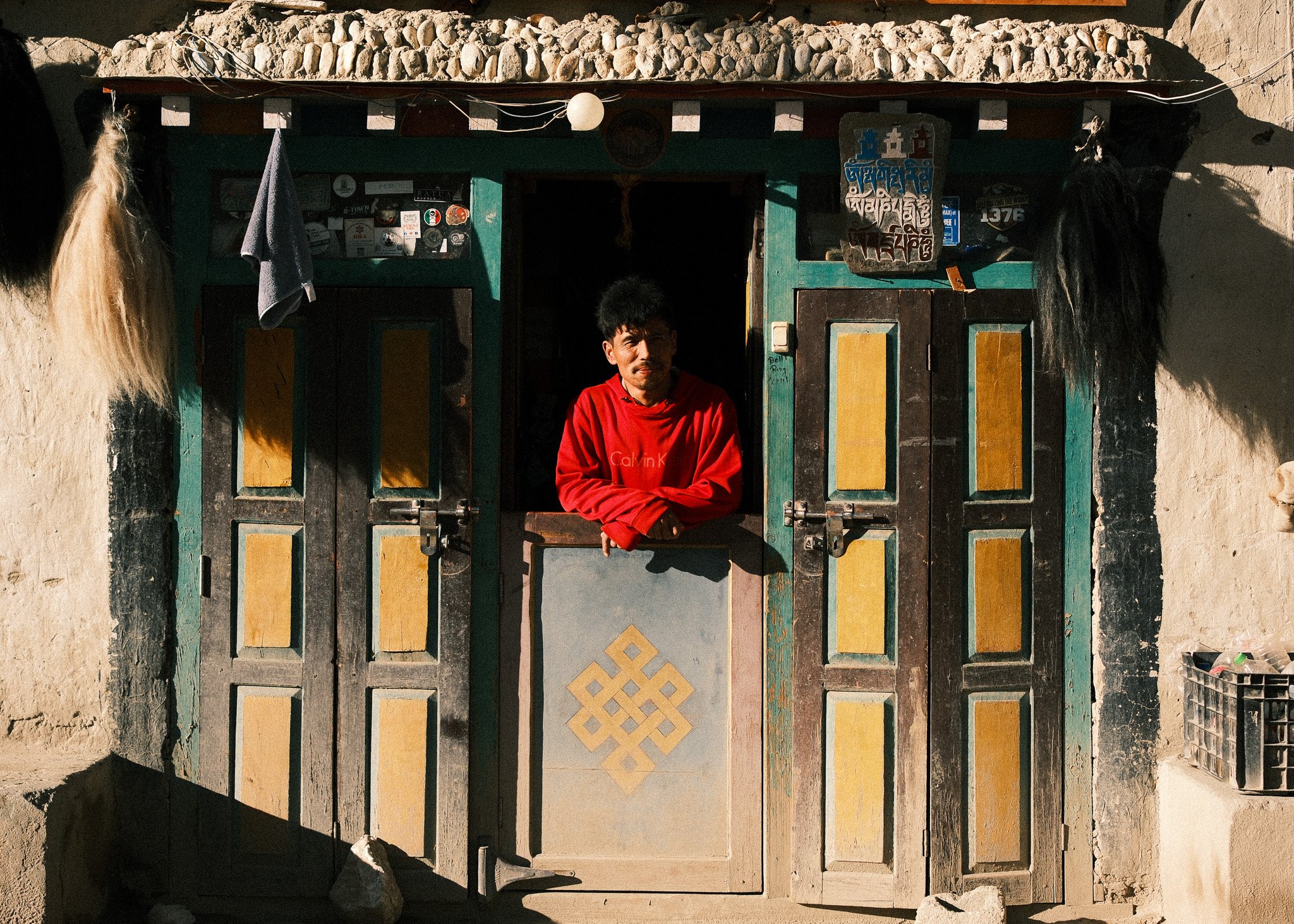
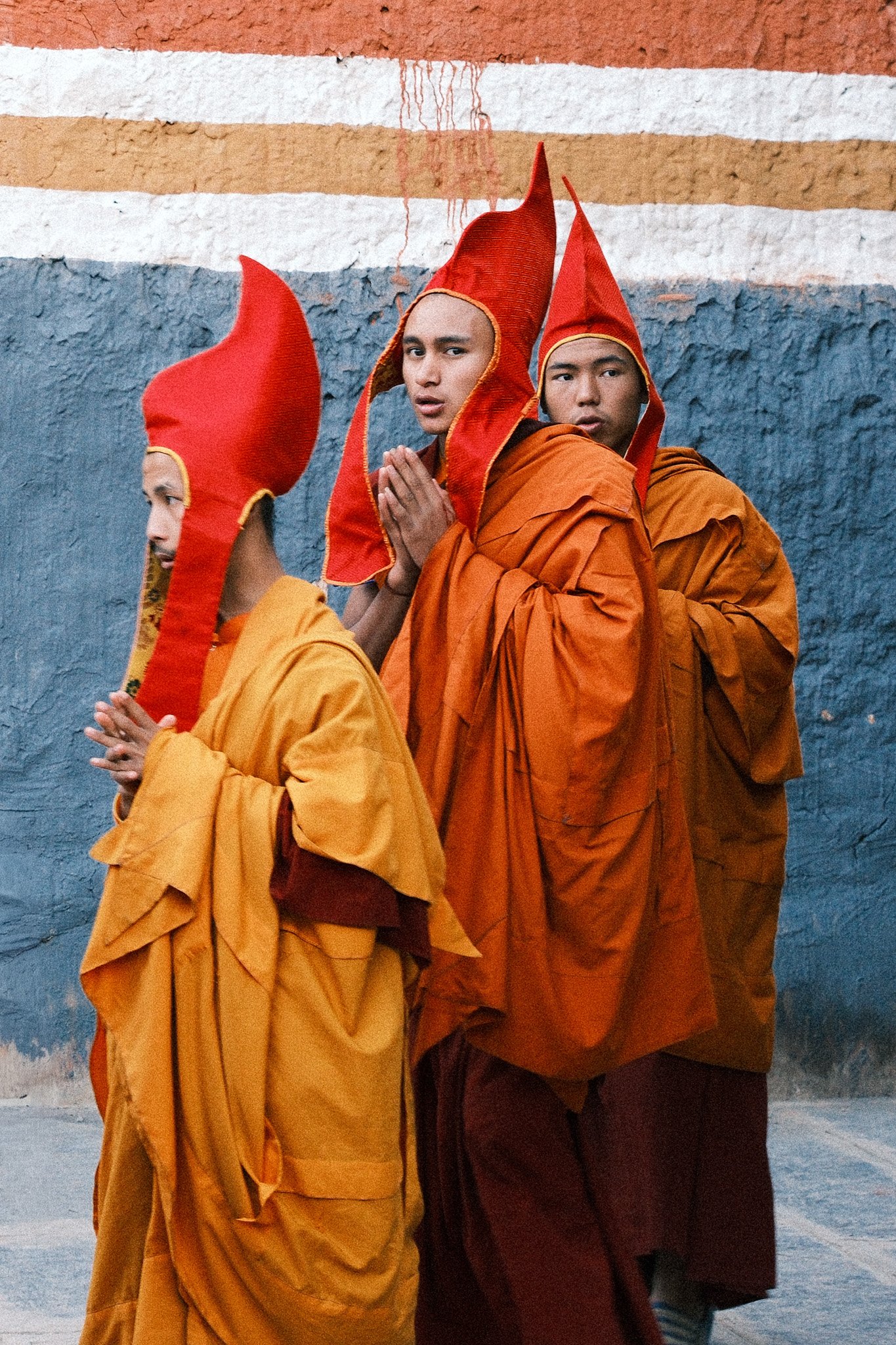
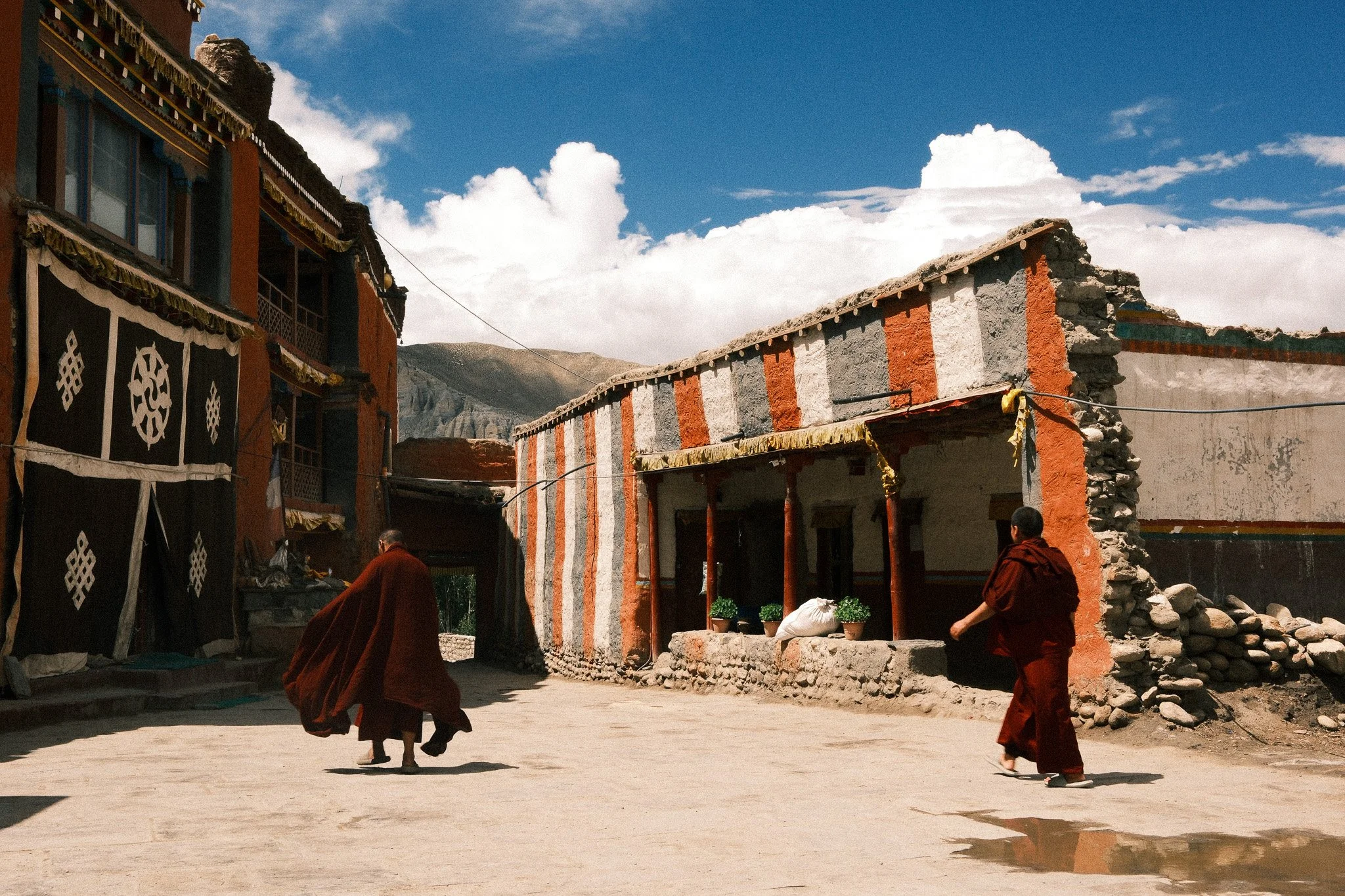
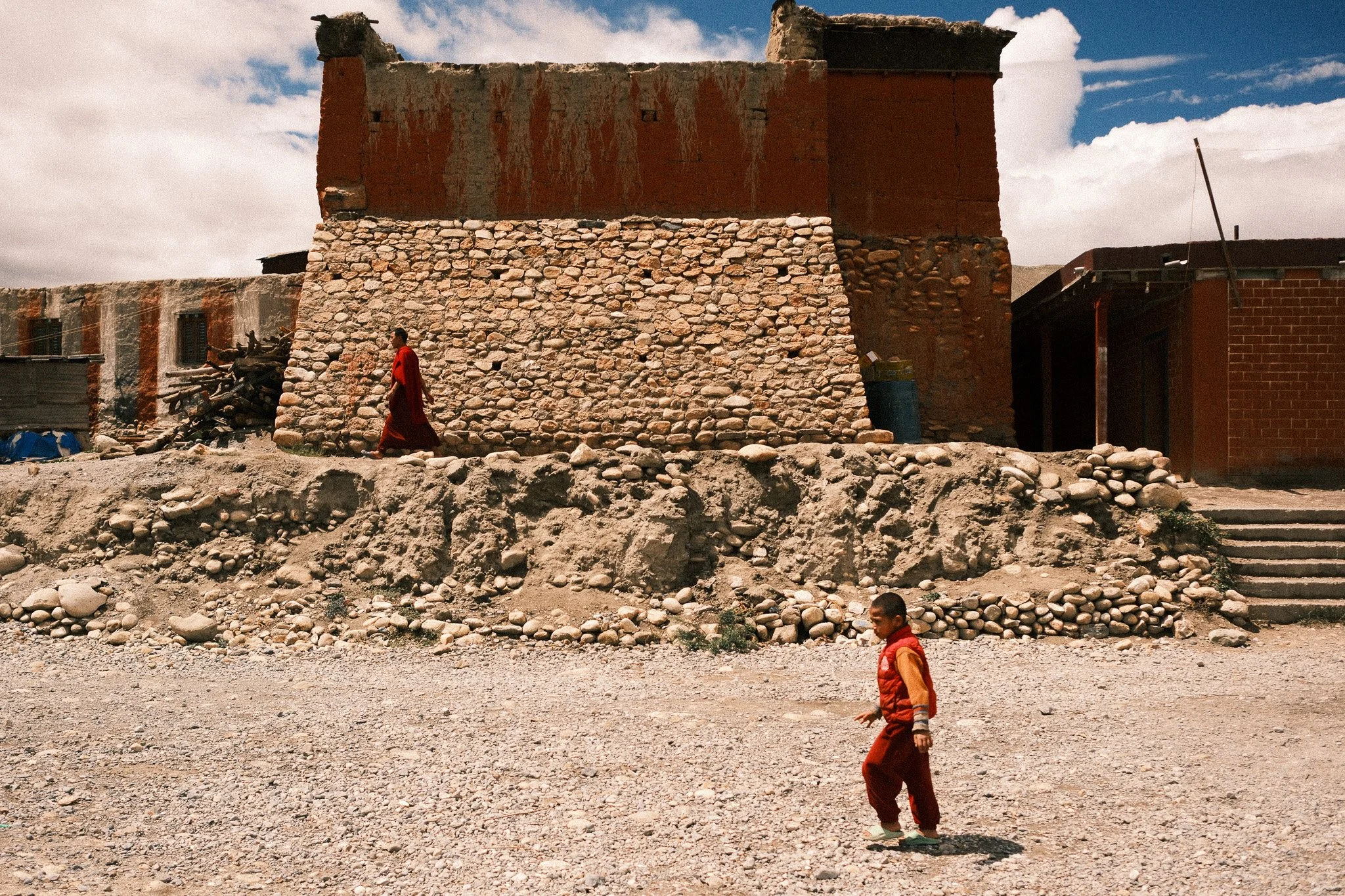
The rhythm changed through the day. Morning pujas brought chanting and bells. Herders moved cattle through town at certain times. Groups of older men gathered in the centre, sometimes singing, while younger monks played in the monastery courtyard after their lessons finished in the late afternoon.
The streets alternate between narrow alleys and wider shopping routes. Whitewashed buildings are usually one or two storeys high, with carved wooden details around doors and windows and stacks of branches laid along the edges of flat roofs. Tibetan ornaments hang at entrances, while painted snakes, scorpions and other zodiac symbols appear as blessings or protective signs. Goat skulls can also be seen above some entrances.
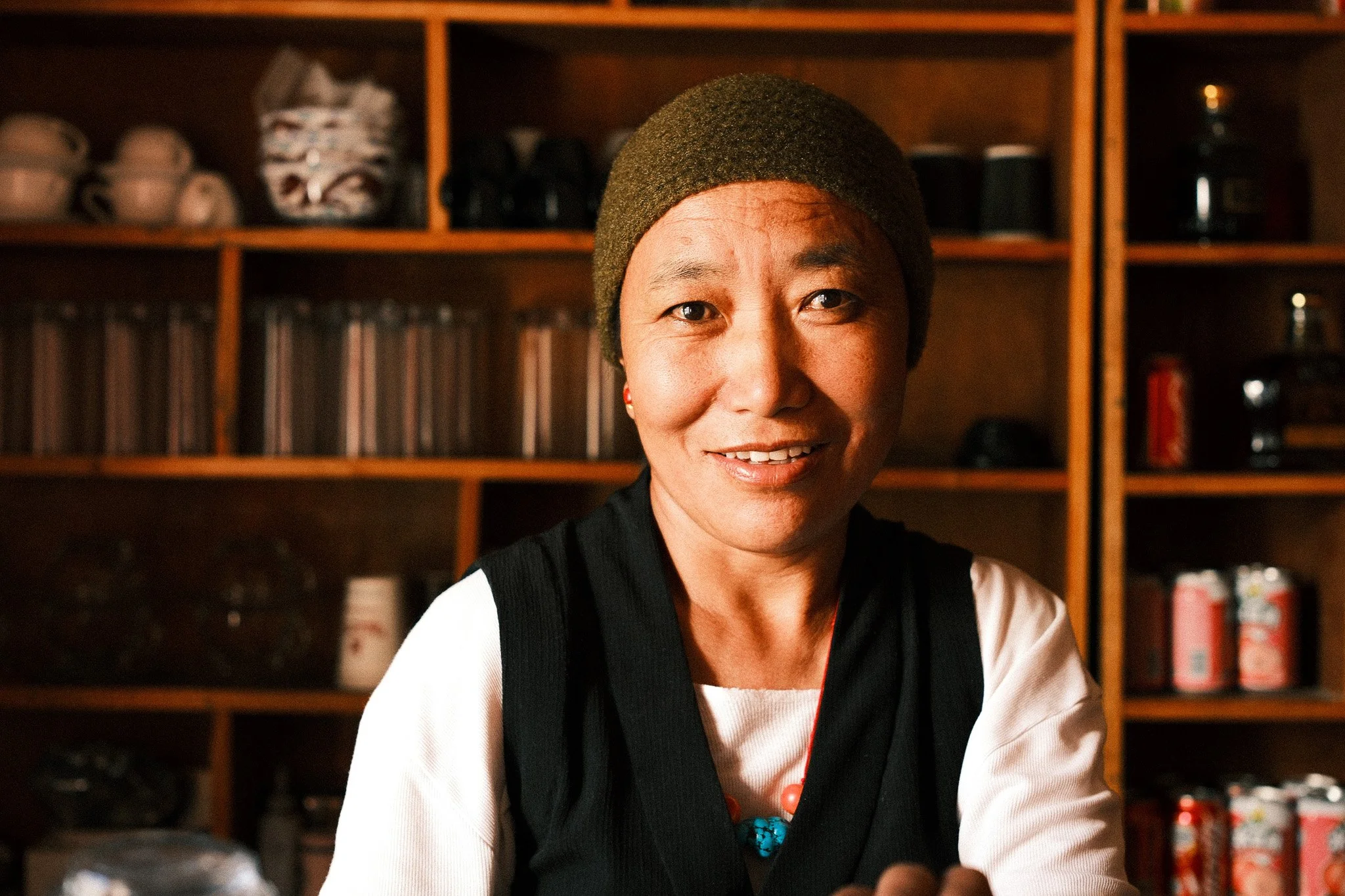
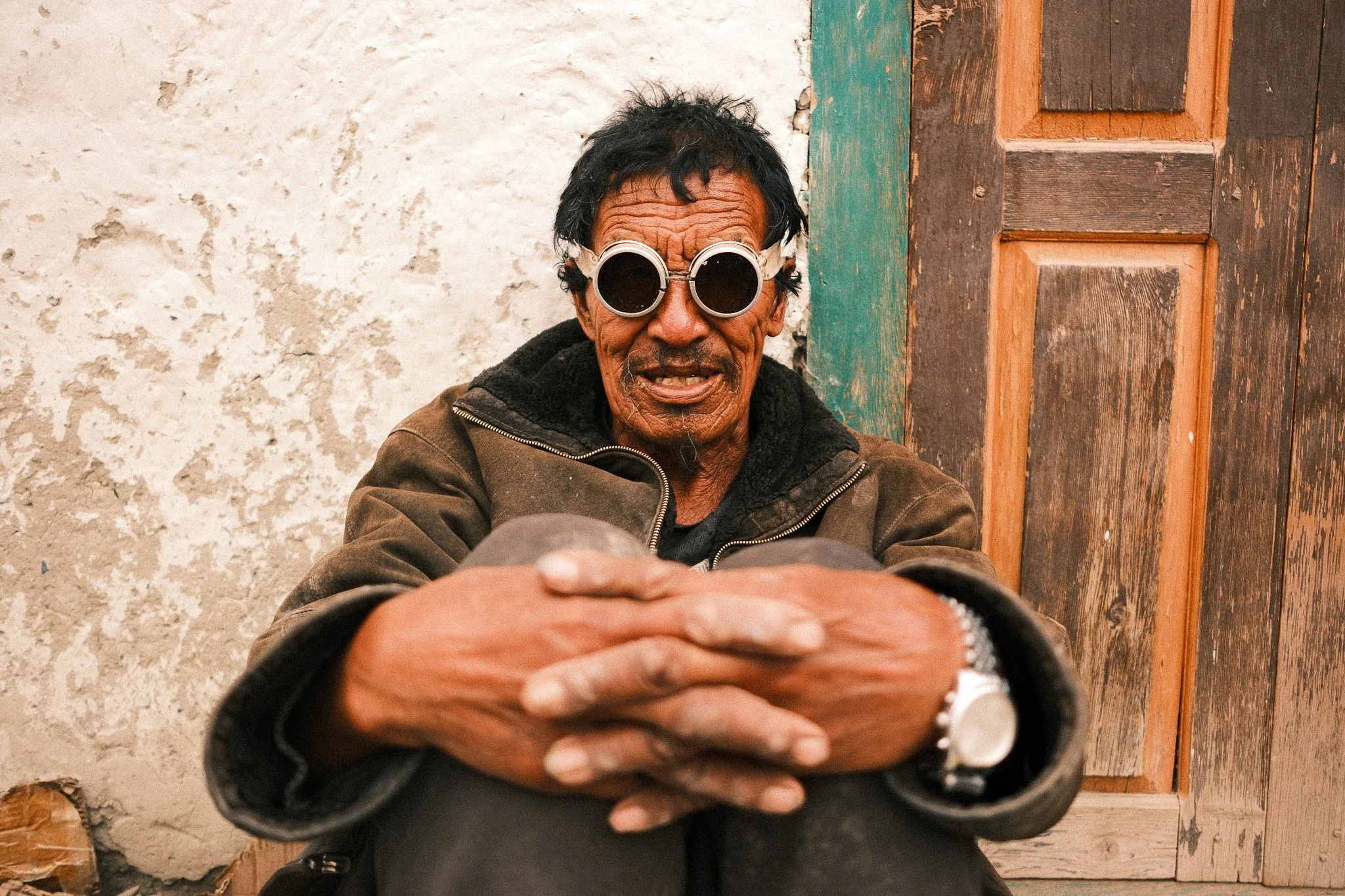
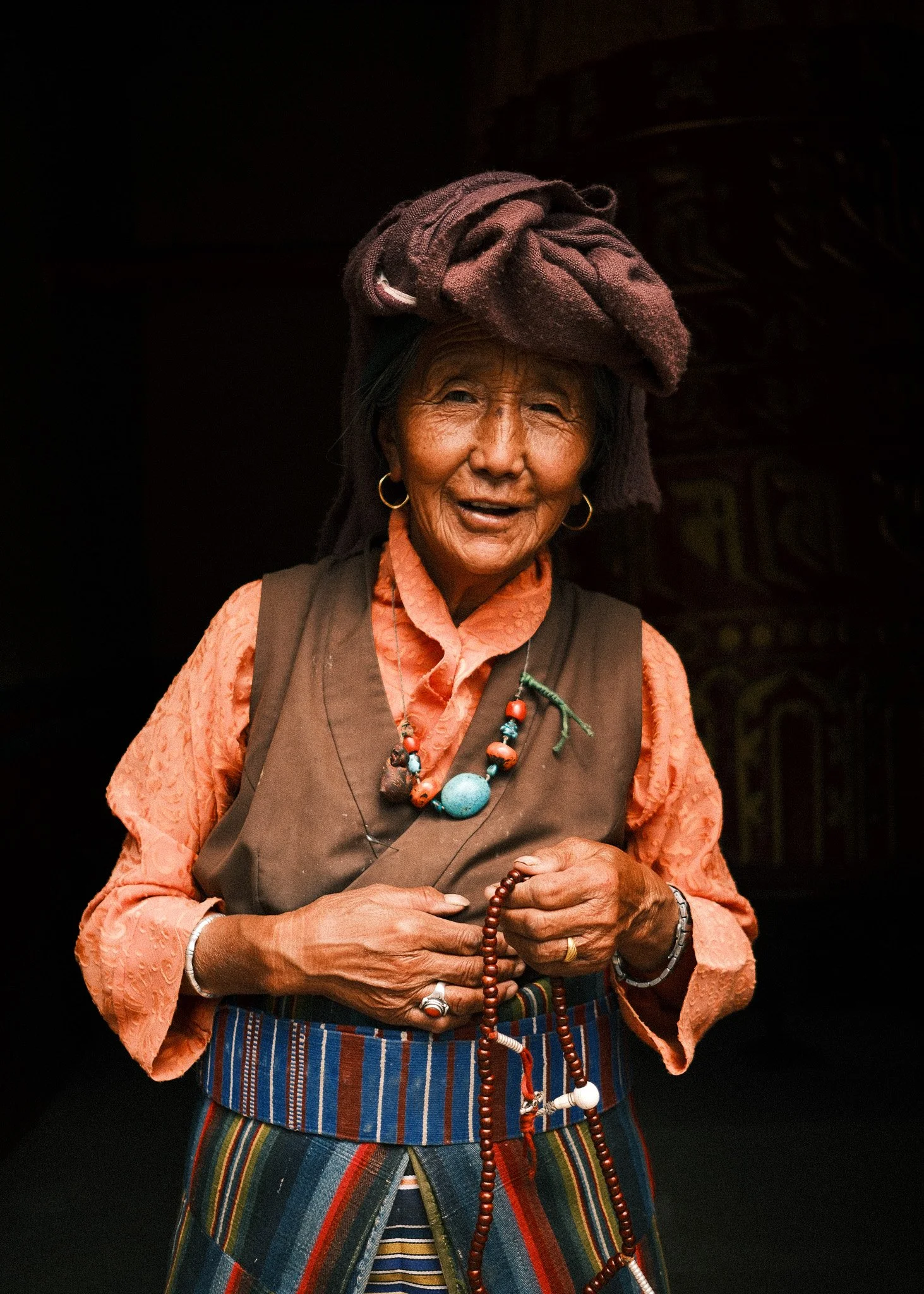
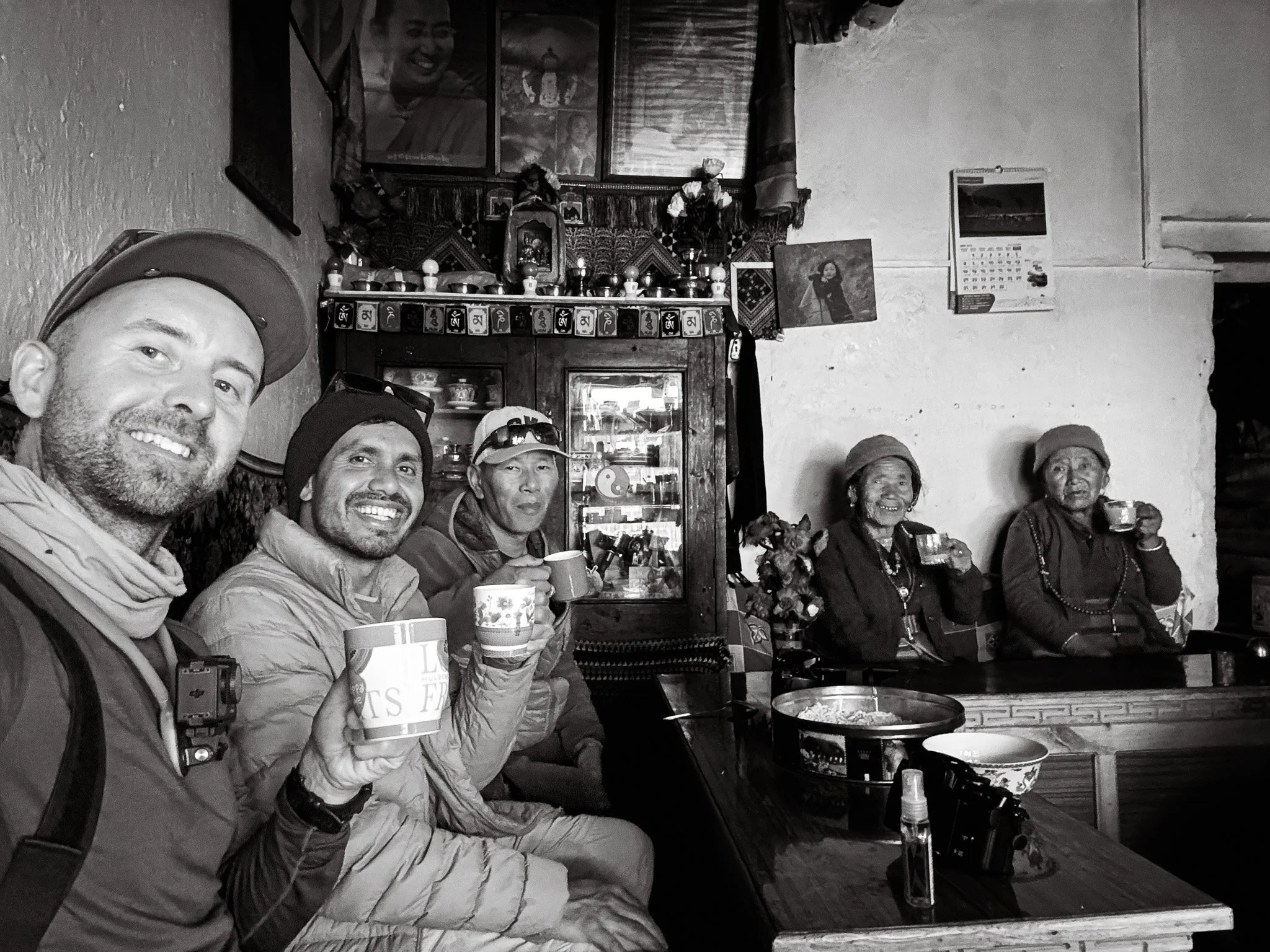
One afternoon, we met two elderly women and offered them tea and a few rupees in exchange for taking their portraits. Afterwards, we sat together in a dimly lit teahouse, sharing hot masala tea and lively conversation.
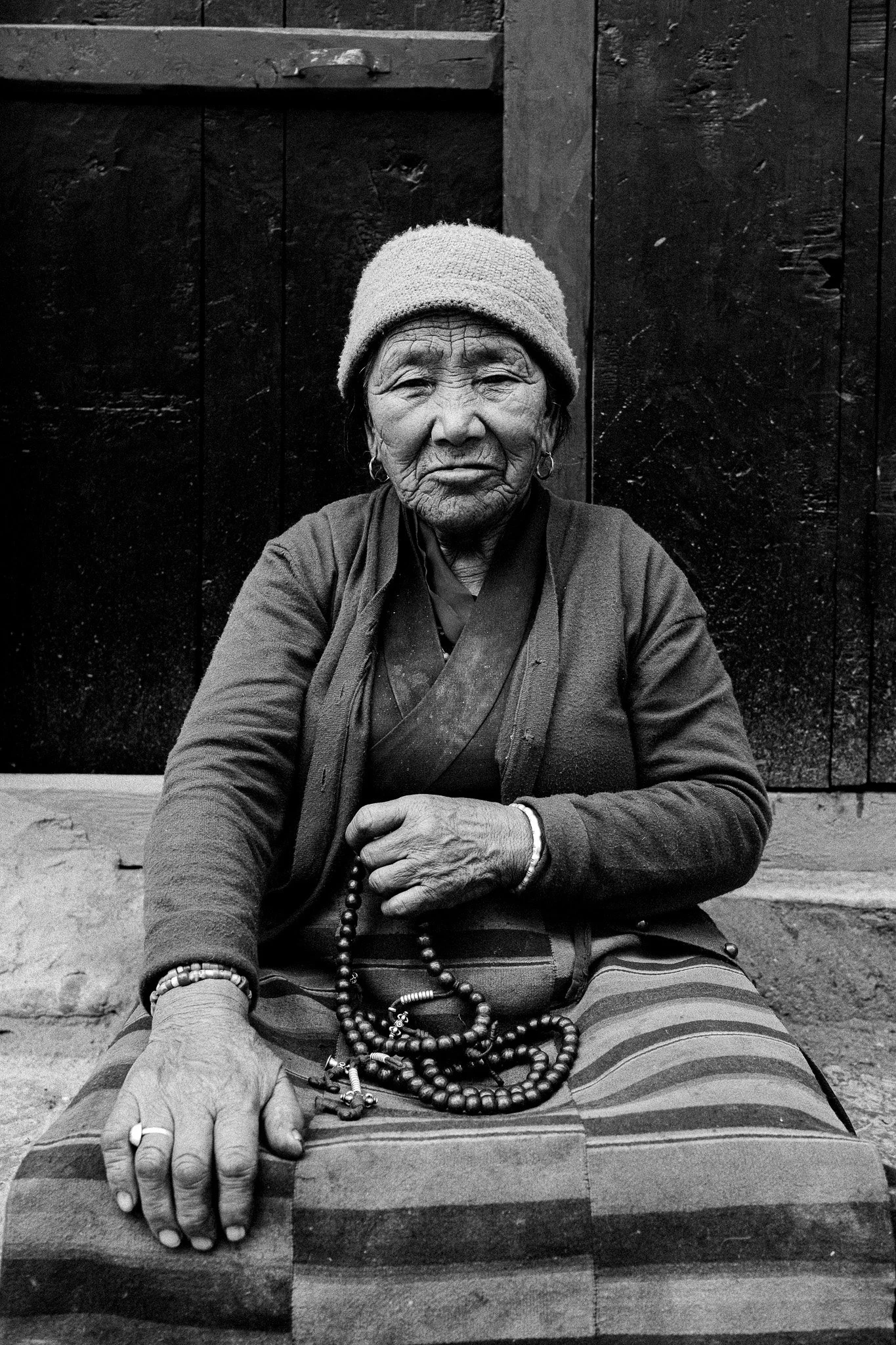
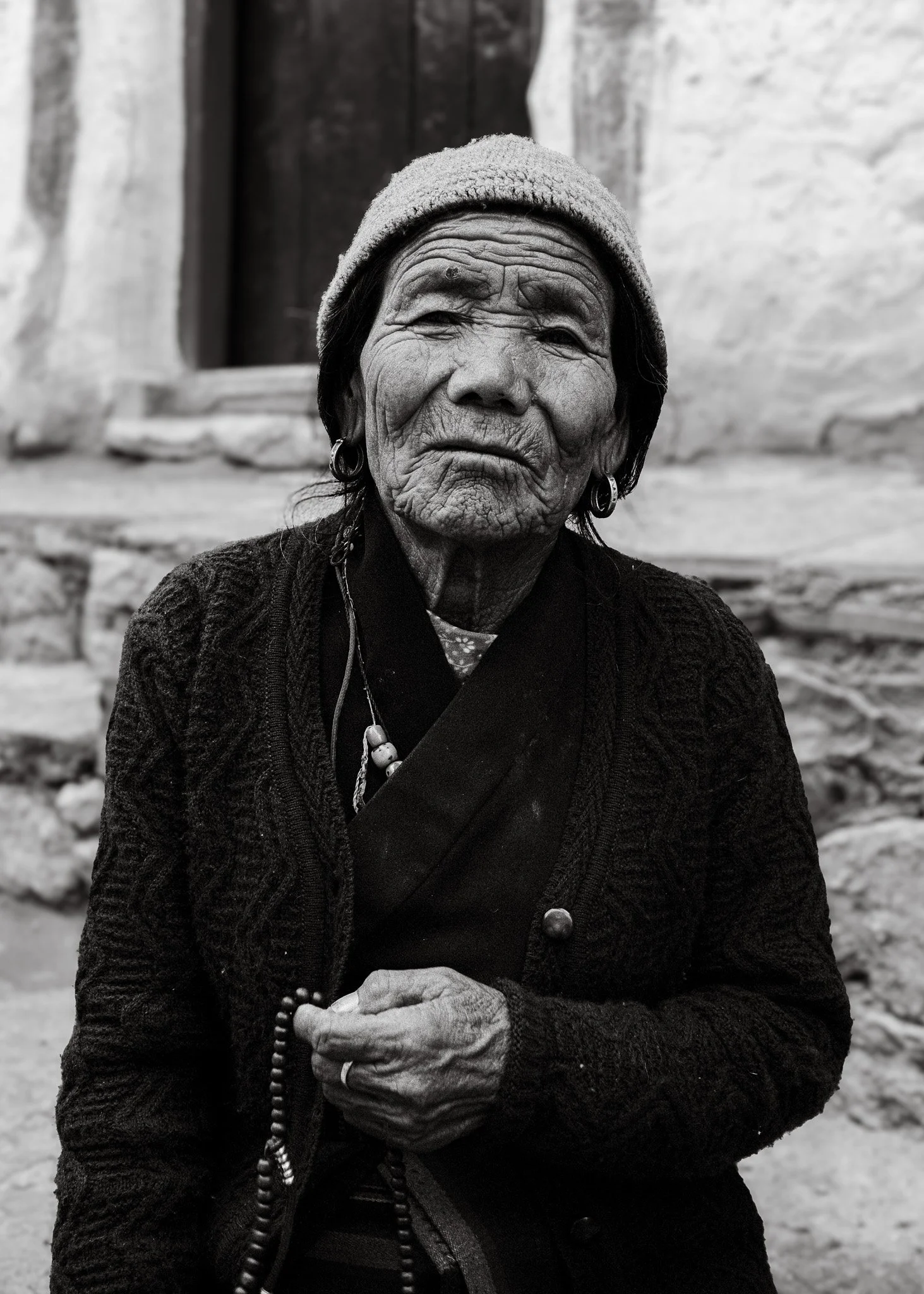
I spent the morning on the hilltop above Lo Manthang, photographing sunrise while the yak herders went about their morning milking. As the first sunlight reached the town below, I moved between views of Lo Manthang and the herders at work. Having both in the same place made it a rewarding spot to photograph: the changing light across the landscape, alongside a morning routine that carried on around me.
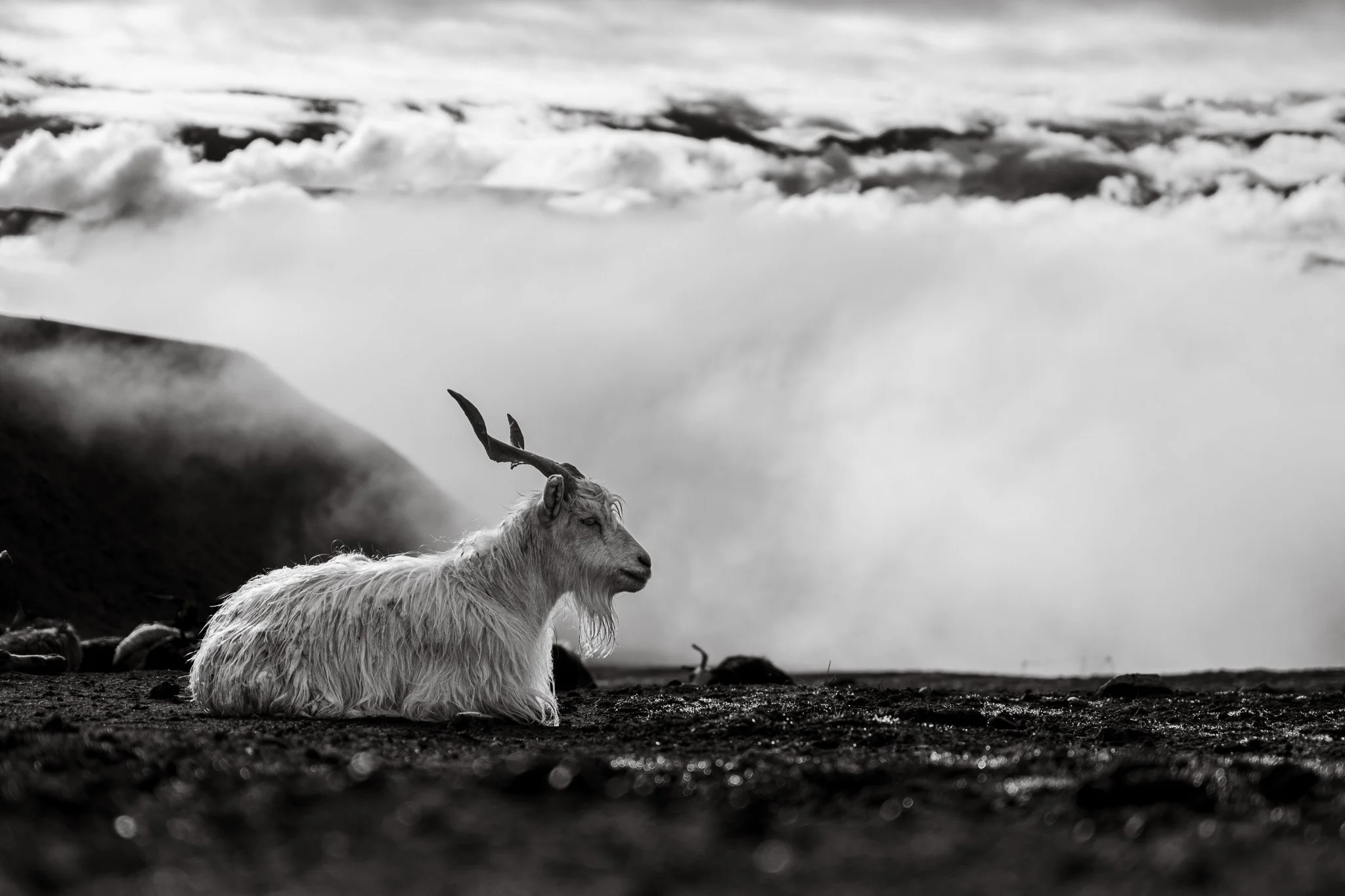
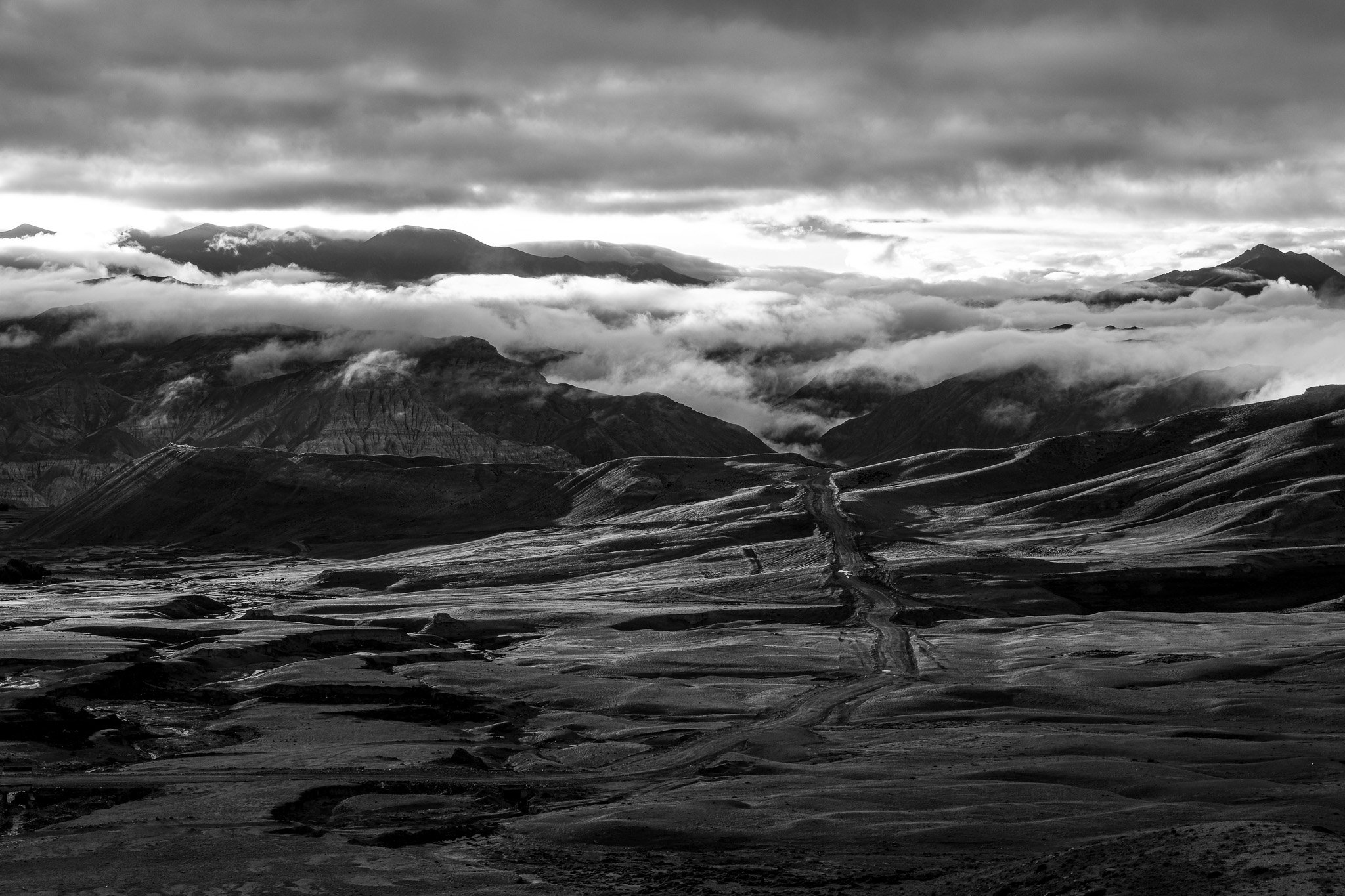
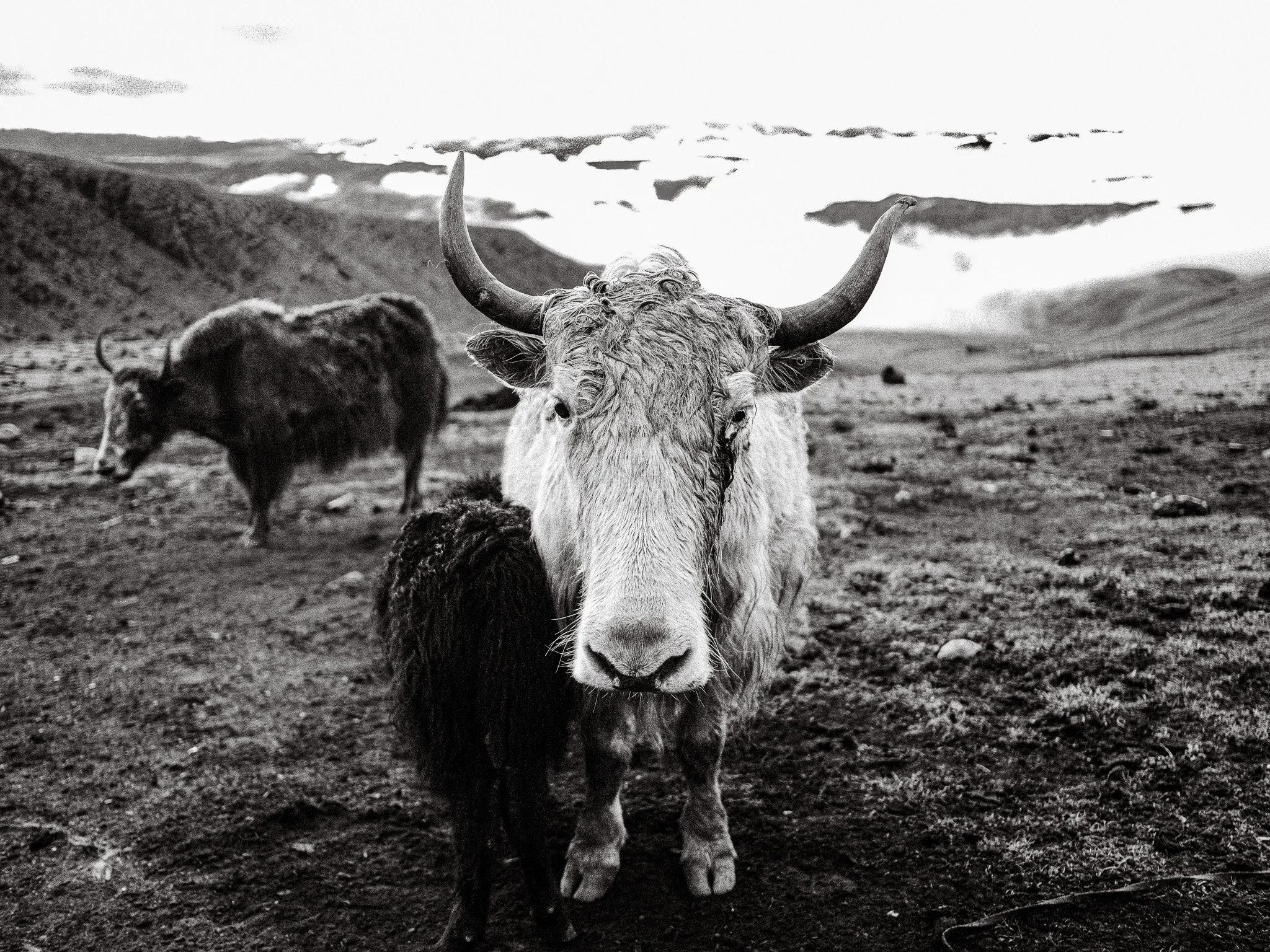
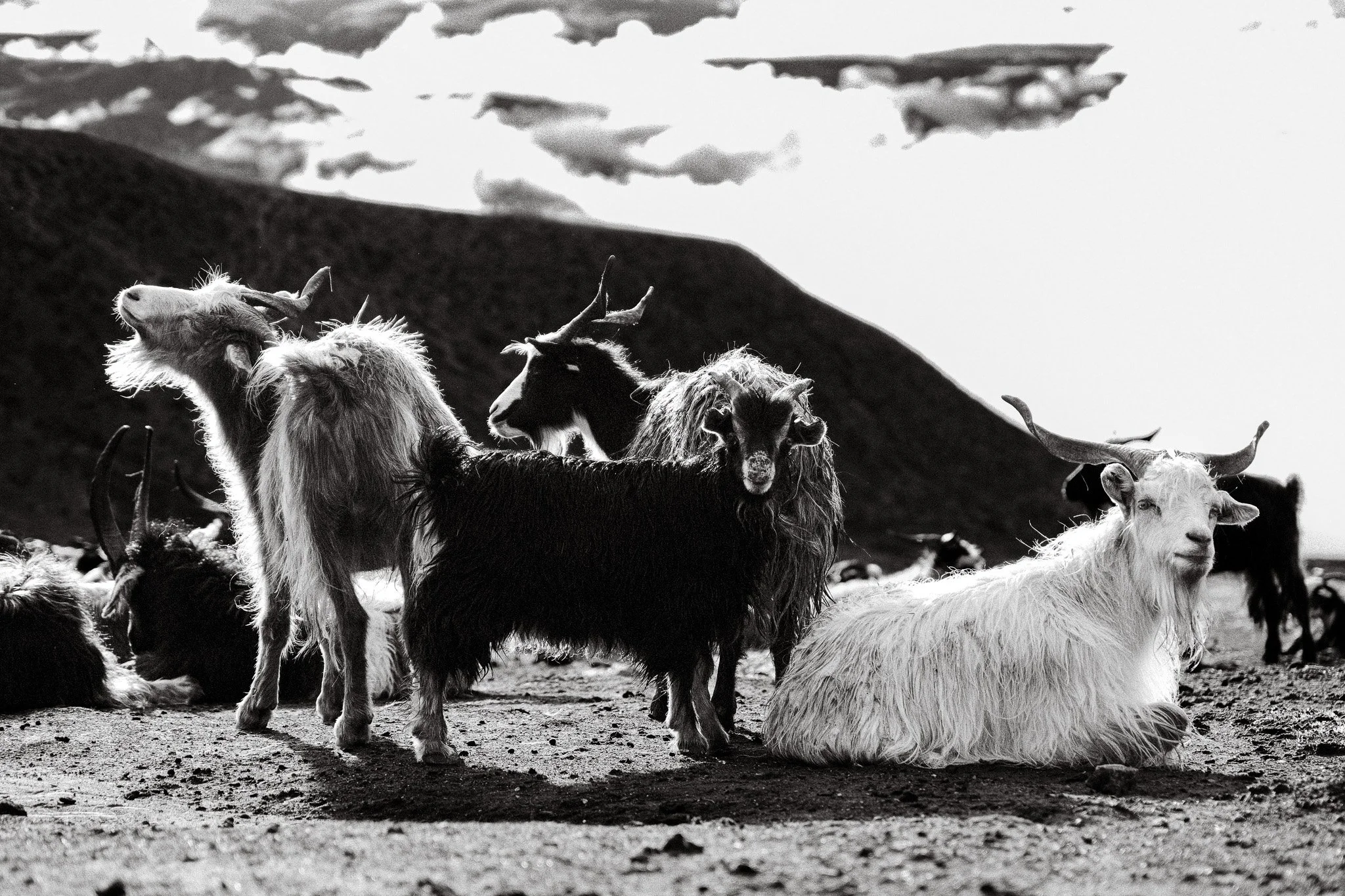
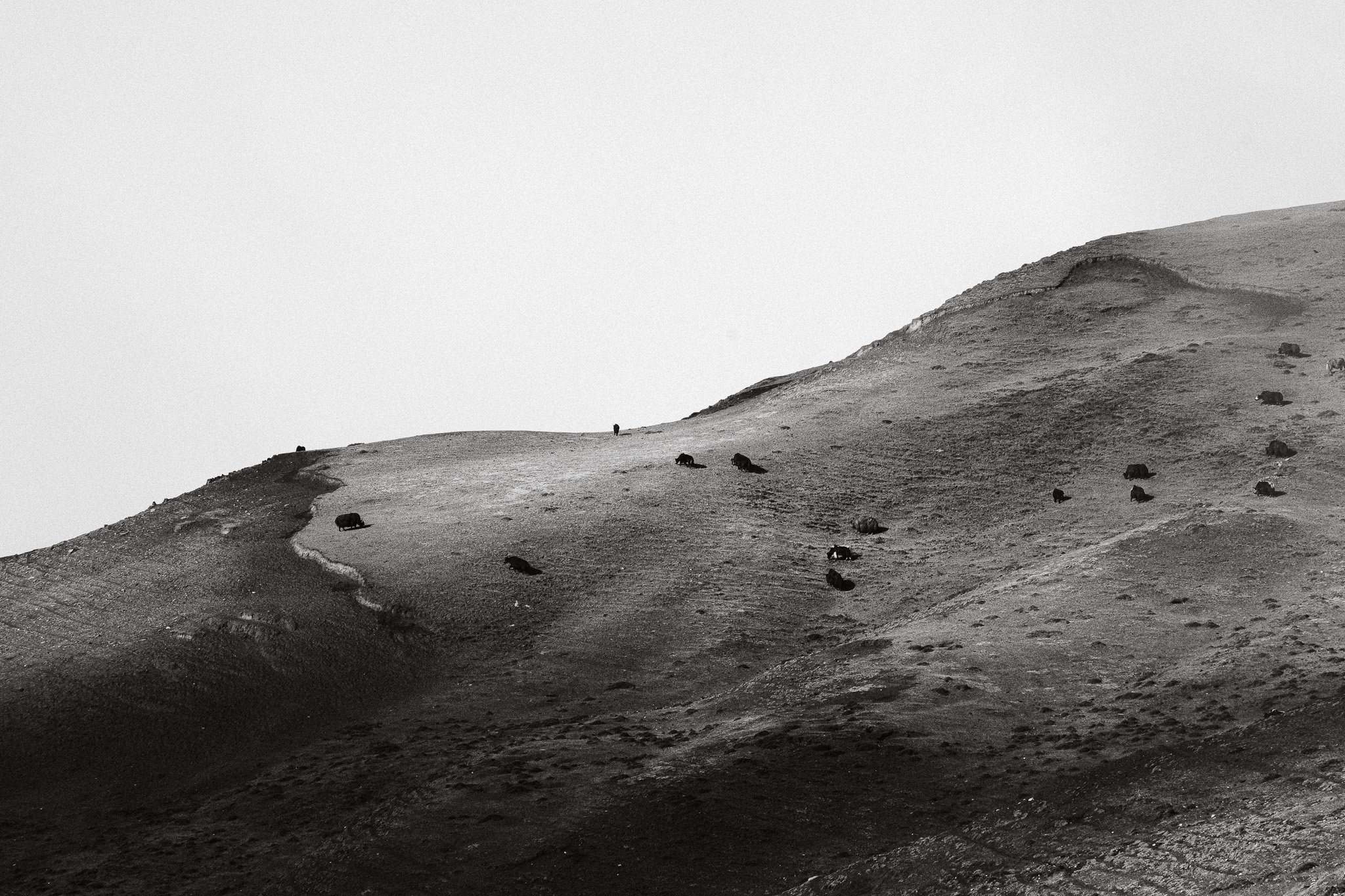
One of the strongest ways to work here is to return to the same streets at different times. The town changes with puja, livestock movements, shop activity and monastery lessons. Two or three nights should be considered a minimum for a photographer, and an additional day would make it easier to explore Choser and the surrounding valley without sacrificing time inside the town.
Life Around Lo Manthang Monastery
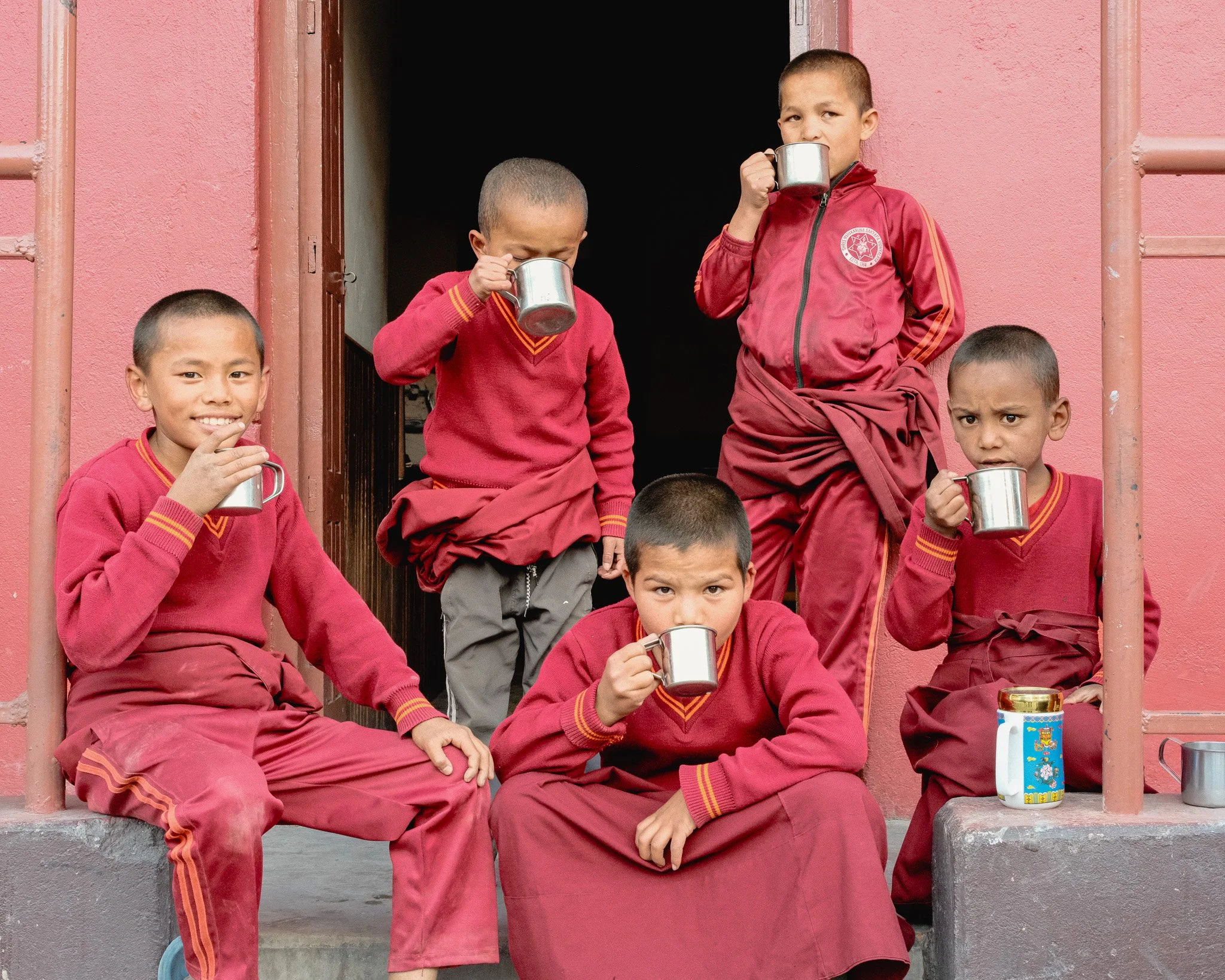
Some of my favourite moments in Lo Manthang came from spending time around the monastery towards the end of the day. Rather than simply visiting the building, photographing the interiors and moving on, we stayed long enough to watch the rhythm of daily life unfold around it.
As lessons and prayers came to an end, monks emerged into the late afternoon light to complete their kora, walking around the monastery and spinning the prayer wheels as they passed. Bells rang, prayer flags moved gently above the surrounding buildings, and small groups of locals passed through the square on their way home.
Then the atmosphere changed completely.
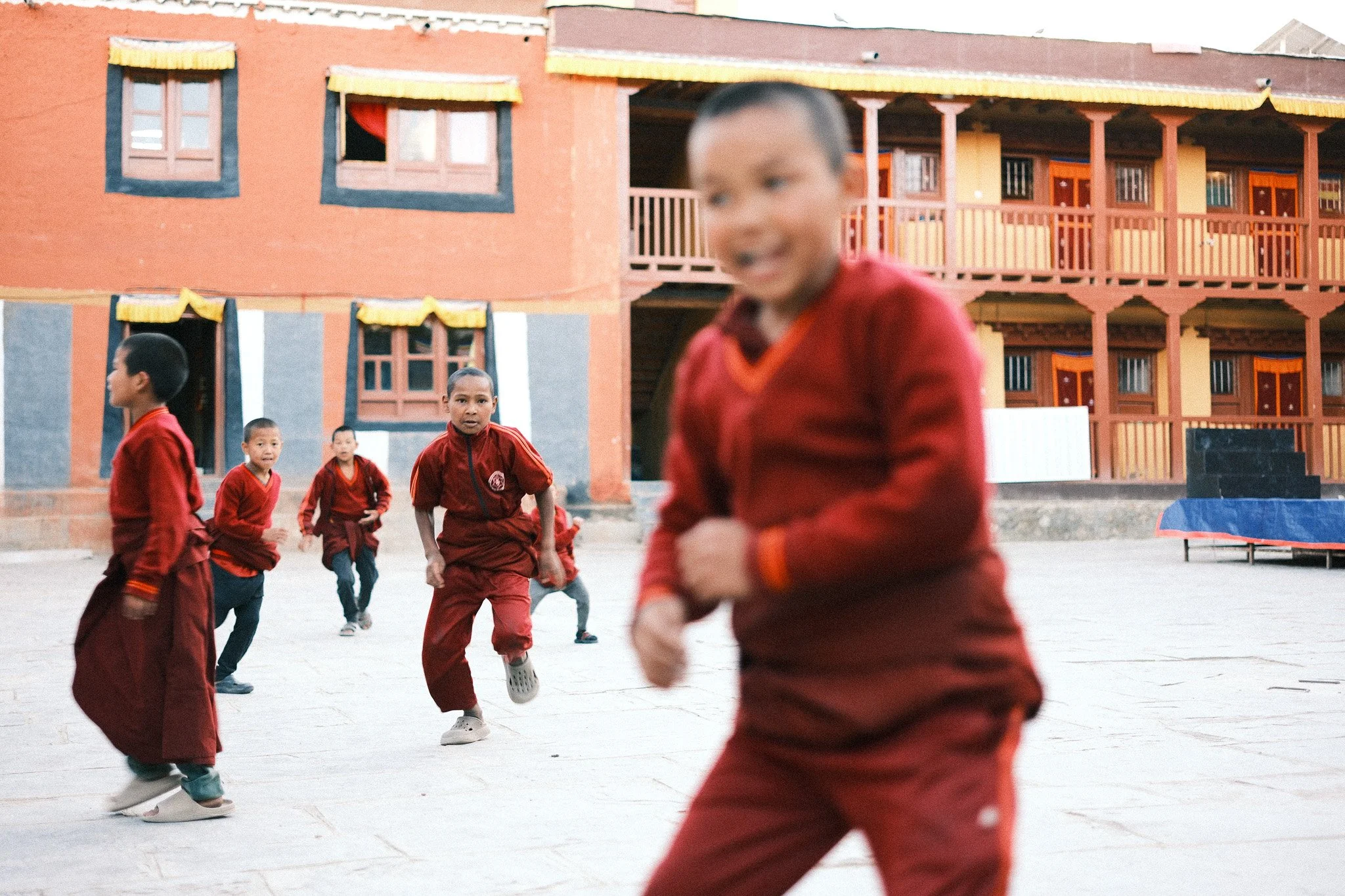
The younger monks spilled into the courtyard and began playing football and other games together. Robes that had looked so formal inside the monastery were suddenly flying around as the children ran, laughed and competed with each other. Several were curious about my camera and happily stopped for portraits before quickly returning to their games.
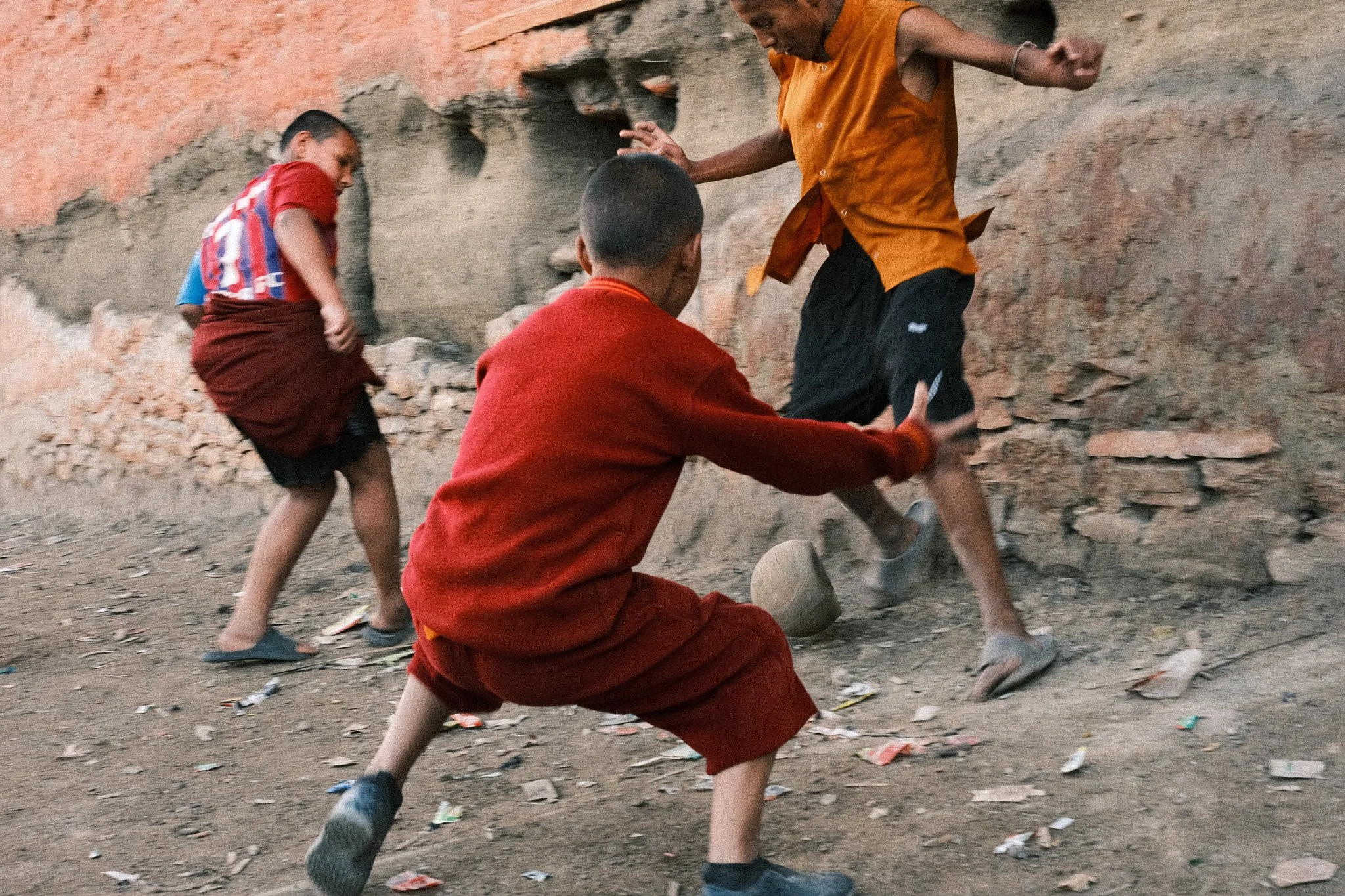
For me, these were some of the most rewarding photographs to make in Lo Manthang. They showed the monastery not simply as an ancient religious landmark, but as a living part of the community, where centuries-old Buddhist traditions exist alongside the completely ordinary energy of children finishing their day.
Choser
Choser was one of the photographic highlights of the entire expedition. Before reaching the village, we explored Sija Jhong, an extraordinary cave complex carved into the cliffs with 108 chambers overlooking the valley. Nearby, monks gathered for a puja, their chanting accompanied by the deep sound of traditional horns echoing across the yellow rock landscape.
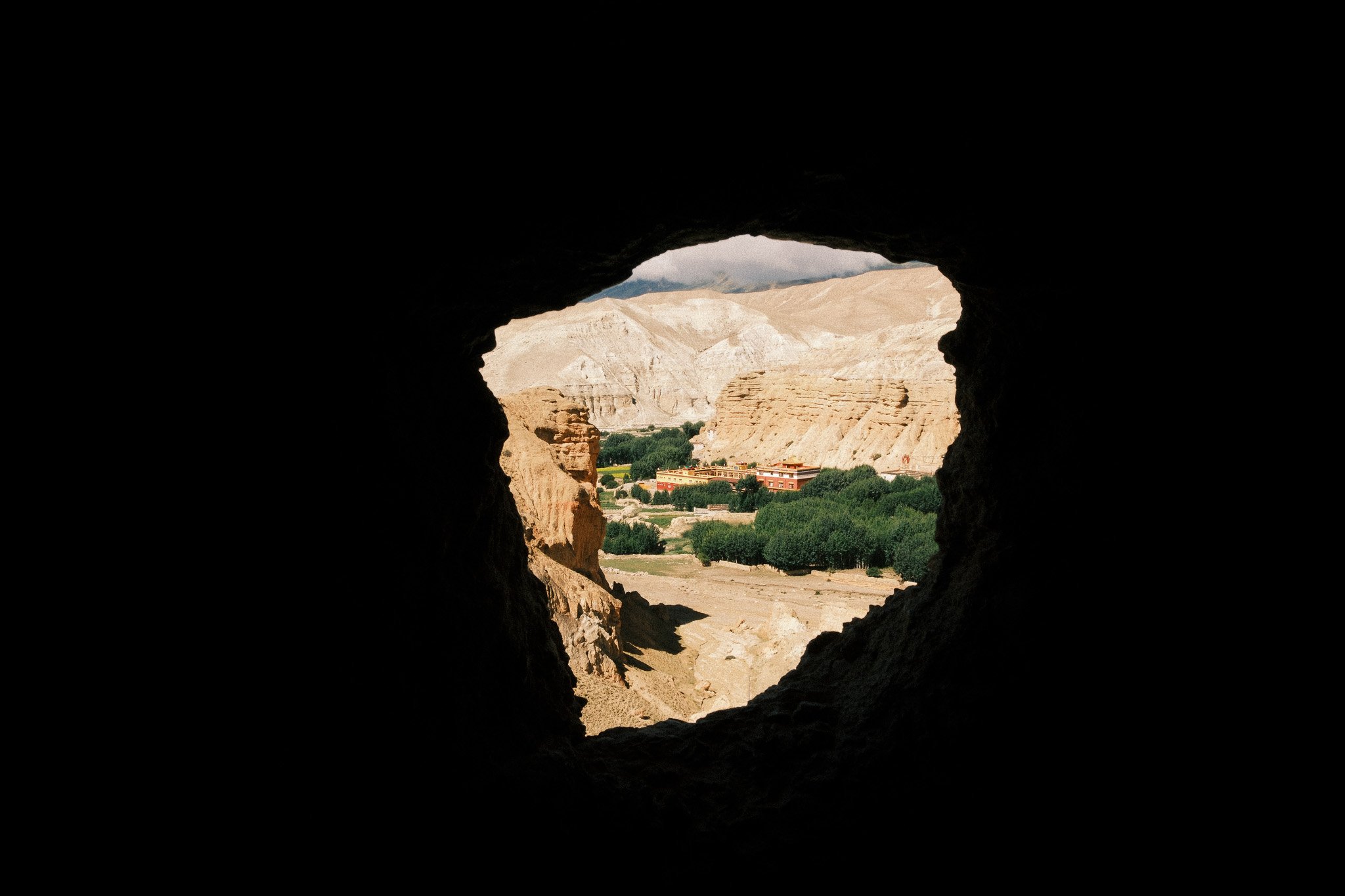
The atmosphere changed again at Lo Niphu Monastery, where people had travelled from across the region to attend a blessing ceremony led by a respected Rinpoche. The monastery courtyard was full of monks, families and pilgrims, creating endless opportunities for documentary photography.
The clear blue skies and strong mountain sunlight brought a completely different feel to the photographs compared to the softer conditions earlier in the trip. Rich colours, traditional clothing and the yellow monastery walls contrasted beautifully against the deep blue Himalayan sky, while distant views of Dhaulagiri completed the backdrop.
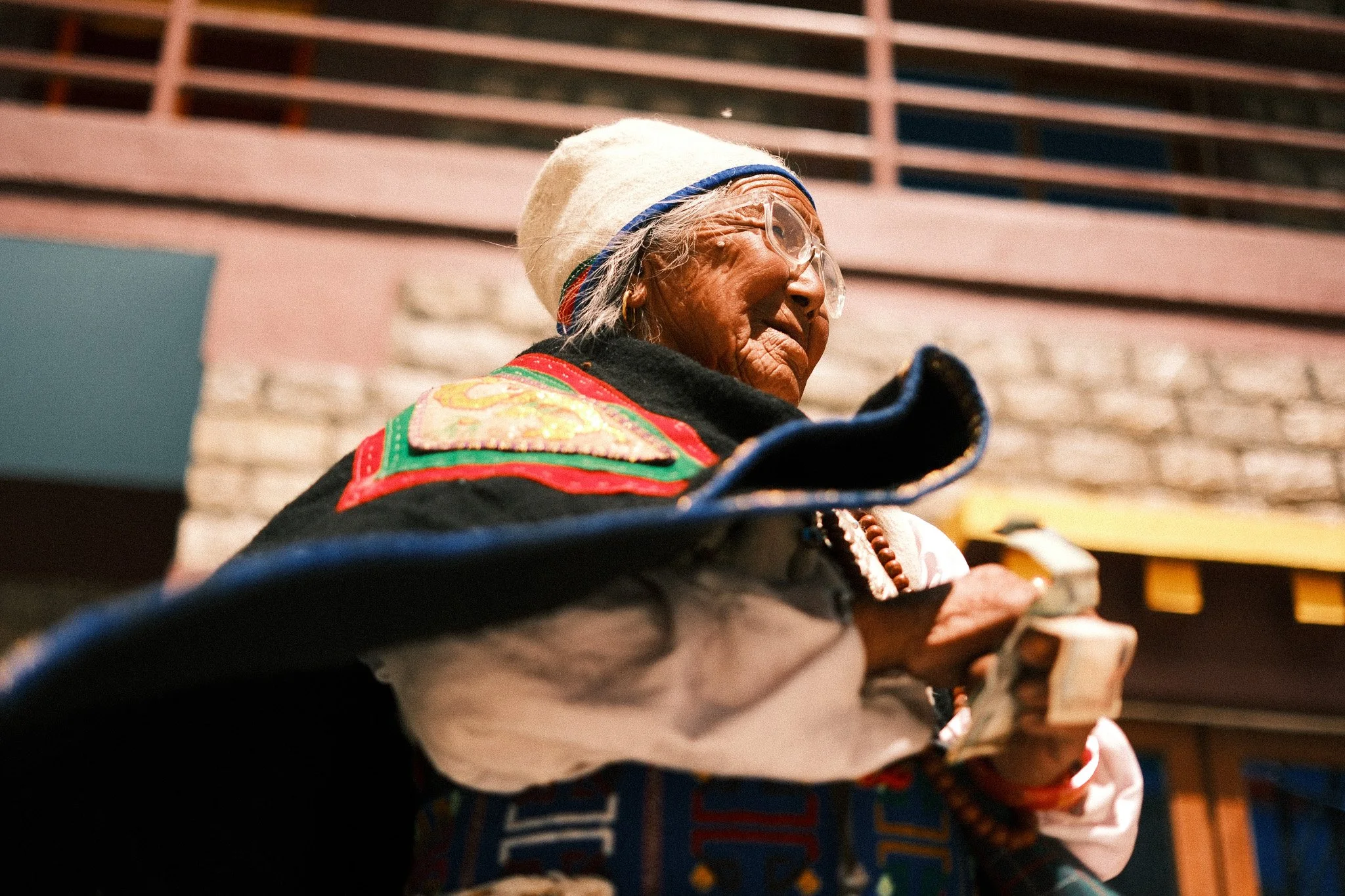
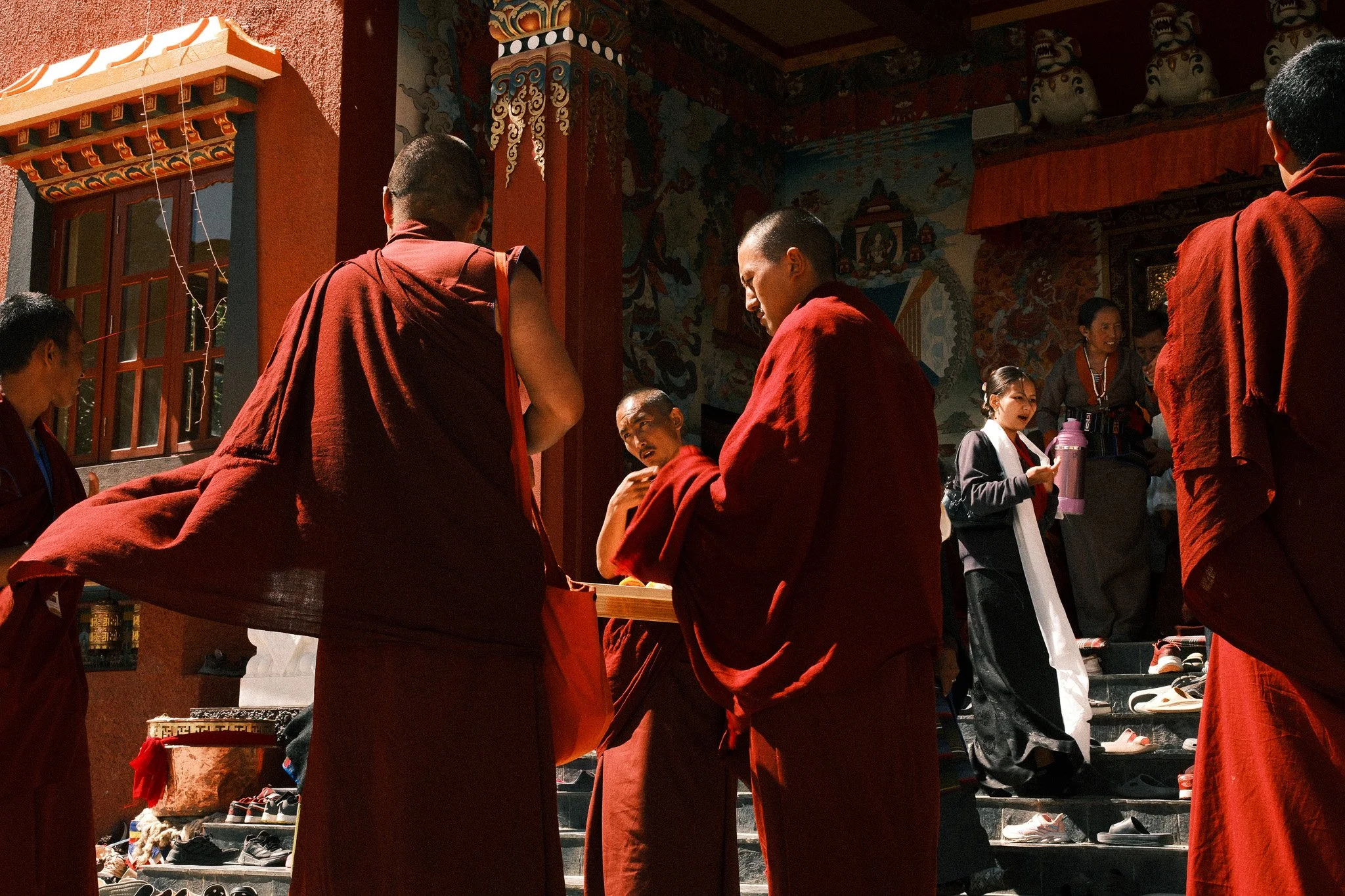
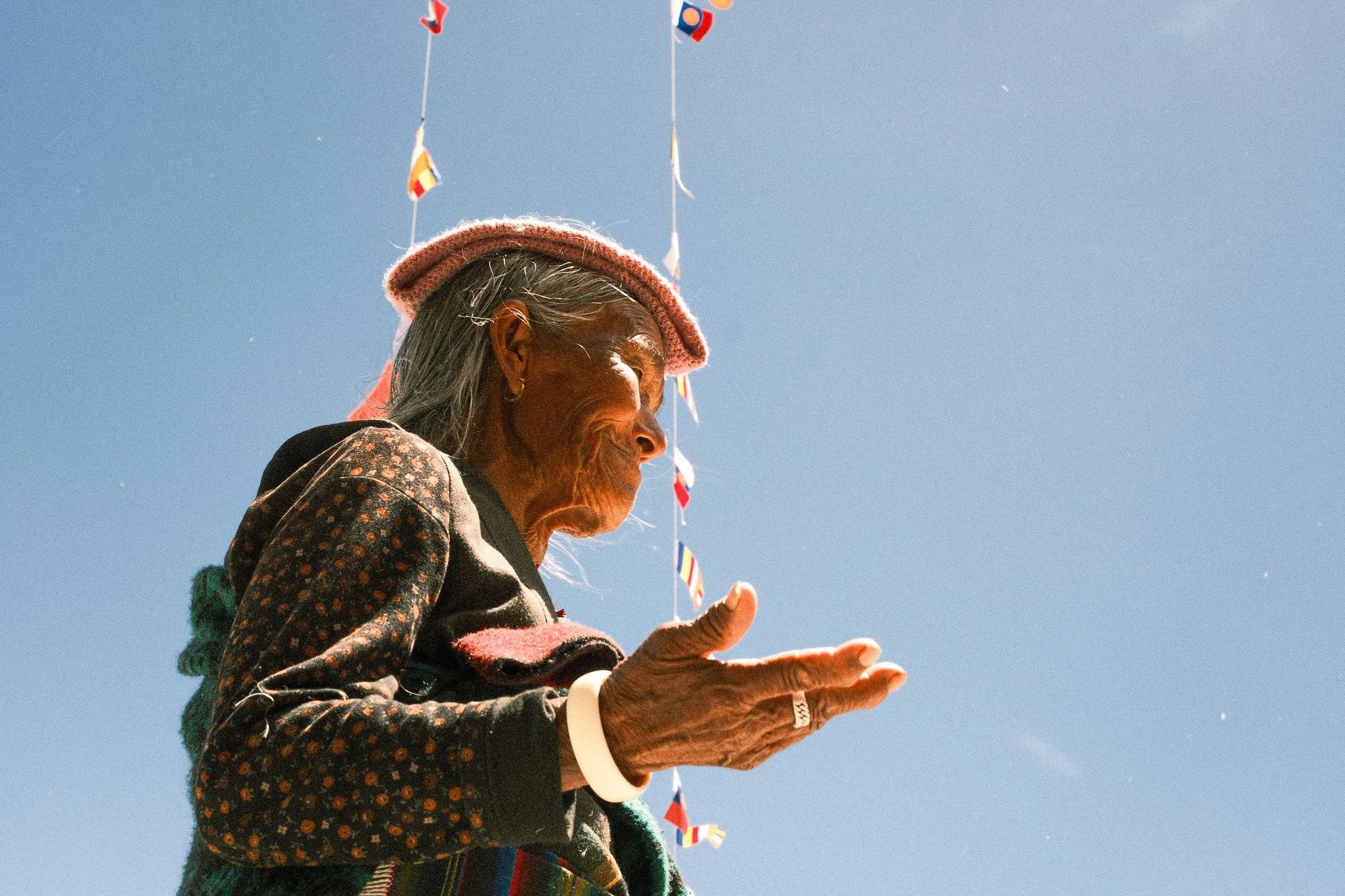
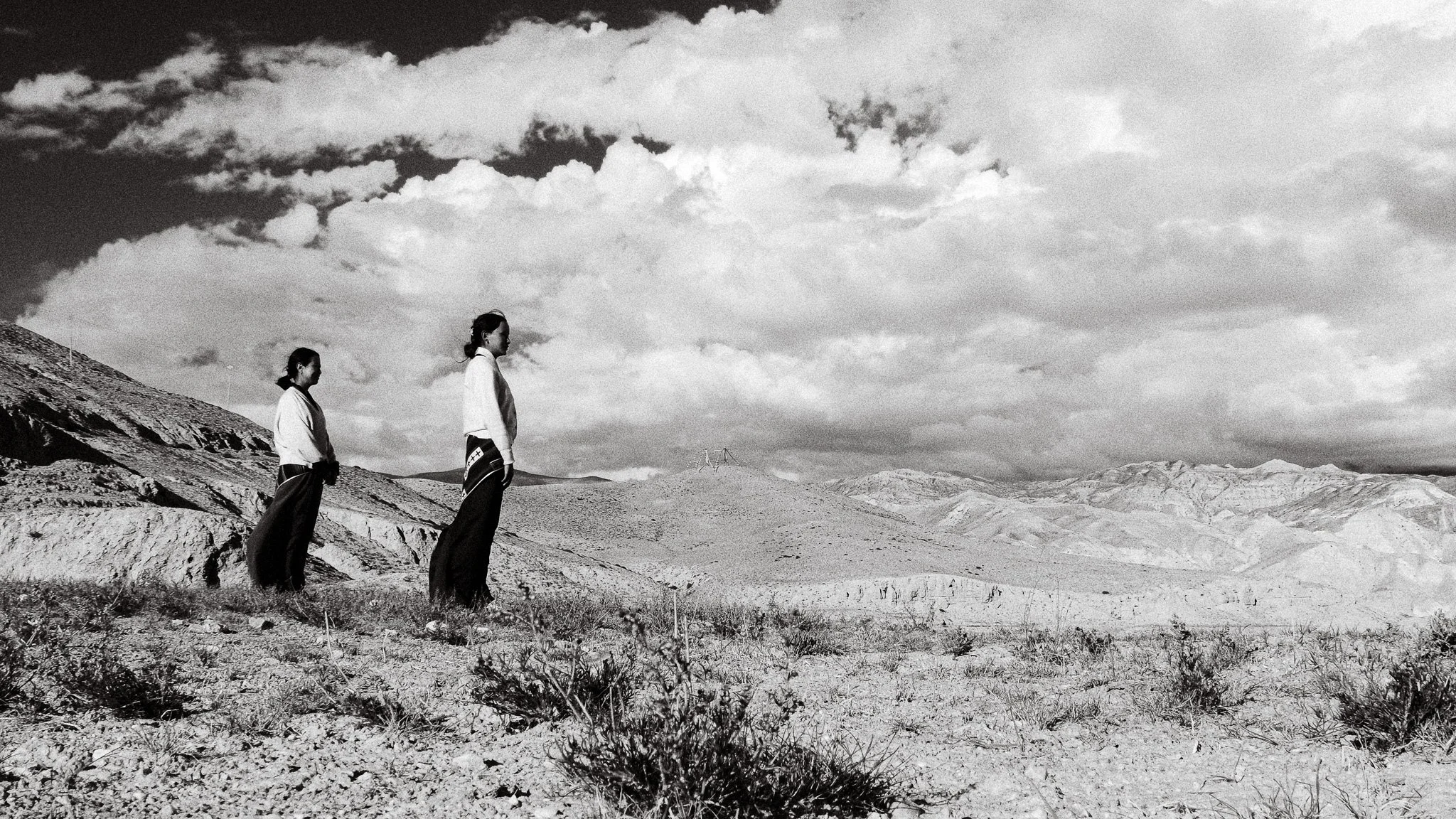
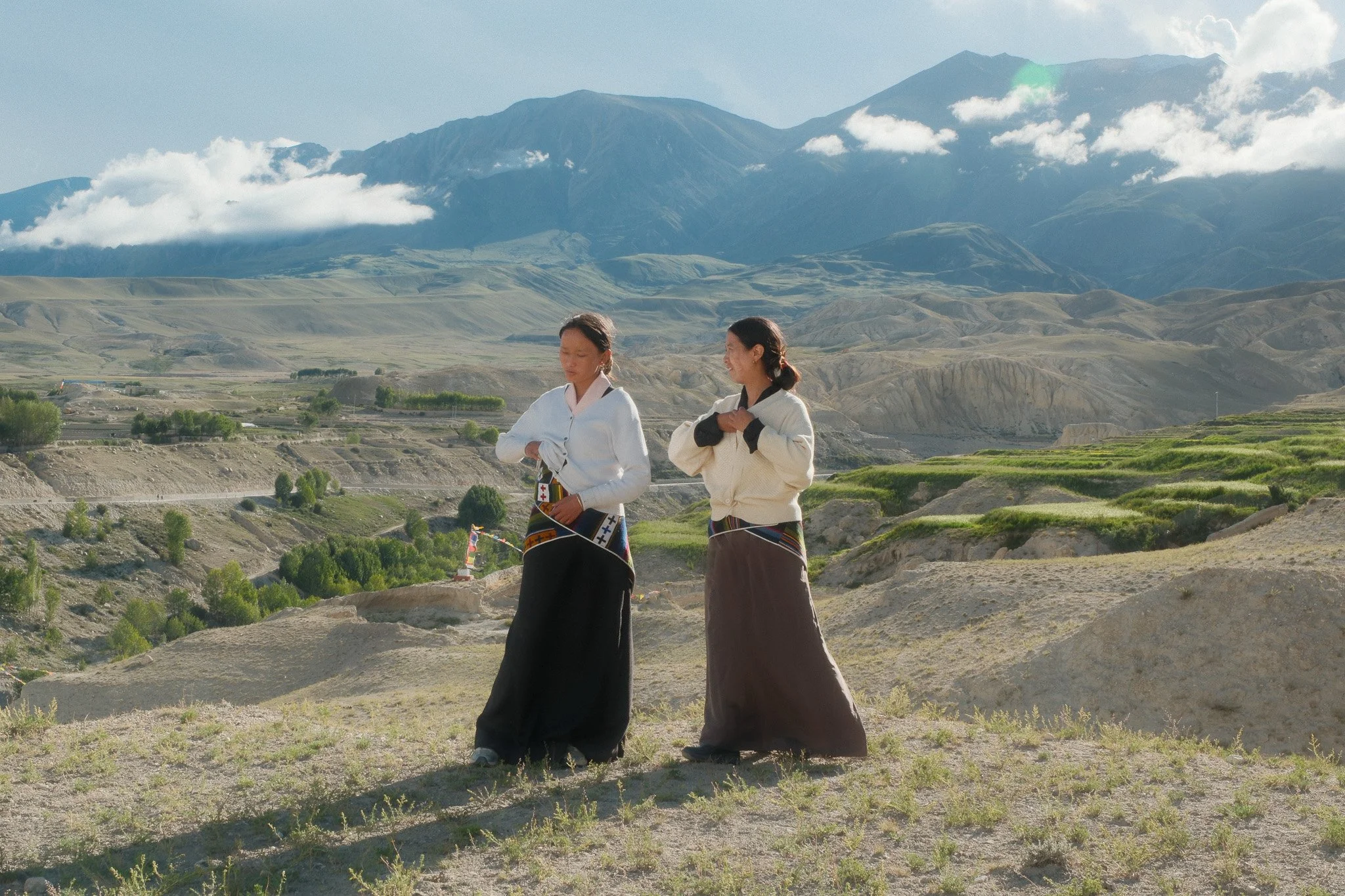
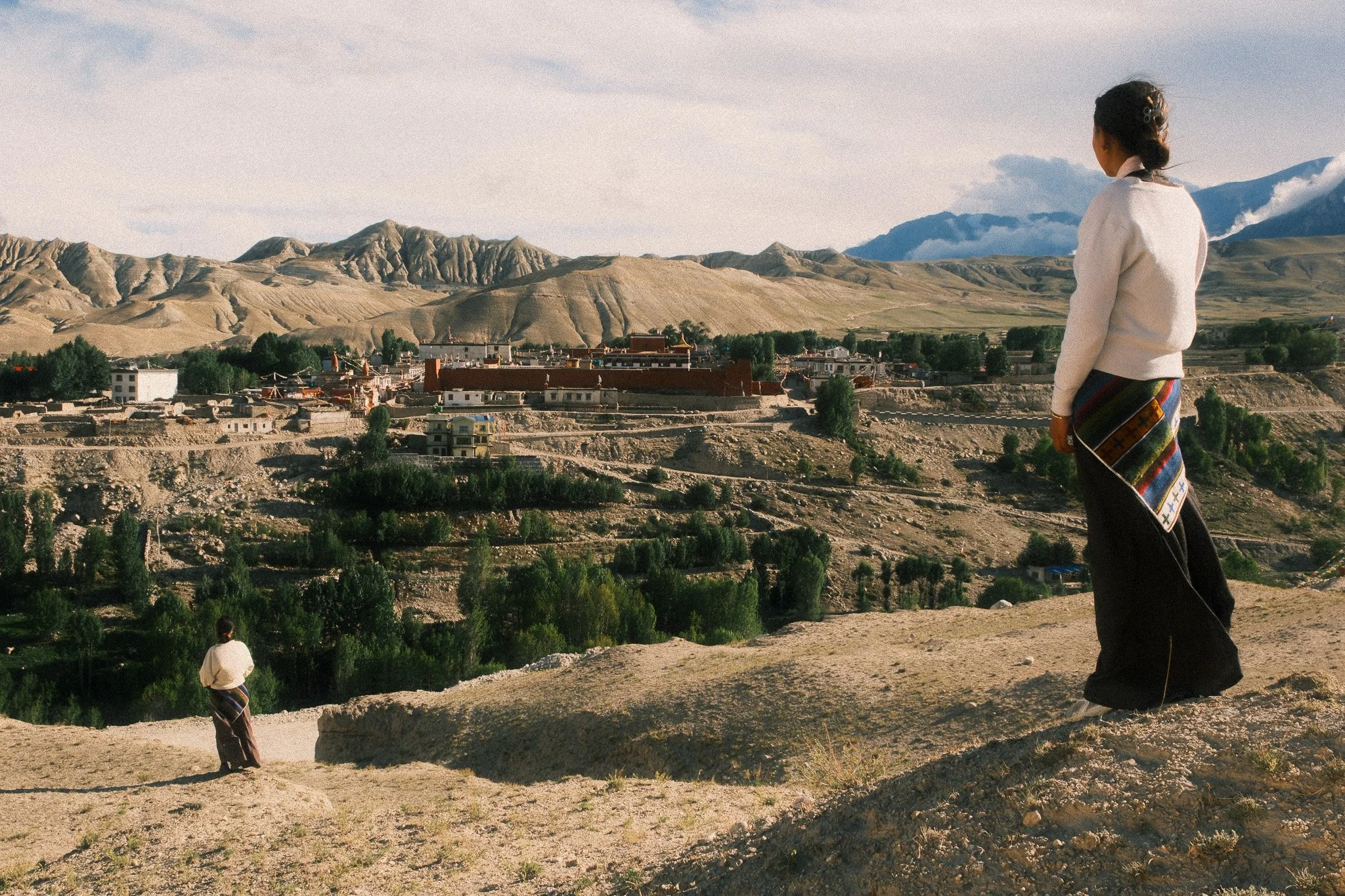
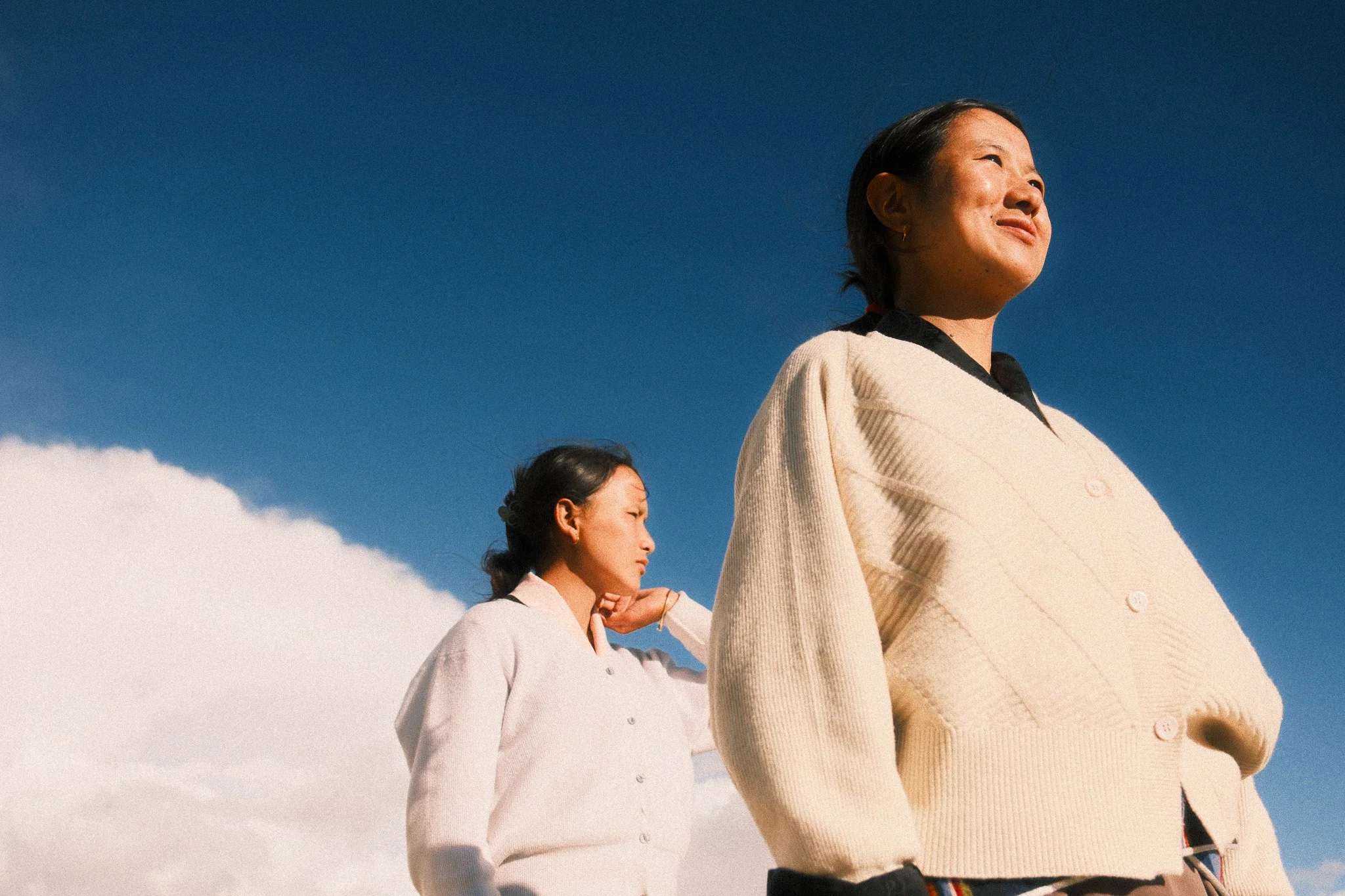
With Udaya's help, we were also able to photograph the two local women we had met the previous day, creating a series of portraits around the monastery and the ancient hilltop buildings. Combined with the candid moments unfolding naturally throughout the ceremony, it became one of the most productive photography days I've ever experienced.
We first met the two women by chance at a small café in Lo Manthang. They were teachers working with the young monks in the town, and both had striking features that immediately made me think they would photograph beautifully. After chatting for a while, we arranged to meet again the following day to take some portraits.
We spent the next morning walking together around a nearby monastery, through the town and onto the surrounding hillsides. Dressed in traditional clothing, they looked completely at home against the whitewashed walls, Buddhist architecture and dry mountain landscape of Upper Mustang.
It became one of my favourite portrait sessions from the entire trip. There was no studio, complicated lighting setup or tightly planned shot list. We simply explored together, stopping whenever the light, landscape or architecture created an interesting composition.
What made the photographs particularly strong for me was the connection between the subjects and their surroundings. Their clothing, features and connection to the local community gave the portraits a cultural context that would have been impossible to recreate elsewhere. Rather than simply making portraits in Upper Mustang, the photographs felt unmistakably of Upper Mustang.
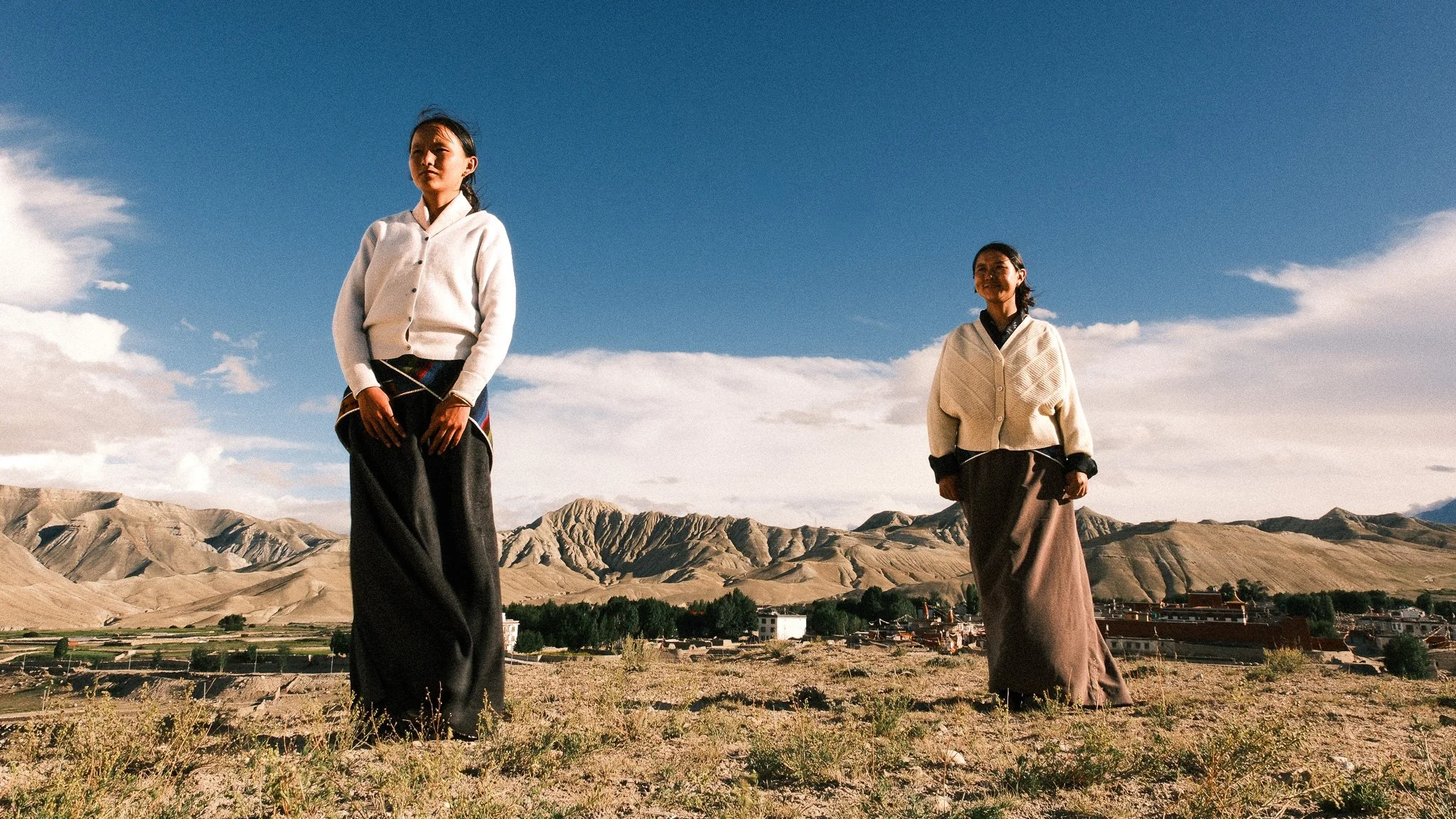
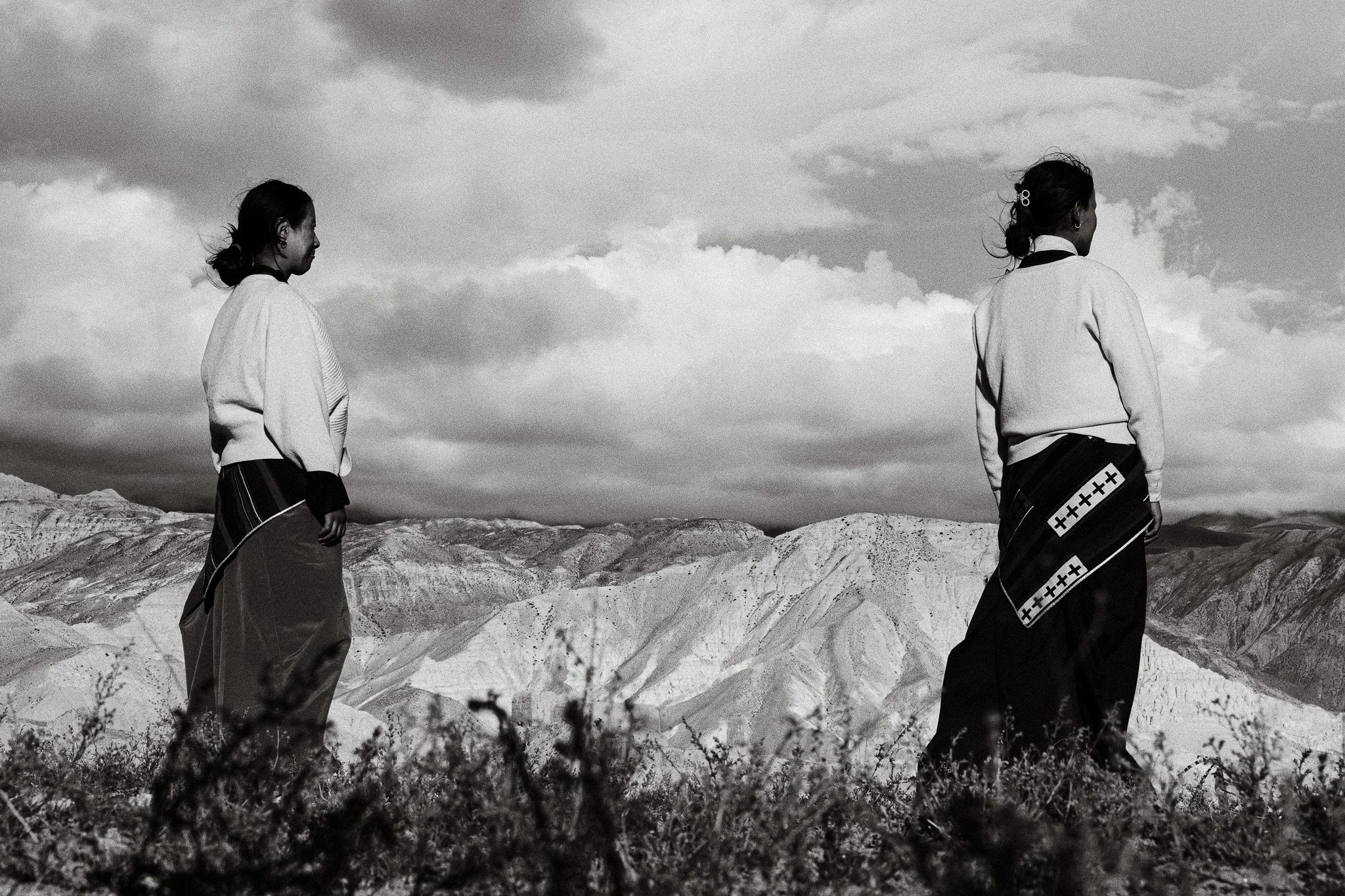
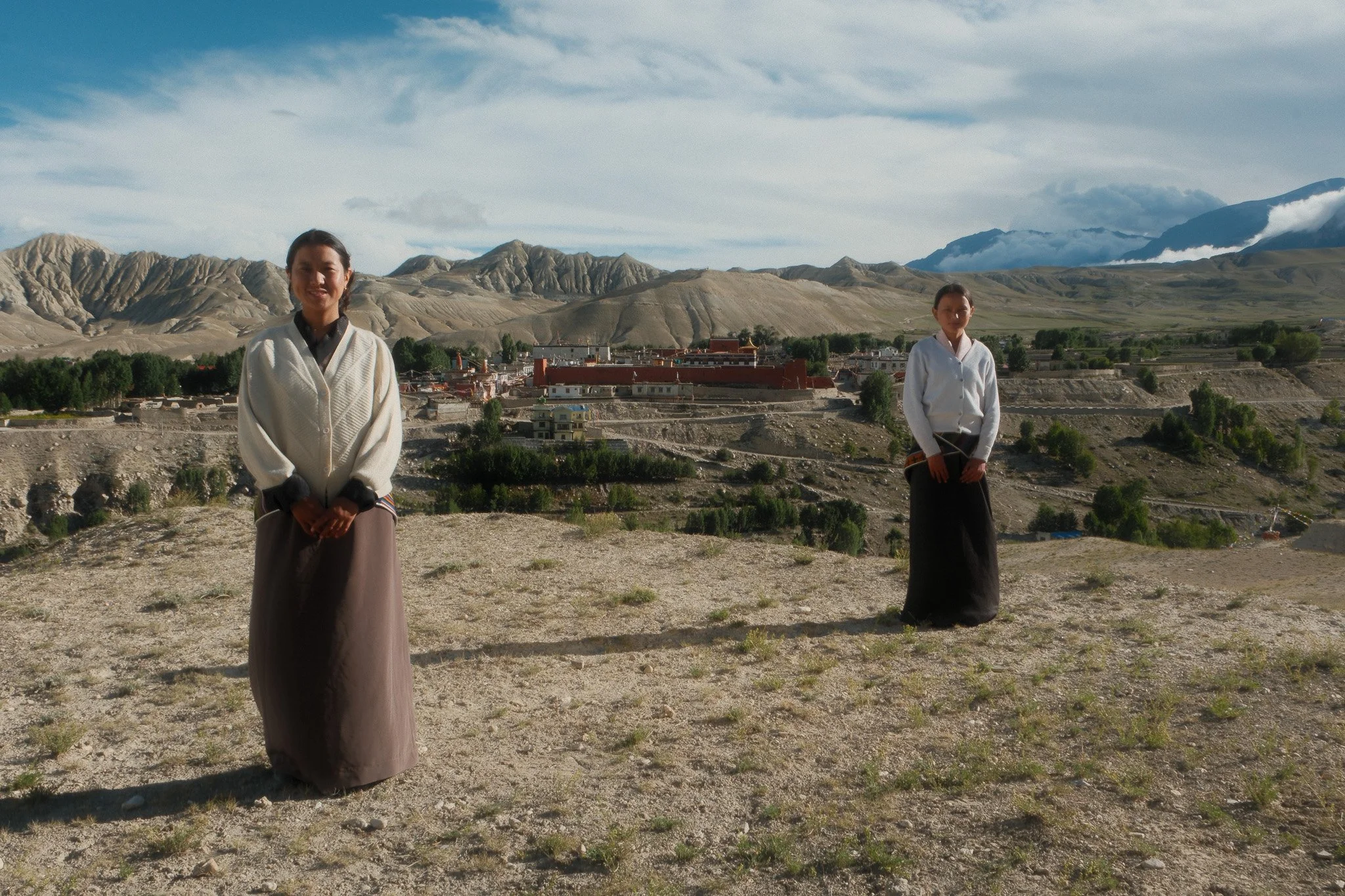
More than the photographs themselves, I remember how welcoming everyone was. Despite the significance of the ceremony, people were relaxed, friendly and genuinely happy to be photographed. That openness, together with the remarkable setting, made Choser one of the most memorable places I visited in Upper Mustang.
📸 Best photography: Ceremonies at Lo Niphu Monastery, portraits around the monastery complex and candid moments as pilgrims gather throughout the day.
Chuksang & Tetang
After several days exploring Lo Manthang and the surrounding villages, the journey south offered a chance to revisit Chuksang before making a short detour to the quieter village of Tetang.
Back in Chuksang, we visited Menchelhagang Cave Monastery, tucked away beside our accommodation, before continuing to Tetang. None of our group had visited the village before, which made exploring its quiet streets feel like a genuine discovery rather than another stop on a well-trodden itinerary.
The light through the cave window was excellent, so we tried out a couple of natural light portraits, which turned out pretty well.
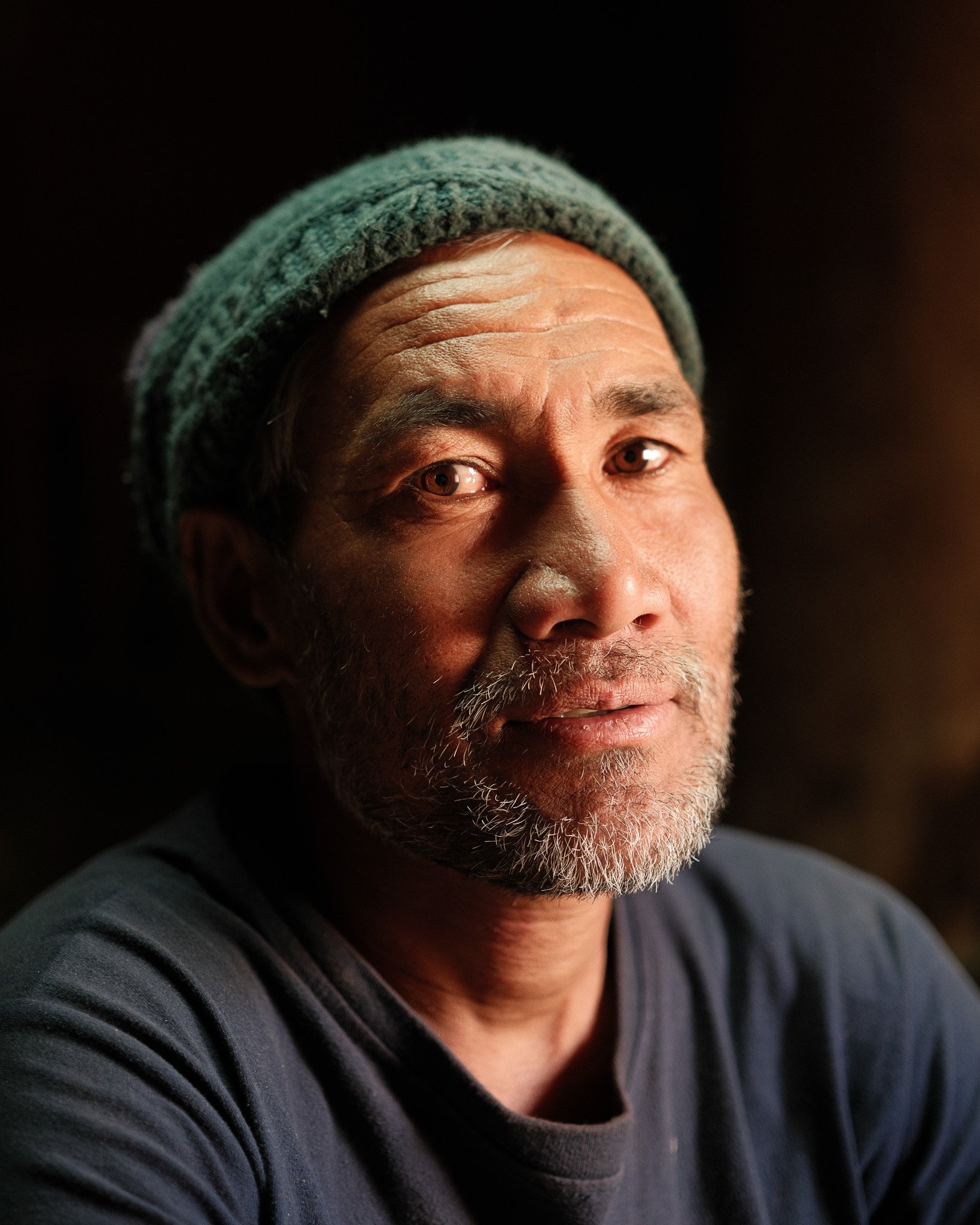
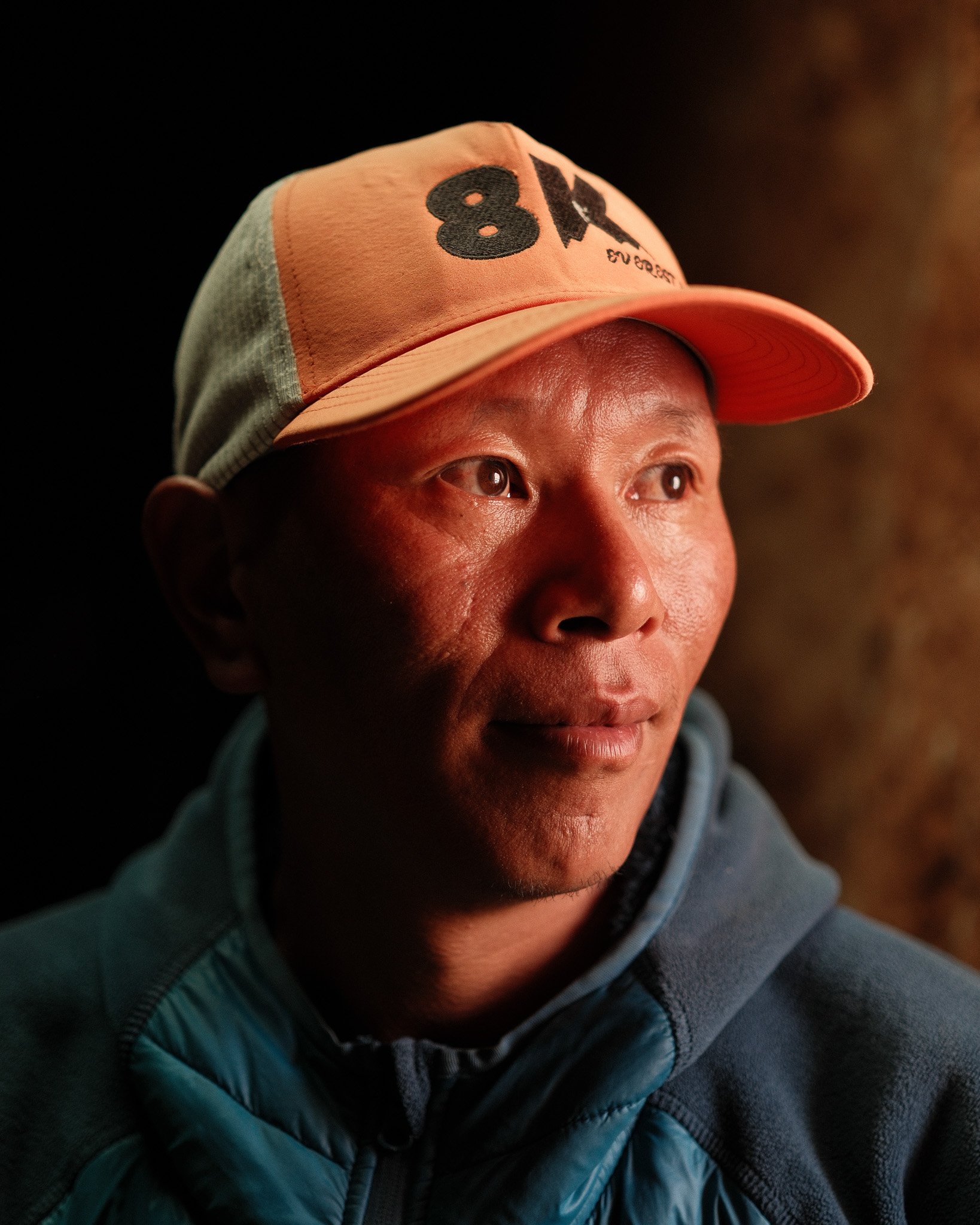
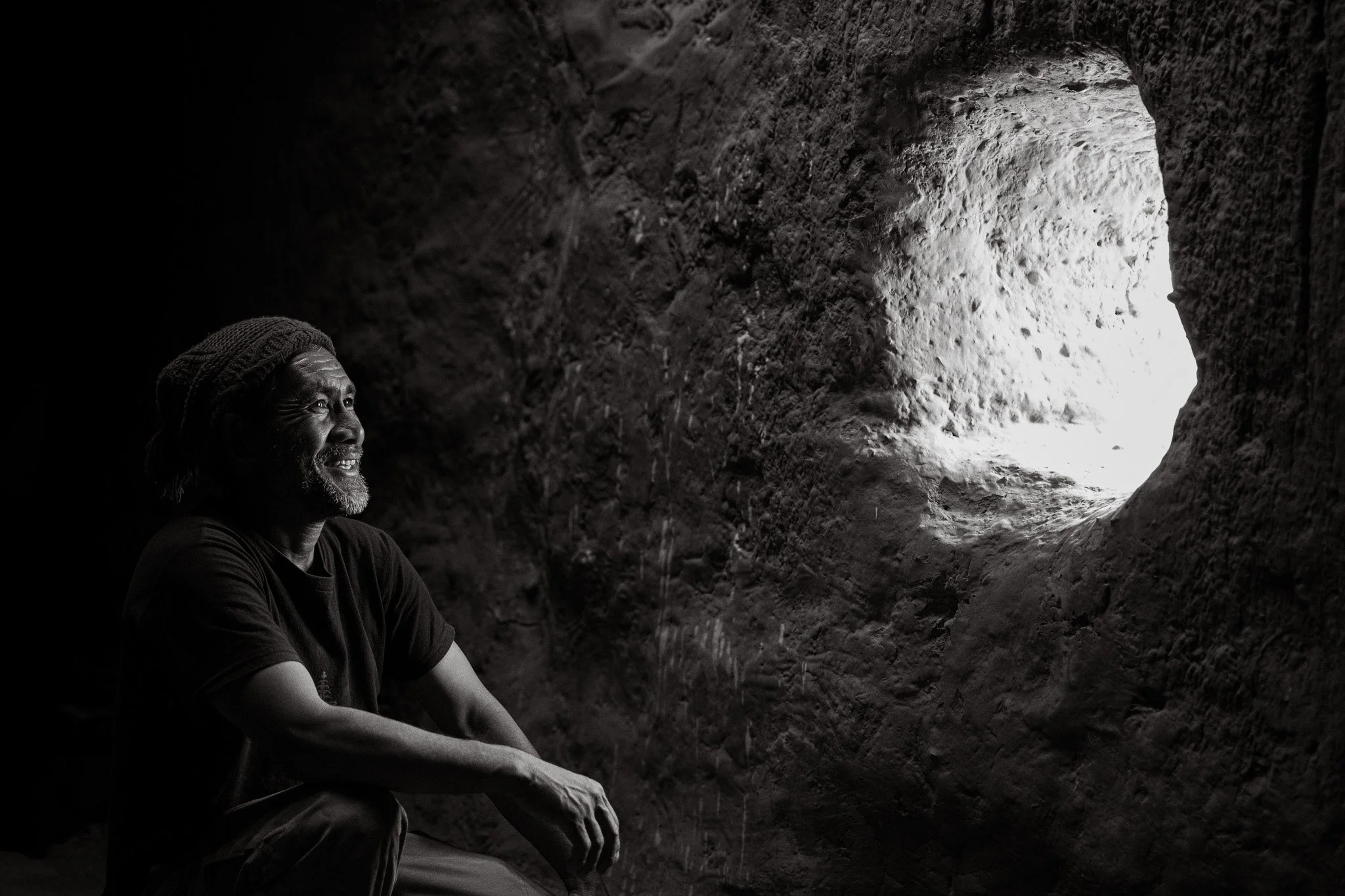
📸 Worth the detour: If you have time, visit Tetang and don't rush straight through Chuksang. Some of the quieter villages reveal just as much character as the better-known destinations further north.
Muktinath
Although Muktinath is one of Nepal's most important pilgrimage sites, I found the journey there just as rewarding as the destination itself. Passing through Kagbeni and Jharkot, we paused to walk around ancient monasteries where the sound of chanting, drums, horns and cymbals echoed through thick stone walls.
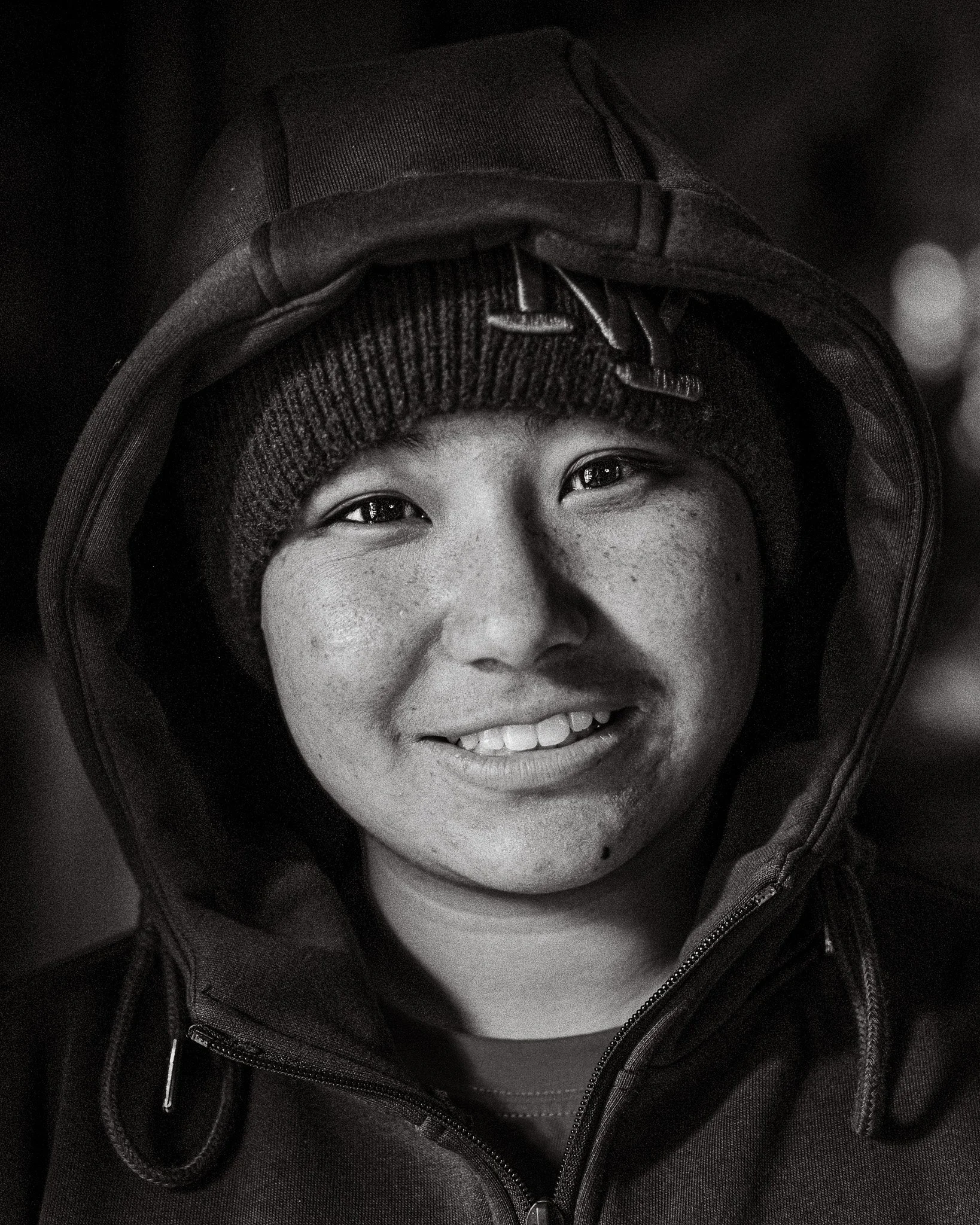
At Muktinath, the temples attracted pilgrims from across Nepal and India. One of my favourite portraits from the day was of Sherap Wangmo, a young nun inside the temple that houses Muktinath's famous natural gas flame. The combination of soft light, colourful robes and the peaceful atmosphere made it one of the most rewarding portrait sessions of the trip.
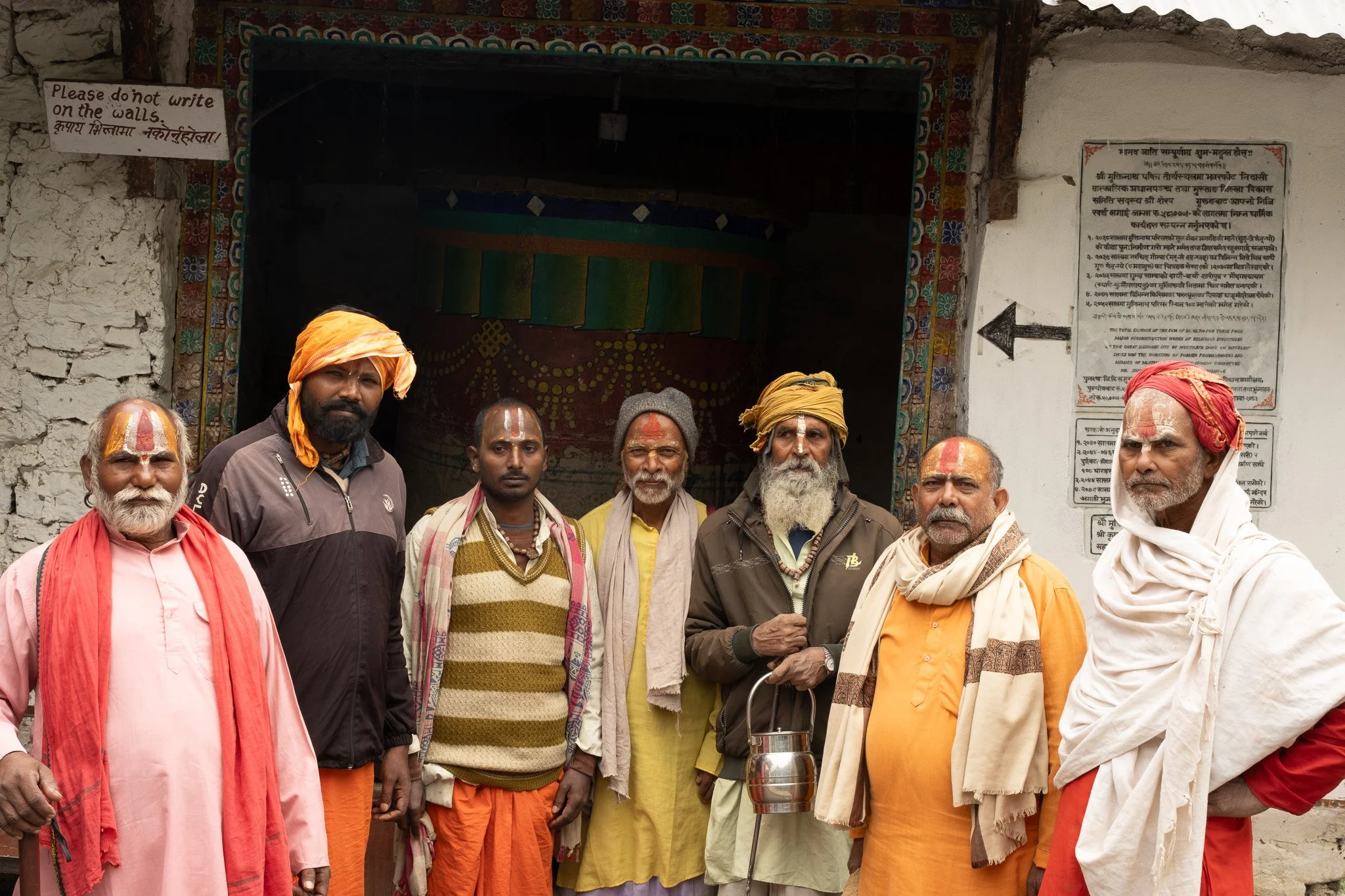
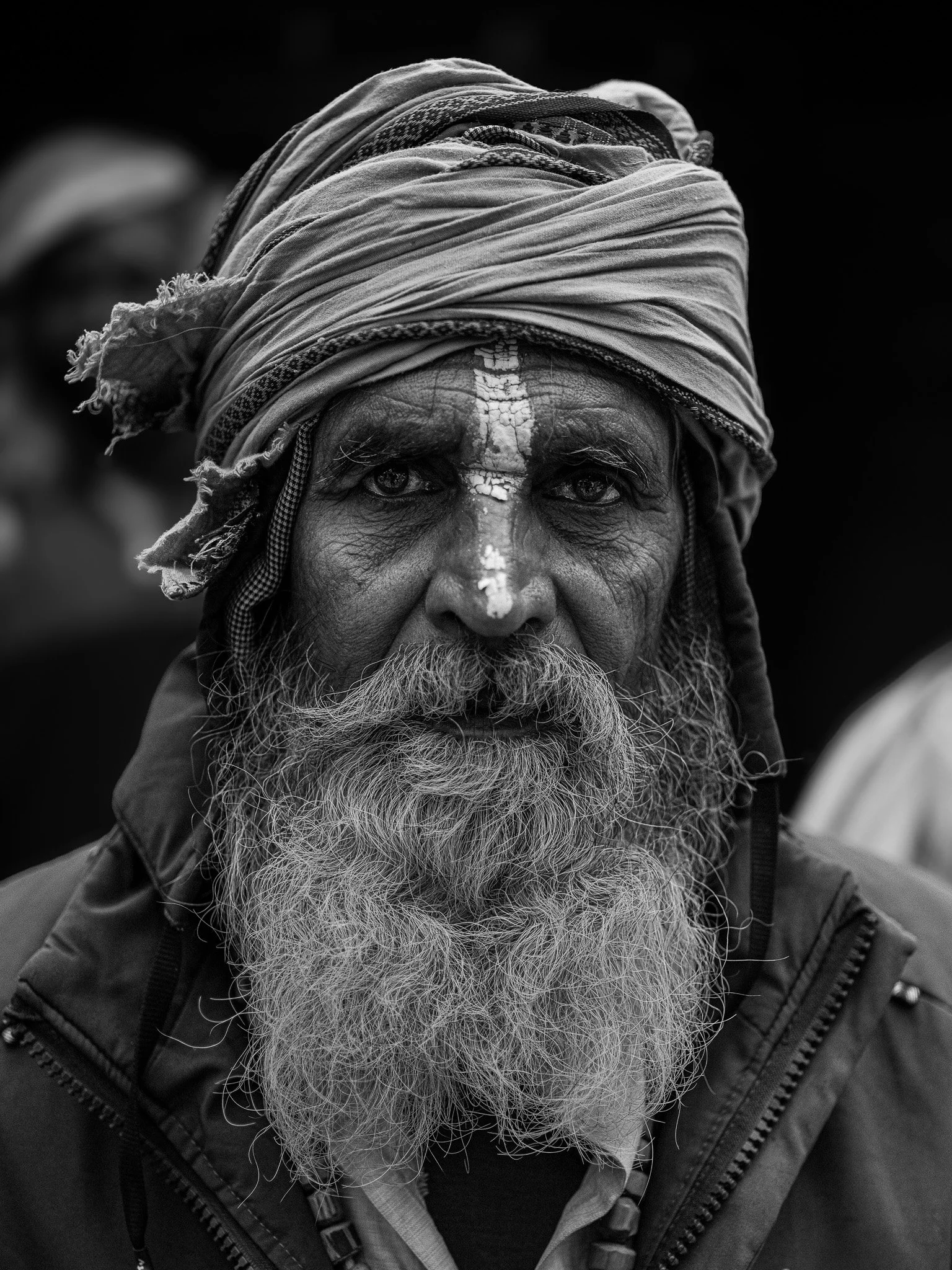
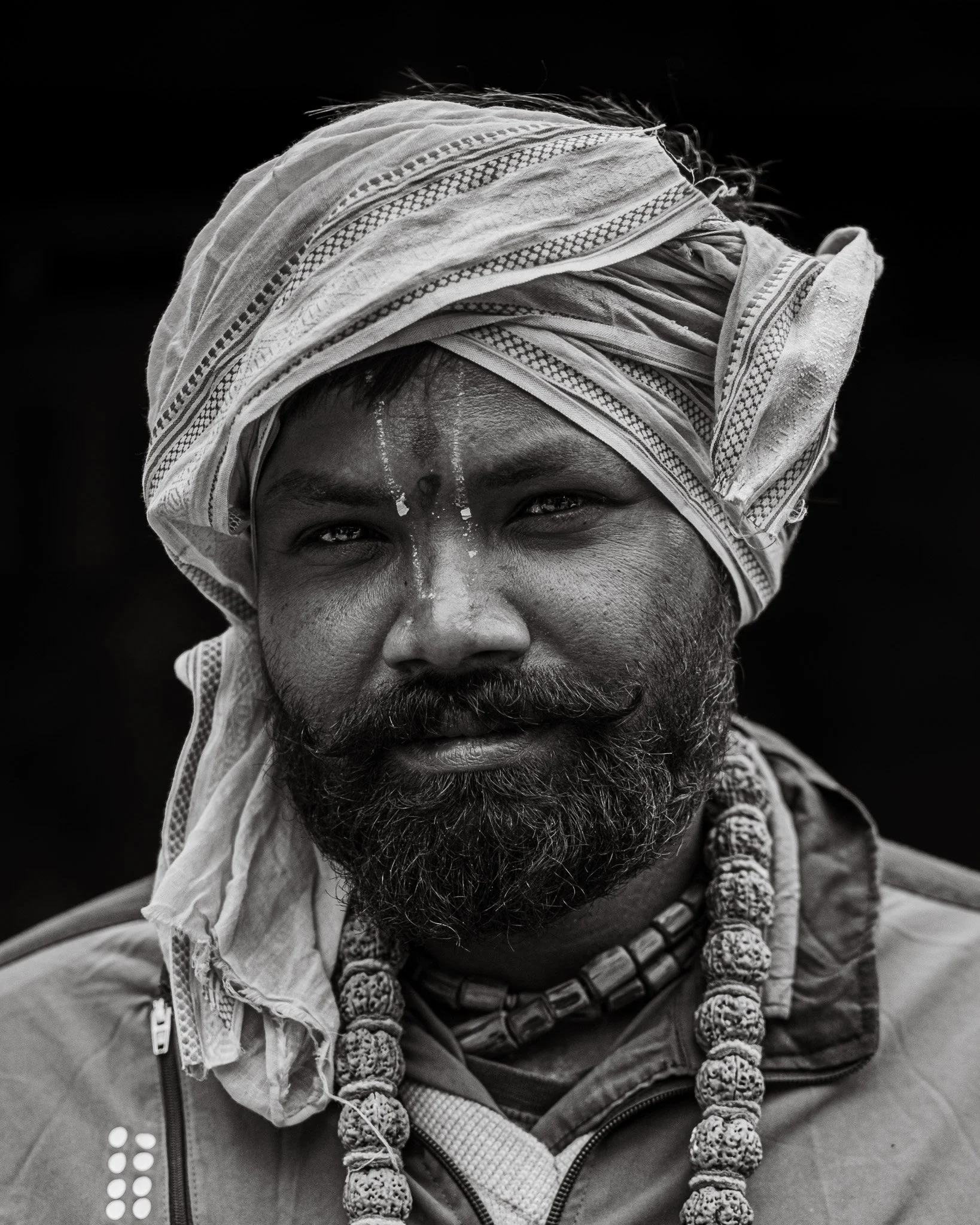
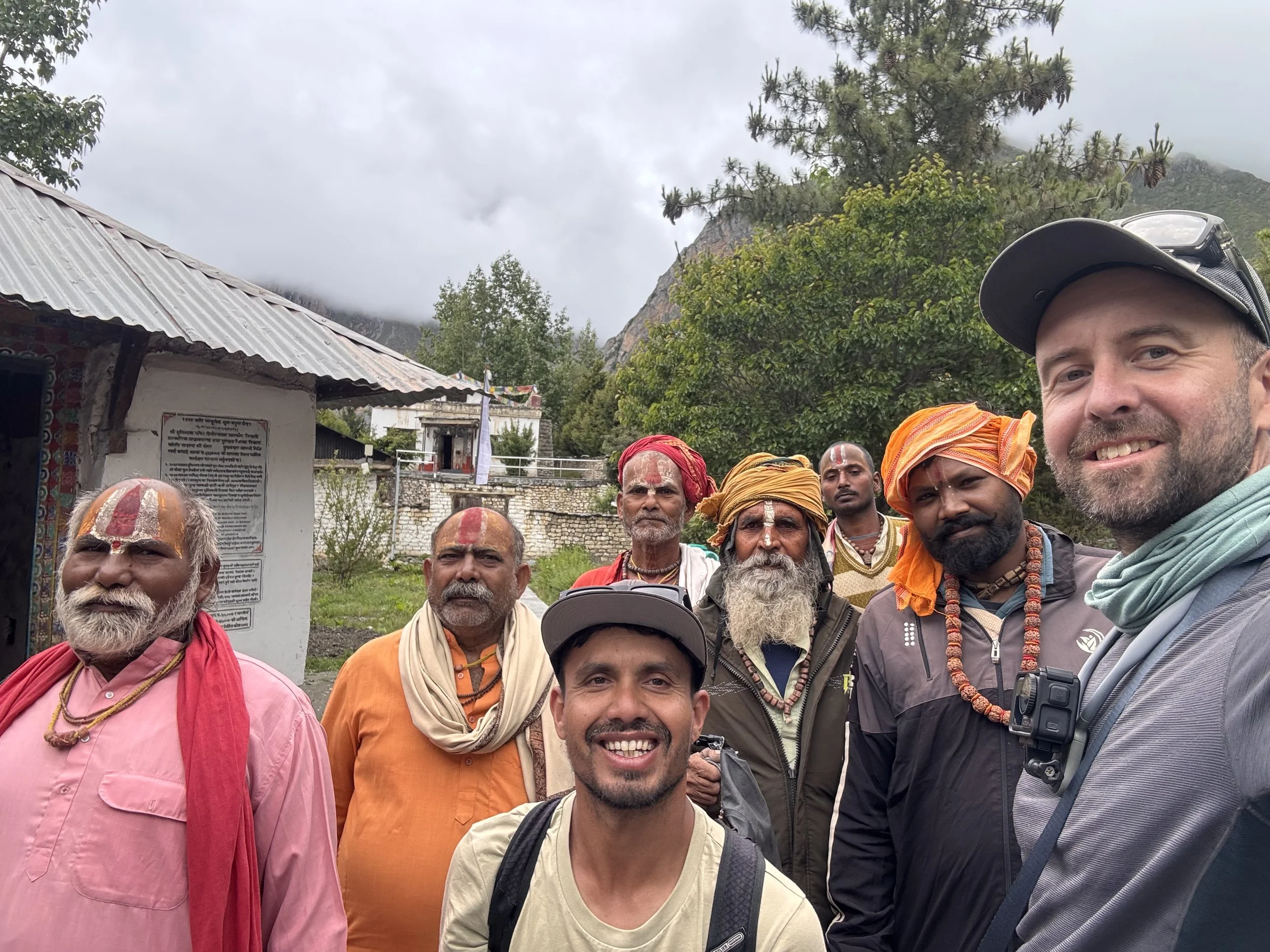
Later that afternoon, we wandered into a nearby ashram (dharamshala) and unexpectedly met the same group of sadhus we had photographed earlier in the journey. They welcomed us into their living quarters, shrines and ceremony spaces, offering a fascinating glimpse into a way of life that most visitors never experience.
📸 Best photography: Arrive early to experience the monasteries around Kagbeni and Jharkot before visiting Muktinath, then spend time around the temple complex where monks, nuns and pilgrims create wonderful opportunities for respectful documentary photography.
Lubra
My final full day in Mustang began before sunrise, I stepped outside into the cool morning air as pilgrims from India slowly climbed the stone steps towards Muktinath Temple. Low cloud drifted through the village, horses and dogs wandered the empty lanes, and the day was only just beginning.
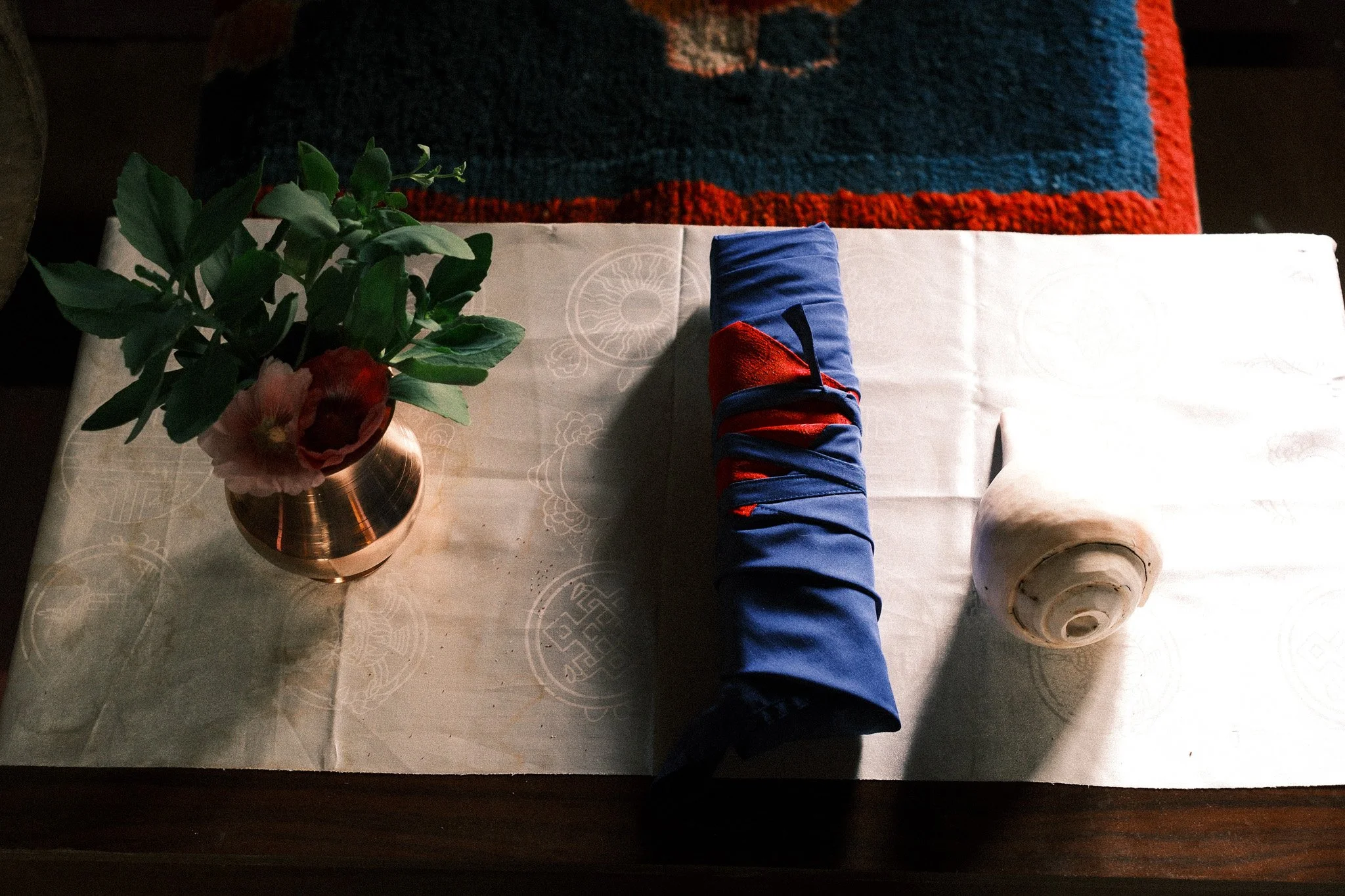
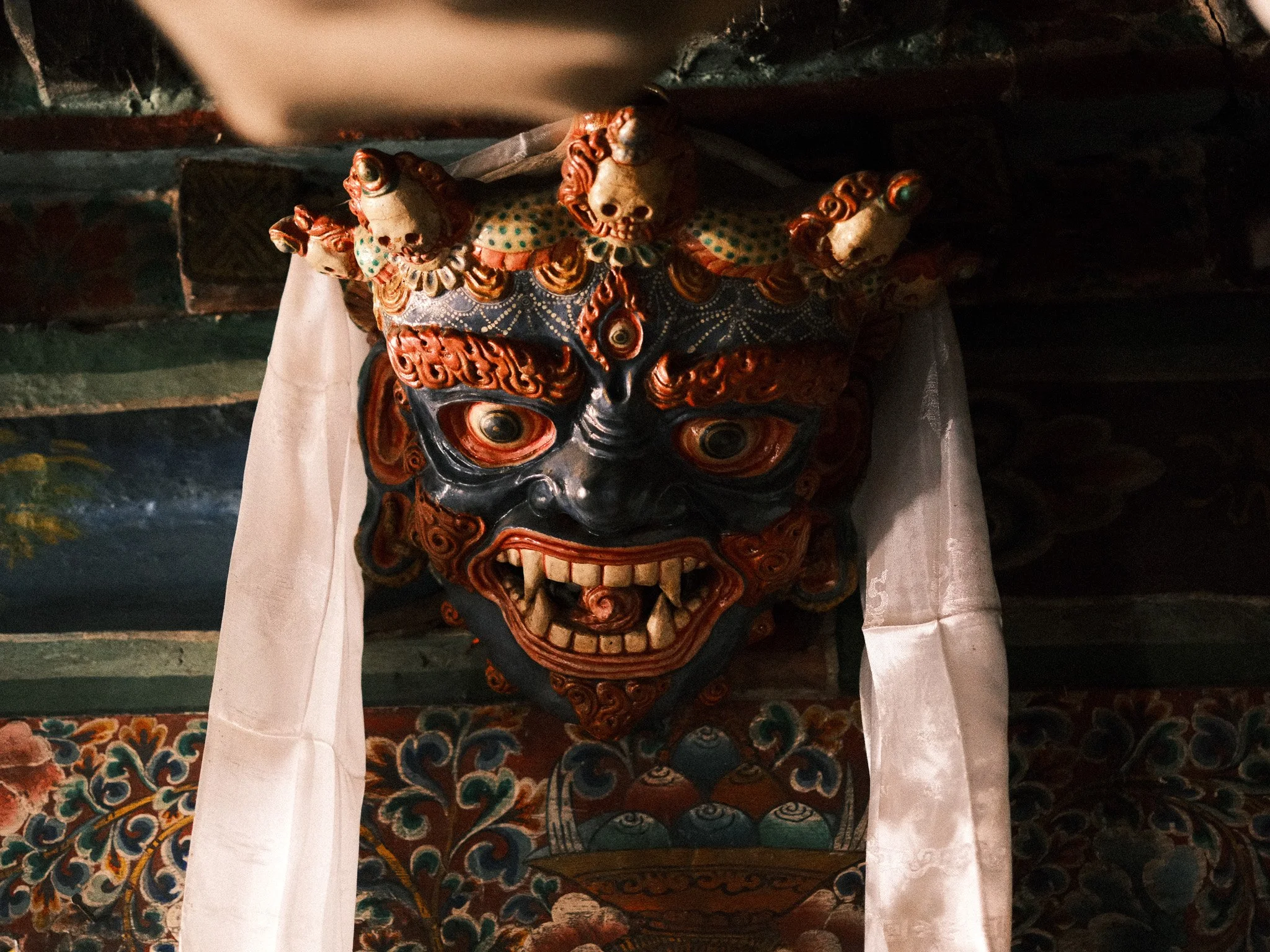
After breakfast, we continued towards Lubra, stopping first at a large monastery where the soft morning light was perfect for photographing monks and the intricate Buddhist artwork inside.
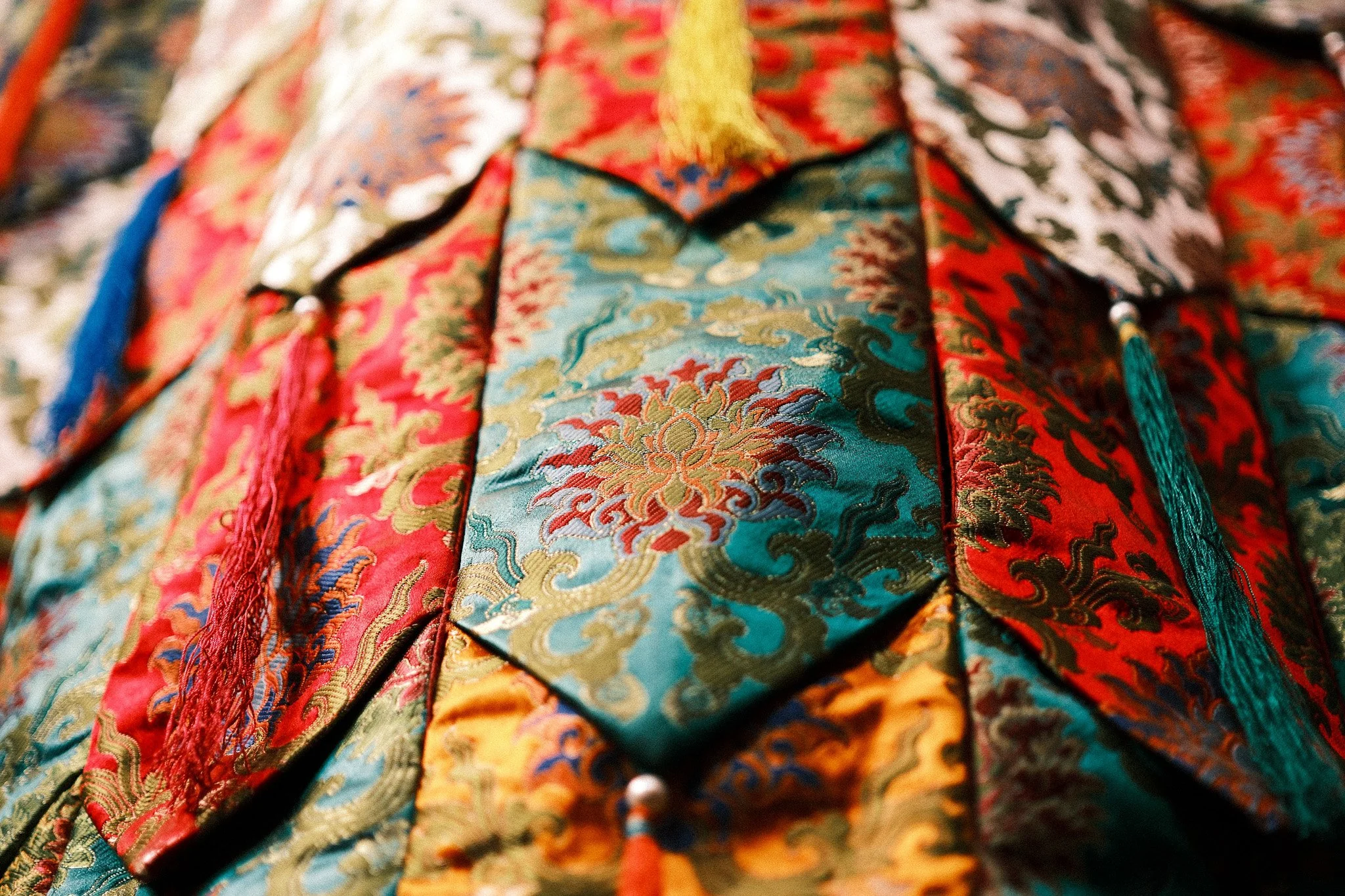
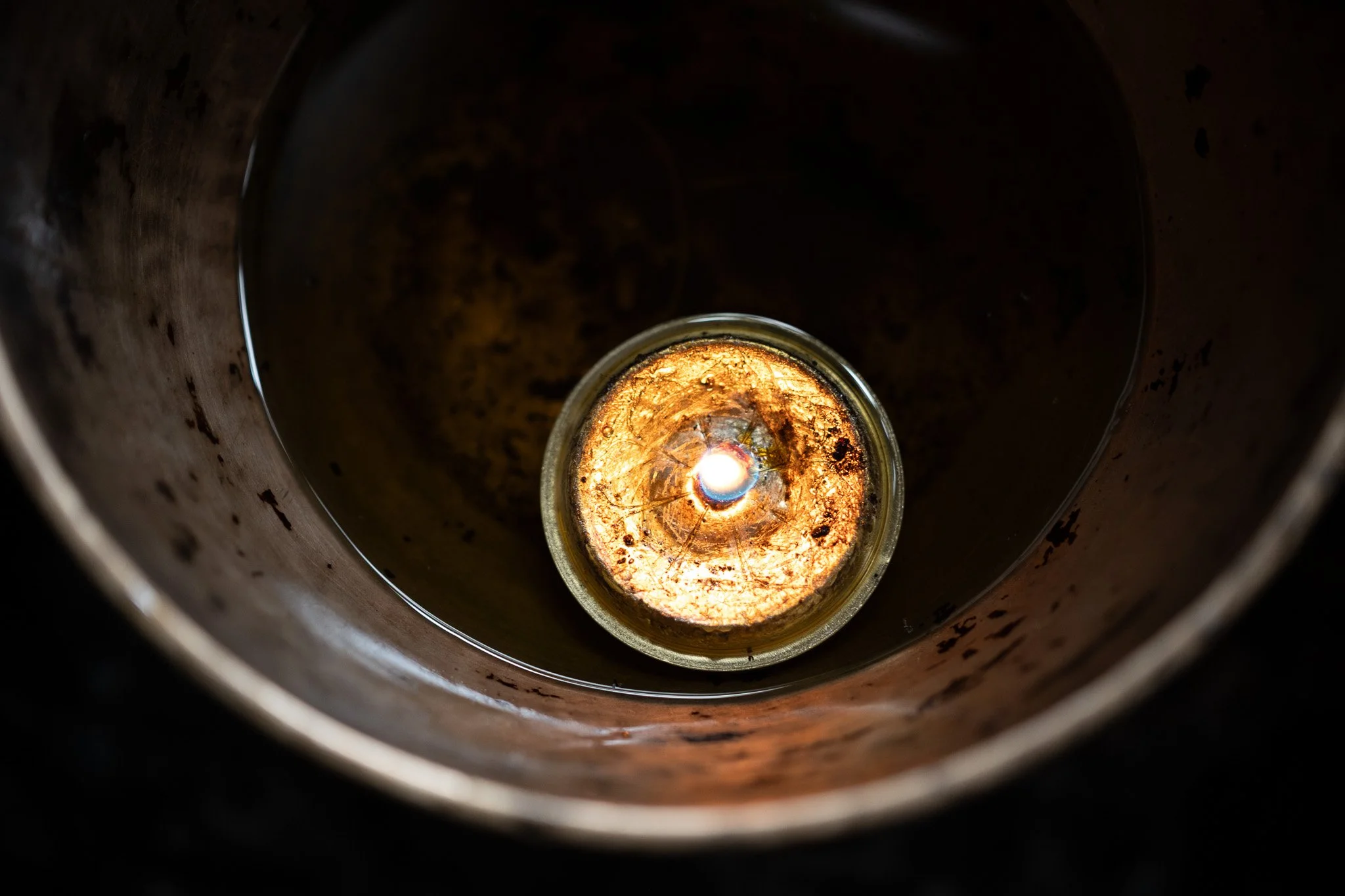
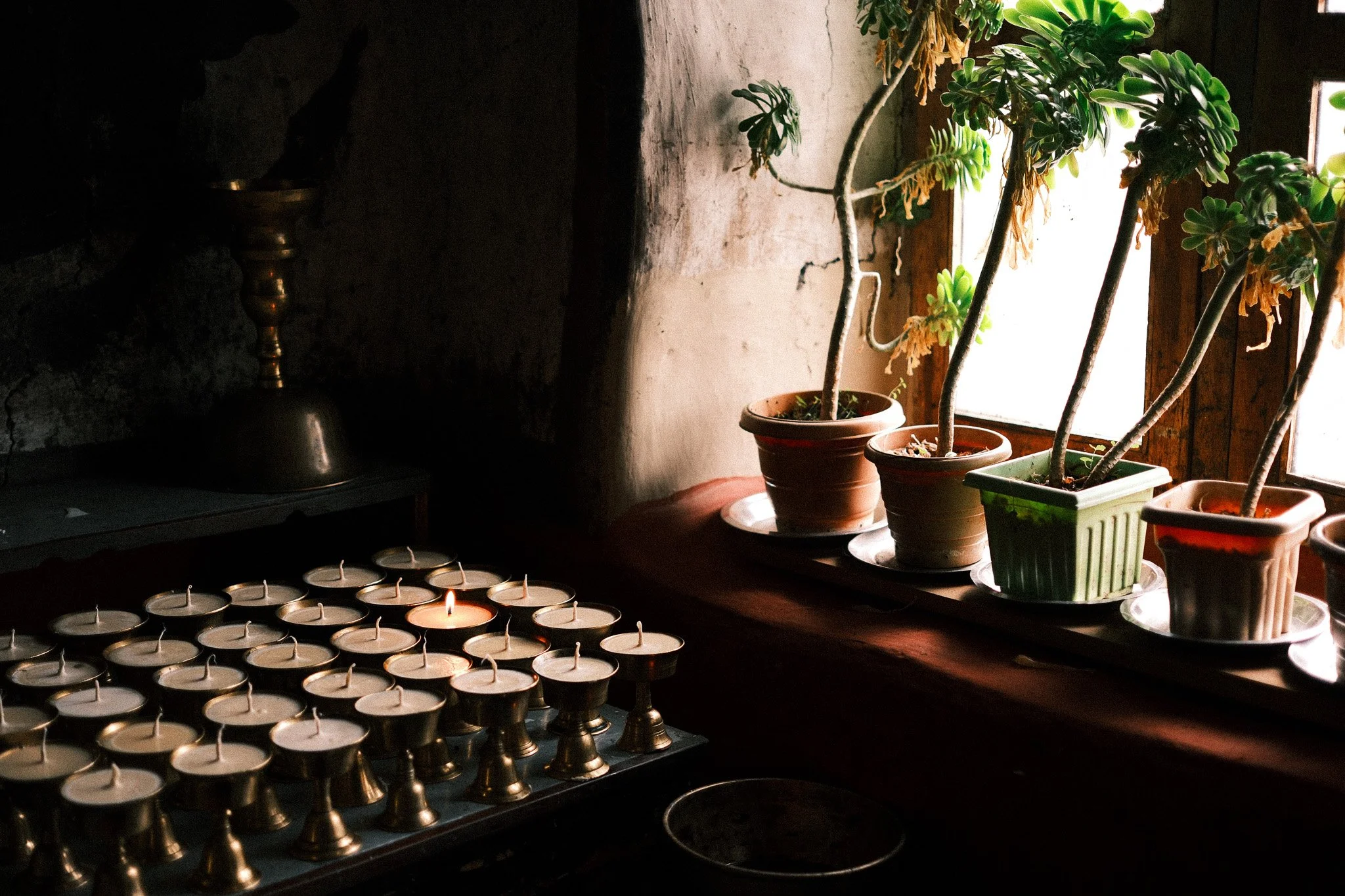
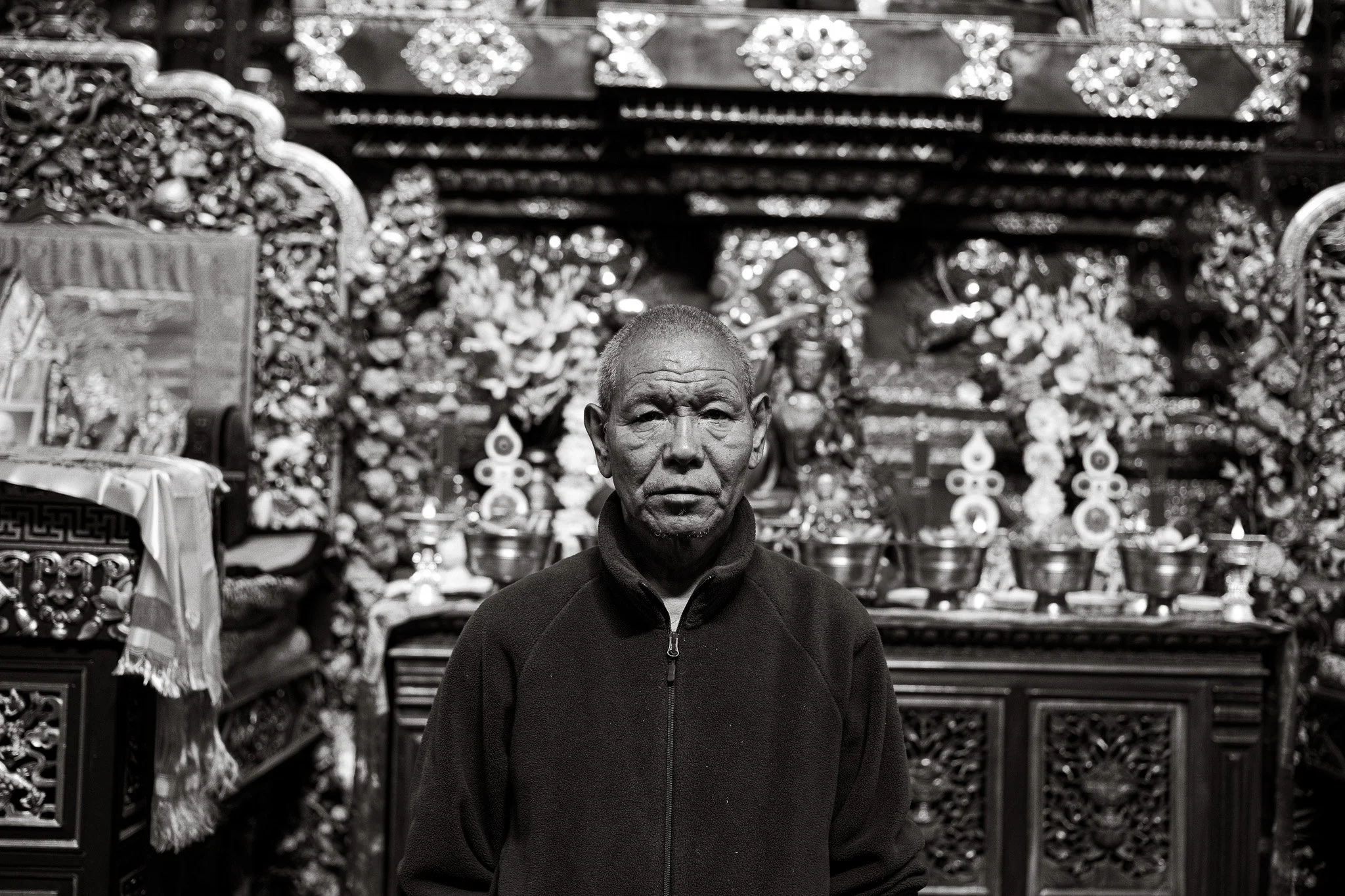
Reaching Lubra required crossing the river on foot before following a small trail to the village itself. Tucked beneath the mountains beside a narrow stream, the 800-year-old settlement is the last Bon village in Lower Mustang, preserving traditions that pre-date Tibetan Buddhism. Its quiet whitewashed houses and peaceful setting made it feel completely removed from the outside world, while a lone vulture circling overhead only added to the atmosphere.
By the afternoon we had begun the drive towards Tatopani, winding through dramatic valleys where fresh monsoon rockfalls repeatedly blocked the road. It was a fitting reminder that, in the Himalayas, even the journey home is rarely straightforward.
📸 Worth visiting: Lubra rewards photographers looking for somewhere quieter and less visited than the main Mustang route. The walk into the village is part of the experience, and the combination of Bon culture, mountain scenery and traditional architecture makes it well worth the detour.
Photographing People Respectfully
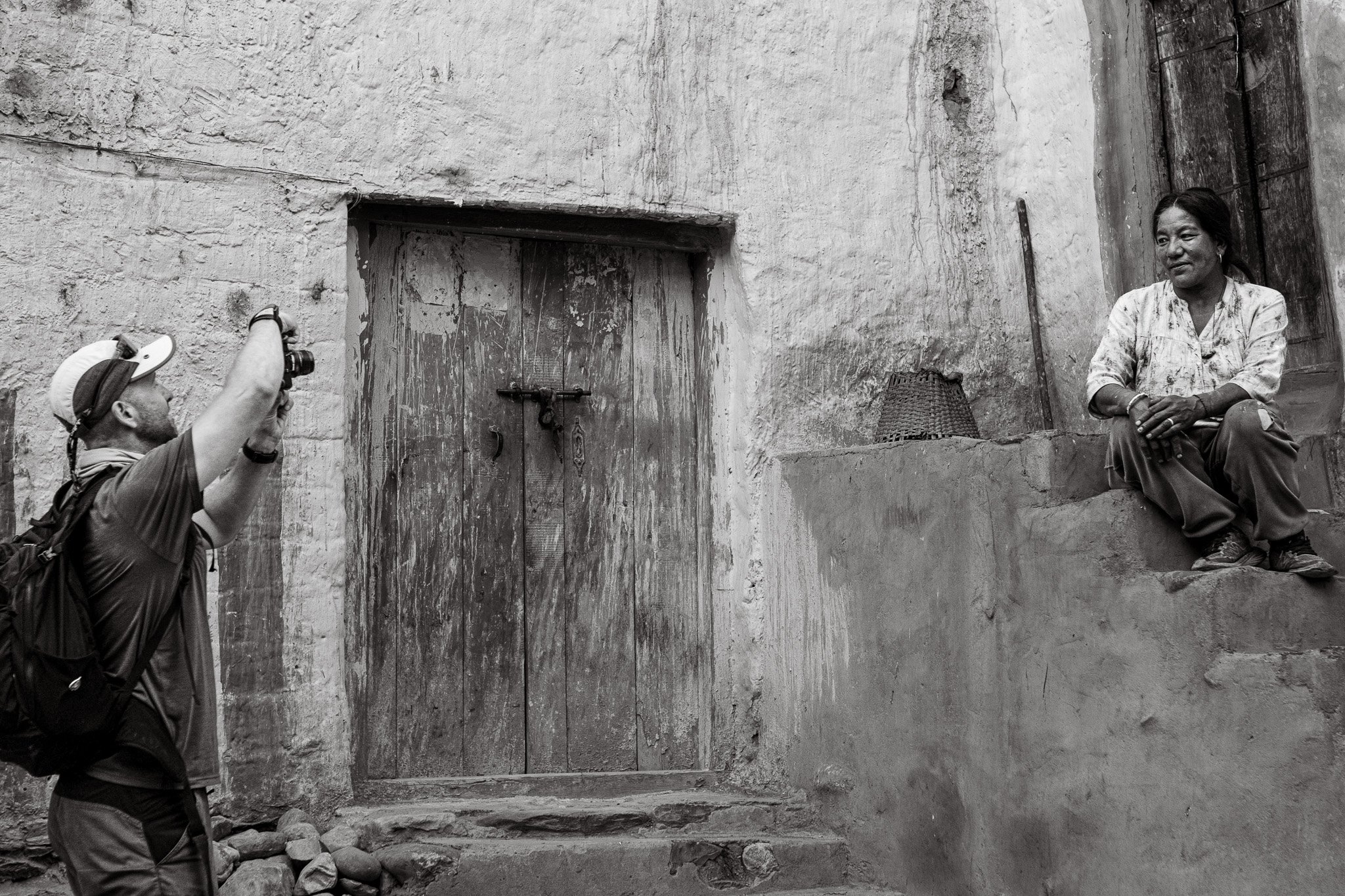
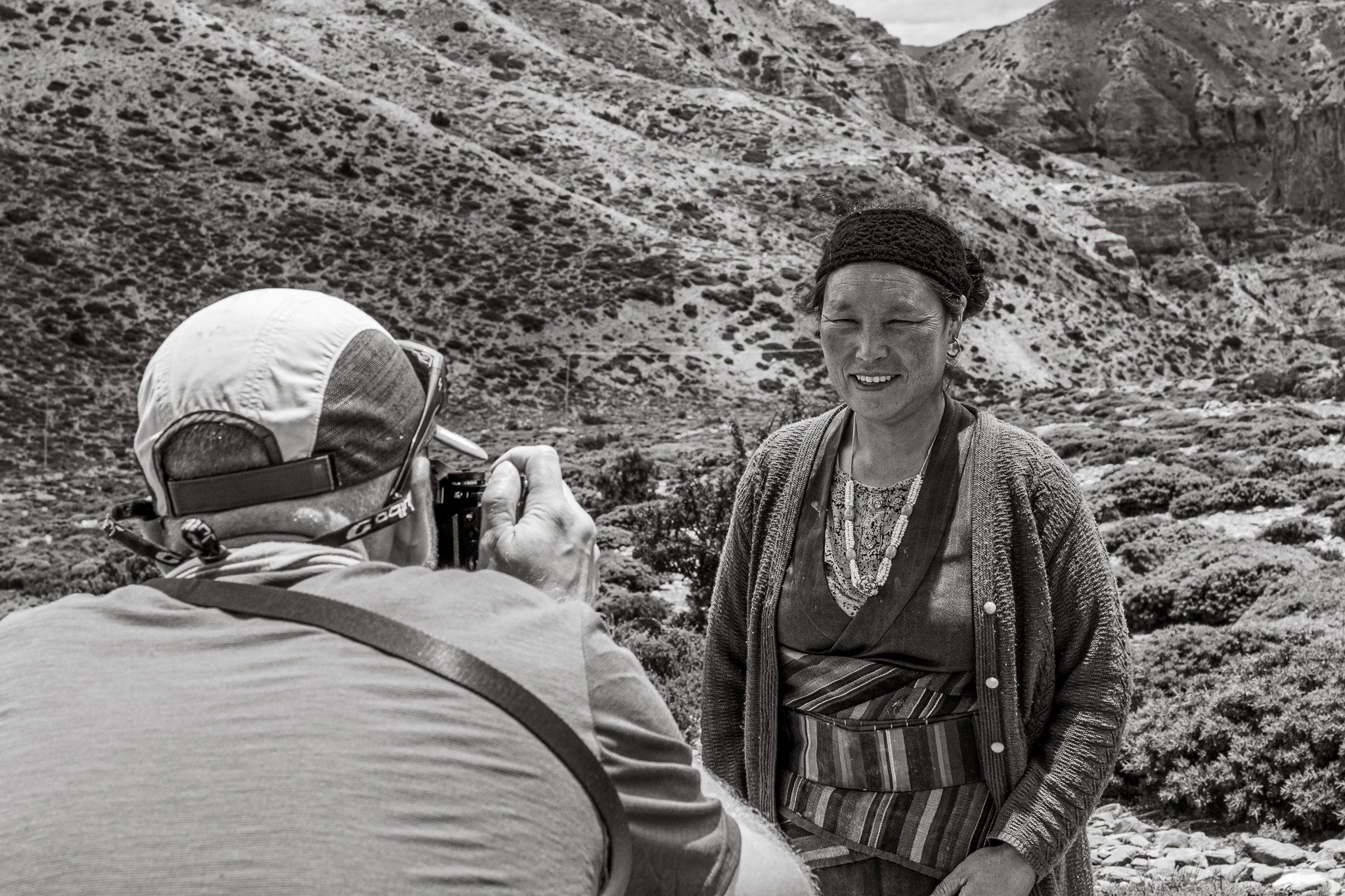
Portrait opportunities are one of the great strengths of Upper Mustang, but they should not be treated as something a visitor is automatically entitled to. The most meaningful photographs usually followed conversation, tea, curiosity or time spent simply being present.
Tea before the photos
Being invited into a shop, home or teahouse creates a different relationship from stopping someone in the street. Not every interaction needs to produce a photograph. When a portrait does follow, it carries more of the encounter with it.
Working with a Local Guide
Use a guide as a cultural bridge, not a fixer
A good local guide supports with far more than logistics. Udaya from Explore Hub Nepal helped create respectful introductions, explained local practices and made it easier to spend time with people without treating the interaction as a quick photographic transaction.
With the help of Udaya, we managed to have very unique experiences such as photographing a wedding procession in Tsarang, and spending time with 8 Sadhus and even visiting their living accommodations in Muktinath. A guide who can translate conversations and introduce you to local people makes a real difference, especially when portrait and documentary photography are the focus of your trip.
Monasteries and religious practice
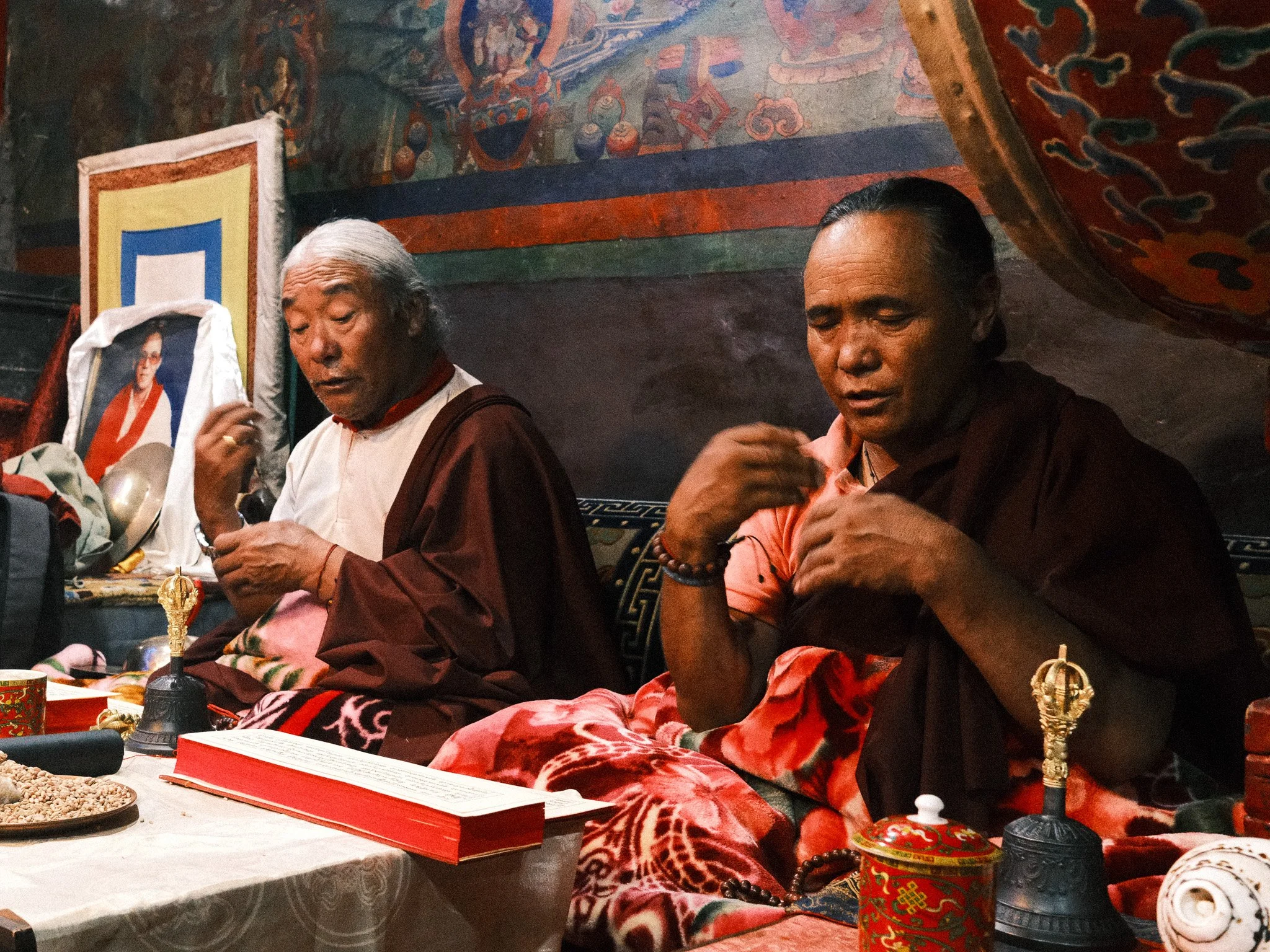
Photography rules vary between monasteries and rooms. Ask every time, avoid interrupting puja, and do not assume that permission to enter includes permission to photograph murals, statues or worshippers.
Favourite Moments
Three Generations Beneath the Red Cliffs
One afternoon, Udaya struck up a conversation with three local women standing outside their home beneath Chuksang’s towering red cliffs. As we chatted, I realised I was photographing three generations of the same family. The deep red rock face behind them contrasted beautifully with their traditional clothing, but it was their warmth and willingness to share a few minutes of their day that made the portraits memorable. Encounters like this come from slowing down, showing genuine interest and travelling with a guide who can bridge the language and cultural gap.
Two Strangers Become Models
We first met the two teachers at a café in Lo Manthang and arranged to take portraits the following day. We met them again at the monastery near Choser, where we spent time photographing around the courtyard and surrounding buildings, using the bright Himalayan light and colourful monastery walls as a backdrop. Those photographs became some of my favourites from the entire expedition, not because they were heavily planned, but because they grew naturally from conversations and trust.
The Wedding We Never Planned To Photograph
While exploring Tsarang, we heard that a wedding celebration was about to begin in a nearby village. Instead of moving on, we waited. Families gradually arrived dressed in their finest traditional clothing, chatting, laughing and greeting one another before the celebrations began. There was no rush and no expectation. We simply became quiet observers, documenting genuine moments as they unfolded. Some of the strongest documentary photographs from the trip came from an event that wasn't on our itinerary at all.
Tea with the Didis
Some of my favourite memories from Upper Mustang happened away from famous monasteries or dramatic viewpoints. We offered two elderly women tea and a few rupees in exchange for taking their portraits, then spent time together at a small local teahouse. There was no electricity, no background music and no distractions, just steaming cups of overly sweet masala tea and lively conversation echoing around a dimly lit room. We couldn't understand every word, but we didn't need to. For half an hour, we simply shared the same space. Those quiet moments reminded me that travel photography isn't only about making photographs, it's about the conversations and connections that happen because of them.
-
Properly scout locations
Returning is more productive than collecting villages. Light, people and routines change throughout the day.
Use reflected light
White walls in Lo Manthang and other villages can produce soft, directional illumination for portraits. I also brought along a small reflector with me so that I could lift the shadows of some of the portraits when I was out in harsher daylight.
Photograph scale with people or animals
A lone walker, herd or horse can communicate the size of the valleys more effectively than an empty wide view.
Walk at the edges of the day
Morning puja, livestock movement and late-afternoon social life provide more layered scenes than the middle of the day.
Observe before raising the camera
Spend time learning the rhythm of a street or courtyard. The frame becomes clearer once you understand what repeats.
Keep gear accessible but simple
A fast prime and versatile zoom cover most situations without turning every encounter into equipment management.
Record notes immediately
Sounds, smells, conversations and small details disappear faster than visual memories. A diary or voice note gives later writing authority.
Expect dust and wind
Protect equipment, avoid unnecessary lens changes and clean carefully at the end of each day.
Do not chase only golden-hour landscapes
Cloud, shade and reflected light often produced stronger documentary portraits and street photographs.
Let some moments remain unphotographed
Not every invitation or ritual should become content. Restraint is part of respectful documentary work.
Upper Mustang FAQs
-
With a Jeep tour, I would suggest that 10-12 days is the ideal time required to really explore the area.
-
It offers both, but its greatest strength is the relationship between people, architecture and landscape.
-
A versatile standard zoom paired with a fast prime is the combination I found most useful, with my 33mm F1.4 spending most of the trip on my camera for portraits.
If your focus is wildlife or landscapes, I'd strongly recommend adding a telephoto lens to make the most of Mustang's dramatic scenery and abundant wildlife.
-
Rules vary. Ask locally and assume that some interiors, murals and ceremonies are off limits.
-
Yes, if you value quieter villages and photography over guaranteed blue skies.
During my visit, mornings and evenings were often overcast due to the monsoon, but the trade-off was having many villages almost entirely to myself, making it possible to photograph authentic street scenes without other tourists appearing in the frame.
-
Yes. A licensed local guide is a legal requirement for anyone travelling into Upper Mustang, and your permits must be arranged through a registered trekking agency. Although solo travellers are now allowed, the guide requirement remains mandatory.
Beyond the legal requirement, I'd say a great guide is the single best investment you can make. A guide who speaks excellent English and fluent Nepali (or the local Mustang dialect) becomes far more than someone who leads the way, they're your translator, cultural interpreter and bridge to the local community. Many of my favourite photographs and memories, from photographing weddings and families to being welcomed into monasteries and homes, simply wouldn't have happened without that connection.
-
Begin with a greeting or conversation, use the guide where helpful, accept refusal and avoid treating payment as automatic access.
Conclusion
Upper Mustang is visually dramatic, but its value to a photographer is not limited to the scale of the mountains or the age of its monasteries. The journey becomes more interesting in the spaces between those landmarks: people talking outside teahouses, monks finishing lessons, animals moving through narrow streets, tea shared in rooms without electricity, and soft light reflected from white walls.
The region rewards a slower way of working. The best photographs were rarely the result of arriving, identifying a subject and moving on. They came from staying, returning, speaking to people and allowing ordinary life to shape the frame.
Upper Mustang confirmed the direction I want my photography to take. More than ever, I want to document cultures, traditions and communities like those found here, while continuing to travel slowly, meet new people and learn from the different ways of life I encounter. The photographs are important, but they're ultimately a product of those experiences, not the reason for them.
Let me know what you think of the photos, or reach out if you’re planning the trek and have questions.
